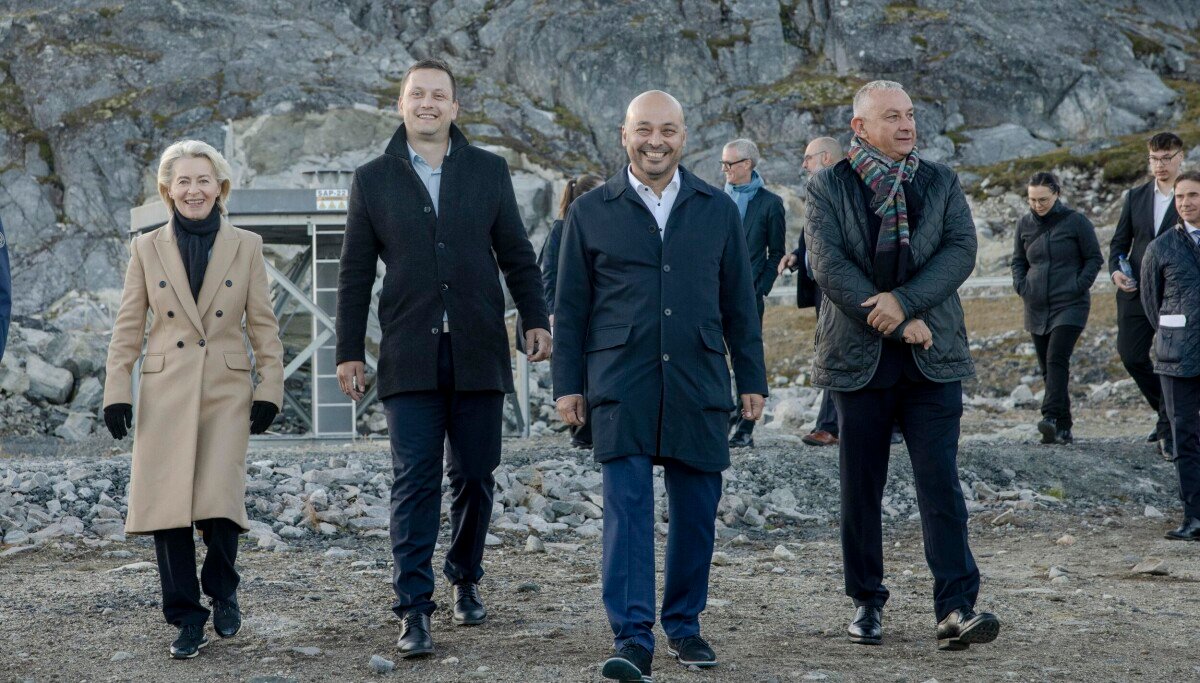
Although the new EU strategy for the Arctic has a strong focus on security, it will benefit the local population, says Síkela.
– When we started to create the strategy for the Arctic, we started in Greenland. We traveled in Greenland and talked to the local population about what is important to them.
This is what the EU Commissioner for International Partnerships, Jozef Síkela, says in an interview with Ritzau, after the EU Commission this week presented a proposal for a new European strategy for the Arctic.
– The goal was to create a strategy together with the Arctic for the Arctic. I hope that it will result in a more stable, richer, safer and more sustainable Arctic and Greenland, says Jozef Síkela.
The EU Commission presented the strategy this week, and it must now be discussed with the EU countries before it can be implemented.
In relation to the latest strategy from 2021, safety plays a significantly larger role, while the environment and climate are central to the current strategy.
– We maintain respect for the environment and sustainability as the overall principle. And then we add new dimensions that reflect the changed reality in the Arctic.
– This means a strong focus on more security. And a strong focus on creating new economic opportunities, says Jozef Síkela.
Raw materials and shipping routes in focus
According to Jozef Síkela, critical raw materials and new maritime routes as a result of climate change will be focal points for growth in the Arctic in the coming years.
When the President of the EU Commission, Ursula von der Leyen, together with Síkela and Prime Minister Mette Frederiksen (S) visited Greenland in September, she presented investments worth DKK 1.5 billion in Greenland.
The funds must, among other things, ensure sustainable raw materials, renewable energy, satellite connections, sustainable tourism and housing.
The EU will also support projects to help Greenlandic communities switch from diesel generators to renewable energy sources.
New submarine cable
As part of the new strategy, the EU Commission also wants to digitally connect Greenland to Europe via submarine cable.
The strengthened digital connection to Greenland is part of the EU’s vision of an Arctic cable that will eventually connect Europe, Greenland, Canada, Japan and South Korea and ensure digital independence.
– The central principle is that the population that calls the Arctic their home must always be involved. And must always benefit from the strategy, says Jozef Síkela.
Question: Is the great focus on security and on being able to use infrastructure for both civilian and military purposes not precisely driven by the wishes of the EU and NATO rather than the wishes of the population?
– The security dimension is driven by the geopolitical change. And it has become even more important after the Russian war of aggression in Ukraine.
– We can see that Russia is strengthening their military positioning and capabilities in their part of the Arctic. At the same time, they are destroying the Arctic by turning it into an energy and mining area, says Jozef Síkela.
More investments will benefit the civilian population
He thus makes no secret of the fact that the concern for security is driven by external circumstances.
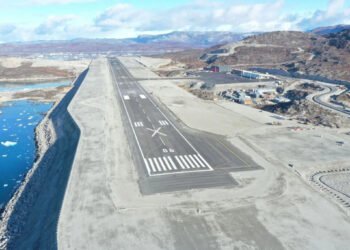
At the same time, Síkela points out that the investments in, for example, ports for military transport and new centers to monitor and protect maritime traffic and critical infrastructure will also benefit the civilian population through increased security, better transport options and increased rescue preparedness.
– We now refer to the Arctic as the “northern neighbourhood”.
– It is an expression that the Arctic is not someone else’s border – it is our border. We are close, we are connected and we are committed, says Jozef Síkela.
In March 2024, the EU opened a permanent representation in Nuuk. At the same time, the EU Commission is now pushing to double the support for Greenland in the next long-term EU budget.
Greenland in the EU?
Question: Do you want Greenland to join the EU?
– We will give a warm welcome to all partners who want to join the club.
– In my opinion, the EU is the best club there is, and it will be a strong signal to the rest of the world, says Jozef Síkela and emphasizes that the decision is up to the Greenlandic population.
However, in connection with von der Leyen and Jozef Síkela’s visit in September, Greenland’s head of government, Jens-Frederik Nielsen, stated that he does not want to change the decision Greenland made in 1985 to withdraw from the then EC.
– Greenland is still in the same place as it was years ago, where we have a partnership with the EU. We would like to build on that and make it more strategic and stronger.
– But membership is not something that is on the table, said Jens-Frederik Nielsen.
RITZAU