“I don’t want our girls to be remembered only after they are no longer alive”, Arlinda’s murder stirs the pain of the families of the murdered women

tidings

Express Newspaper
31/10/2026 11:14
The end of a woman’s life, for their families, marks the beginning of a life changed forever.
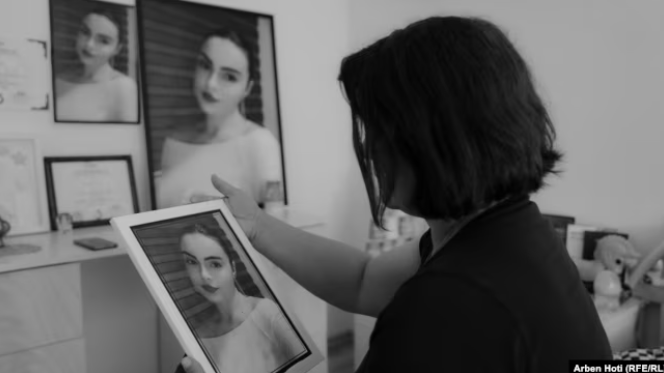
Milihate Cokli, the mother of Erona Cokli, who was killed by her ex-husband in 2024, says that she had asked for help from the institutions to protect her daughter, but that it was not taken seriously.
For this reason, the case of Arlinda Zekaj’s murder on October 25 – after she had reported the danger to all responsible institutions – reminds her of her own struggle.
Now, she remembers a case when she went to the place where Erona worked, since, according to her, the girl’s ex-partner did not leave her daughter alone even at the workplace. During the conversation, Erona came out and hugged her mother.
“Mother, this does not leave me comfortable”, she had told him.
Cokli says that after this case she went to the police to report that her daughter was being threatened, but that the reaction she received disappointed her.
She recalls a conversation with an investigator who, according to her, asked her what kind of mother she was for not allowing her daughter to make up her own mind. Cokli says he left with tears in his eyes, after explaining that Erona was being threatened and that he feared for her safety.
“As a mother, I asked for help for my daughter, I was carried around like a rag”, she says to Radio Free Europe.

Now, Erona’s murder has changed the life of the family forever, says Cokli, who cares for the son Erona left behind.
“I have my grandson whom I consider my son. But without Erona’s smile, the atmosphere at home is not the same as before,” she says.
In addition to the loss, the mother says that she does not feel that she has received justice for her daughter’s murder, as she considers the 24-year prison sentence for Erona’s killer to be too low.
Erona’s mother demands that institutions change the way they treat women and family members who seek help.
“They shouldn’t make fun of girls or mothers who ask for help,” she says to REL.
“I don’t want our girls to be remembered only after they are no longer alive”
The requests for protection and institutional responsibility are also repeated by Valdete Osmani, the mother of Marigona Osmani, who was killed at the age of 18 in 2021.
“I don’t want our girls to be remembered only after they are no longer alive. I want them to be protected, to be heard and to feel safe”, says Osmani for Radio Free Europe.
She remembers her daughter every day for her smile, her brown eyes and the dreams she couldn’t fulfill.
“She was not just a name in the news, she was my daughter”, says Osmani for Radio Evropa e Lire.

In addition to the absence of Marigona, the family has had to constantly face the memory of the circumstances in which she lost her life.
“The court process has been very difficult for us as a family because every time we had to face what happened to our daughter,” she says.
However, Marigona’s mother remains hostage to the idea that the tragedy could have been prevented, as she says that the family had asked for help from the police before the tragedy, but that they were not taken seriously.

“As a mother, it’s very hard to think that you asked for help and still ended up losing your daughter,” she says.
She cannot know for sure if a reaction from the institutions would have changed the outcome, but she requests that from now on every complaint and concern be treated seriously and in time.
“As a mother, I cannot bring Marigona back, but I would like lessons to be learned from her case and that no one else will go through the pain that we are experiencing”, says Osmani.
Six weeks of waiting for Donjeta
For Shkelqim Pajazita, Donjeta’s brother, the most difficult period was the six weeks during which the family did not know where his sister was. Her lifeless body was found in December 2015, but her killer is still unknown.
“When he was found, since he was found, it was a kind of relief for us because we knew that now the suffering and mistreatment for him have ended”, says Pajazitaj for Radio Free Europe.
He believes a quicker police response during the weeks when Donjeta was missing could have influenced her fate.
“(If it had been treated) with more urgency at that time, maybe we could have Donjeta alive today,” he says.
He says that during the meetings with the family, the security institutions had told them that Donjeta’s phone signal was located in the territory of Strellci.
For 11 years now, the family continues to have doubts that at that time all possible actions were not taken to find him in time.
Pajazitaj says that news of other murders of women always brings the family back in time.

“The negligence of the institutions is causing the killing of women today because their voice is not being valued and taken into account,” he says.
He asks that the institutions act in time and that the previous cases are not forgotten. According to him, the key to preventing other tragedies lies in punishing the perpetrators and institutional responsibility./REL/