Friday, October 30, 2026
    The GeoStrategic Consensus
    No Result
    View All Result
    • Login
    • HOME
    • AMERICAS
      • Argentina
      • Brazil
      • Canada
      • Chile
      • Colombia
      • Costa Rica
      • Cuba
      • Dominican Republic
      • Ecuador
      • El Salvador
      • Greenland
      • Guatemala
      • Honduras
      • Mexico
      • Nicaragua
      • Panama
      • Paraguay
      • Peru
      • United States
      • Uruguay
      • Venezuela
    • ASIA-PACIFIC
      • Australia
      • Brunei Darussalam
      • Cambodia
      • China
      • Federated States of Micronesia
      • Fiji
      • Indonesia
      • Japan
      • Kiribati
      • Laos
      • Malaysia
      • Marshall Islands
      • Mongolia
      • Myanmar
      • Nauru
      • New Zealand
      • North Korea
      • Palau
      • Papua New Guinea
      • Philippines
      • Samoa
      • Singapore
      • Solomon Islands
      • South Korea
      • Taiwan
      • Thailand
      • Timor-Leste
      • Tonga
      • Tuvalu
      • Vanuatu
      • Vietnam
    • CARICOM
      • CARICOM – Non-English
        • Haiti
        • Suriname
      • CARICOM Associates
        • Anguilla
        • Bermuda
        • British-Virgin-Islands
        • Cayman-Islands
        • Curacao
        • Turks-and-Caicos
      • CARICOM English
        • Antigua and Barbuda
        • Barbados
        • Belize
        • Dominica
        • Grenada
        • Guyana
        • Jamaica
        • Montserrat
        • Saint Kitts and Nevis
        • Saint Lucia
        • Saint Vincent and the Grenadines
        • The Bahamas
        • Trinidad and Tobago
    • EURASIA
      • Armenia
      • Azerbaijan
      • Balarus
      • Georgia
      • Kazakhstan
      • Kyrgyzstan
      • Moldova
      • Russia
      • Tajikistan
      • Turkmenistan
      • Ukraine
      • Uzbekistan
    • EUROPE
      • Albania
      • Andorra
      • Austria
      • Bosnia and Herzegovina
      • Bulgaria
      • Croatia
      • Cyprus
      • Czech Republic
      • Denmark
      • Estonia
      • Finland
      • France
      • Germany
      • Greece
      • Holy See
      • Hungary
      • Iceland
      • Ireland
      • Italy
      • Kosovo
      • Latvia
      • Liechtenstein
      • Lithuania
      • Luxembourg
      • Malta
      • Monaco
      • Montenegro
      • Netherlands
      • North Macedonia
      • Norway
      • Poland
      • Portugal
      • Romania
      • San Marino
      • Serbia
      • Slovakia
      • Slovenia
      • Spain
      • Sweden
      • Switzerland
      • United Kingdom
    • MIDDLE EAST AND NORTH AFRICA
      • Algeria
      • Bahrain
      • Egypt
      • Iran
      • Iraq
      • Israel
      • Jordan
      • Kuwait
      • Lebanon
      • Lybia
      • Morocco
      • Oman
      • Palestinian Territories
      • Qatar
      • Saudi Arabia
      • Syria
      • Tunisia
      • Turkey
      • United Arab Emirates
      • Western Sahara
      • Yemen
    • SOUTH ASIA
      • Afghanistan
      • Bangladesh
      • Bhutan
      • India
      • Maldives
      • Nepal
      • Pakistan
      • Sri Lanka
    • SUB-SAHARAN AFRICA
      • Angola
      • Benin
      • Botswana
      • Burkina Faso
      • Burundi
      • Cabo Verde
      • Cameroon
      • Central African Republic
      • Chad
      • Comoros
      • Cote d’Ivoire
      • Democratic Republic of the Congo
      • Djibouti
      • Equatorial Guinea
      • Eritrea
      • Eswatini
      • Ethiopia
      • Gabon
      • Gambia
      • Ghana
      • Guinea
      • Guinea Bissau
      • Kenya
      • Lesotho
      • Liberia
      • Madagascar
      • Malawi
      • Mali
      • Mauritania
      • Mauritius
      • Mozambique
      • Namibia
      • Niger
      • Nigeria
      • Republic of the Congo
      • Rwanda
      • Sao Tome and Principe
      • Senegal
      • Seychelles
      • Sierra Leone
      • Somalia
      • South Africa
      • South Sudan
      • Sudan
      • Tanzania
      • Togo
      • Uganda
      • Zambia
      • Zimbabwe
    No Result
    View All Result
    Agentially
    No Result
    View All Result
    Home CARICOM CARICOM - Non-English Suriname

    REVIEW — The price of a lax government: how Suriname loses its vegetable exports – de Ware Tijd

    The Analyst by The Analyst
    October 30, 2026
    in Suriname
    REVIEW — The price of a lax government: how Suriname loses its vegetable exports – de Ware Tijd


    The numbers don’t lie. The weekly export volume of Surinamese vegetables to Europe plummeted from 65 tons in 2018 to only fifteen tons in 2026 and the number of active exporters halved from thirteen to seven. In six months, the European Union (EU) rejected three export shipments this year: red pepper, long beans and sopropo. And since 2011, Suriname has been considered a risk country in Brussels.

    READ ALSO

    The riotous world of 2026 (7): Elections in Brazil: the Amazon and the future of South America – the True Time

    Kenki a system? – the True Time

    Text Ivan Cairo

    Image dWT archive

    The fact that the country is classified as a risk area is not a cyclical dip. It is a structural economic crisis of confidence that has been going on for years. And anyone who only points to the government sees half the problem. Farmers who use banned chemicals or do not adhere to usage instructions are not just victims of a failing system. They are partly the cause of it.

    “Food safety cannot wait until a serious incident occurs“

    NDP MP Ann Sadi

    Economic account of prohibition

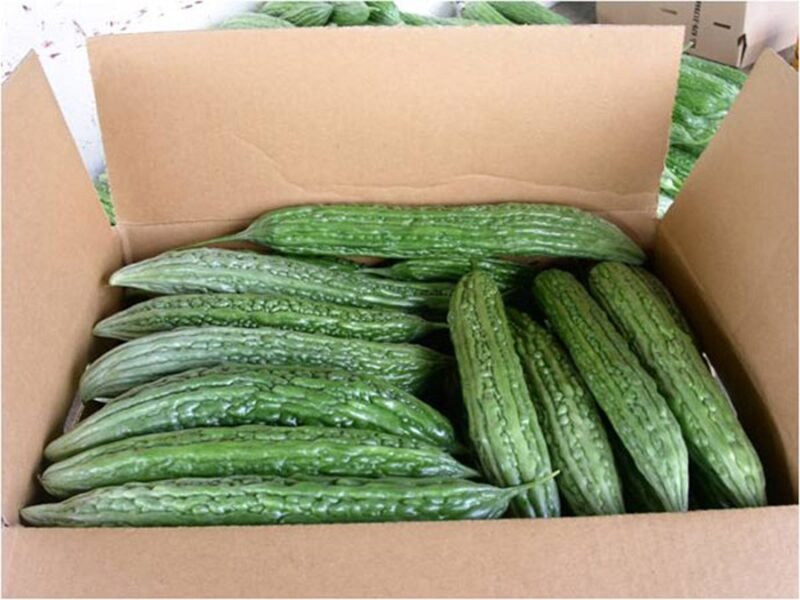
    The most visible symptom is the sopropo ban. Since 2019, fresh sopropo is no longer allowed to enter the EU due to the risk of thrips, an insect species. Only frozen sopropo from Suriname is still allowed to enter the EU.

    That sounds like a phytosanitary measure, but the economic impact is enormous: before the ban, sopropo represented 35 to 40 percent of the total volume of Surinamese fresh vegetable exports to Europe. A product that was the mainstay of exports for decades lost access to its most important sales market, as it were, overnight.

    The painful thing is that it wasn’t necessary. Countries such as Mexico and the Dominican Republic were given the green light after the same measure, because they implemented the required phytosanitary measures in time. Suriname had been warned since 2016 that Brussels would take measures, but failed to do so. The result: while competitors restored their exports, Suriname remained behind a nailed shut door.

    Farmers partly responsible

    There is a tendency to portray the local grower as a powerless pawn, at the mercy of failing government policy and unfair European regulations. That one framing is understandable, but incomplete.

    The figures on pesticide use are downright alarming. Suriname has become the leader in South America in terms of the import of pesticides per hectare of agricultural land. Every year, the country imports approximately 1.8 million kilograms of pesticides, equivalent to 38 to 40 kilograms per hectare — more than sixteen times higher than the global average. In 2010 and 2020, this use was still approximately seven kilograms per hectare.

    This explosive increase is not only the result of a lax government. It also reflects choices that growers make themselves. Minister Mike Noersalim of Agriculture, Livestock and Fisheries (LVV) noted earlier this month that some farmers are still compiling their own mixtures of pesticides – so-called ‘cocktails’ – with all the associated risks. He pointed out that growers are using pesticides without proper personal protective equipment and that the prescribed safety periods between spraying and harvesting are not being adhered to.

    President Jennifer Geerlings-Simons put it even more sharply in May this year. The use of pesticides in itself is not prohibited, she said, agricultural products are also treated internationally. “The difference lies in correctly complying with regulations and permitted quantities.” Problems arise when farmers do not adhere to guidelines and intensively spray products just before sale, leaving harmful residues behind.

    In addition, residues of substances that have been banned in the EU for years are found on the Surinamese market. Paraquat (Gramoxone), banned in the EU since 2007, is still used in Suriname, according to politician Dharm Mungra. Carbofuran, one of the most toxic insecticides still in use and banned in the EU, Canada and the United States (US), has also been found in Surinamese vegetables. And in December 2025, the police intercepted ten boxes of illegally imported herbicides in Nickerie that were shipped through the ‘backtrack’route from Guyana had been smuggled in.

    These are not abstract statistics. These are choices – made by growers, traders and suppliers – that close the European market and endanger public health. The farmer who wants to preventively protect his crop against fungi and insects uses products he knows and that work. But he is not a weak-willed victim. He is a link in a chain that he helps shape.

    Institutional emptiness behind the numbers

    This does not alter the fact that the government bears its own responsibility, which is at least as serious. The National Institute for Food Safety (Nivs) law has been in force since 2021. The institute had to bundle the fragmented inspections, establish residue standards and take samples for export and the local market.

    But the Nivs has been functioning without a Supervisory Board since 2024. Full administrative supervision has been lacking for almost two years. The law obliges the Ministers of LVV, Health, Welfare and Labor and Economic Affairs, Entrepreneurship and Technological Innovation to consult at least three times a year (Articles 15 and 16). That consultation has never been held.

    The Food Act of 1911 on which the control rests dates from the time of carts and colonial trade. The draft Food Law that should modernize this was submitted to the National Assembly on March 6 this year. The committee of rapporteurs heard stakeholders in April and the law was scheduled for plenary discussion on July 9. Treatment has started, but not completed. The parliamentary agenda is one thing; the political urgency is another. And that urgency is missing.

    And then there is the residue laboratory. That project has been running since 2012 or 2013. At the end of this year, the construction phase is reportedly 99.9 percent complete, but the necessary equipment is not expected until the first or second quarter of 2027. Until then, the government lacks its own inspection capacity to determine whether products are safe.

    This is the institutional void: laws that are not implemented, a regulator without an administration, a laboratory that has been under construction for more than a decade and a parliament that allows a law from 1911 to continue. The government created the instruments on paper, but then left them empty or not filled in.

    And it has failed to actually sanction growers who knowingly violate the rules. LVV Minister Noersalim has announced that measures will be taken against violators, but so far it has been limited to announcements.

    Ann Sadi: the voice of impatience

    It is against this background that NDP MP Ann Sadi took to the pen a few days ago to denounce this matter. She expresses what many in society know, but what remains hanging in the boardrooms: “Food safety cannot wait until a serious incident occurs.”

    Sadi emphatically places the responsibility on the government, not on the farmer. She points out that the Minister of LVV recently held farmers responsible for safe products during Farmers’ Day, but forgot that his own ministry must implement the law that regulates supervision.

    She calls the reference to a pesticide law that has yet to be drawn up and the laboratory that has been under construction since 2012 ‘excuses’. Justifiably. Residues analyzes have been possible for quite some time, she says; the problem is that the Nivs law is not being implemented and the Food Act is not being implemented.

    Her most confrontational observation is perhaps the simplest: “If the job is already done well, why does Europe discover our problems and not us?” Why do contaminated agricultural products slip past these well-functioning institutions?

    Sadi is right that the government is failing in its legal duty. But her argument remains stuck in a political framing in which the farmer is primarily a victim. The reality is more unruly. The same government that fails to monitor and sanction growers has also failed to consistently educate and guide them. And some growers have used that space to continue practices that have kept the European market closed to fresh produce for fifteen years.

    Consumer pays the bill

    The economic damage is not limited to exports. The agricultural areas that produce for the European market also supply the local market. The local consumer. Vegetables that do not meet European standards find their way to Surinamese shops, markets, dining tables and restaurants. Research shows that fruit and vegetables are sold on the local market with residues of pesticides that have been banned in the EU for years. After the April and May notifications, there has been no public warning or recall.

    President Geerlings-Simons has now announced that products with excessively high concentrations will be removed from the market and destroyed in the future. But that announcement only came after European disapproval had piled up. And the question remains how effective that enforcement is as long as our own laboratory is not yet operational and the legal basis dates from 1911.

    Core of the matter

    Surinamese vegetable exports are not a victim of bad luck or unfair European regulations. It is a victim of a shared blindness and a failing system. The government has not implemented the laws, not allowed the institutions to function and not controlled the growers. And some growers have used that space to use banned substances, make cocktails and ignore safety deadlines.

    “The figures on pesticide use are downright alarming. Suriname has become the leader in South America in terms of the import of pesticides per hectare of agricultural land”

    As long as the three ministers who must help give substance to the legal provisions do not meet on food safety, as long as the Nivs operates without supervision, as long as parliament allows a law from 1911 to continue and as long as farmers believe that the rules do not apply to them, Brussels will continue to check, reject and return or destroy export shipments from Suriname.

    The bill for this is not paid by the responsible ministers, but by growers who ignore the rules and will no longer be able to sell their production in the long term. It is further paid by the exporter who loses his market, but especially by the consumer who does not know what is on his plate.

    The insecticide package on the right has had its production and expiration dates removed by the importer.


    Source link

    Related Posts

    The riotous world of 2026 (7): Elections in Brazil: the Amazon and the future of South America – the True Time
    Suriname

    The riotous world of 2026 (7): Elections in Brazil: the Amazon and the future of South America – the True Time

    October 30, 2026
    Kenki a system? – the True Time
    Suriname

    Kenki a system? – the True Time

    October 30, 2026
    Prosecuting War Crimes – The Real Time
    Suriname

    Prosecuting War Crimes – The Real Time

    October 30, 2026
    Mennonites – the True Time
    Suriname

    Mennonites – the True Time

    October 29, 2026
    Administrative anarchy – the True Time
    Suriname

    Administrative anarchy – the True Time

    October 29, 2026
    Vegetable export and public health – the True Times
    Suriname

    Vegetable export and public health – the True Times

    October 29, 2026
    Next Post
    Alias ​​Alex, the leader of the ‘Gulf clan’ who would have died in the sixth bombing ordered by De La Espriella

    Alias ​​Alex, the leader of the 'Gulf clan' who would have died in the sixth bombing ordered by De La Espriella

    POPULAR NEWS

    2026 Regional and International Conventions of Jehovah’s Witnesses

    2026 Regional and International Conventions of Jehovah’s Witnesses

    July 7, 2026

    All posts

    July 23, 2026
    Thaksin, Yingluck and Paetongtarn meet Indonesian President Prabowo for investment talks

    Thaksin, Yingluck and Paetongtarn meet Indonesian President Prabowo for investment talks

    July 13, 2026
    ‘There should be a knowledge institute on Surinamese contract labor’ – de Ware Tijd

    ‘There should be a knowledge institute on Surinamese contract labor’ – de Ware Tijd

    October 8, 2026
    This is how Nicolás Maduro and Cilia Flores reappeared in their hearing

    This is how Nicolás Maduro and Cilia Flores reappeared in their hearing

    July 24, 2026

    EDITOR'S PICK

    ANNOUNCEMENT: DOWASCO apologizes for unscheduled service interruption in Gallion

    ANNOUNCEMENT: DOWASCO apologizes for unscheduled service interruption in Gallion

    August 10, 2026
    Jeremy Hendricks Killed After Heated Domestic Dispute

    Jeremy Hendricks Killed After Heated Domestic Dispute

    September 7, 2026
    Uganda declared Ebola-free even as Congo faces deadly, fast-growing epidemic

    Uganda declared Ebola-free even as Congo faces deadly, fast-growing epidemic

    August 27, 2026
    Watchmaker Awake fuses heritage with modernity with new 38mm collection

    Watchmaker Awake fuses heritage with modernity with new 38mm collection

    July 13, 2026

    Recent Posts

    • Residents of Tokmok noticed the re-blooming of fruit trees and lilacs in the fall
    • Why many people take stomach acid blockers even though they don’t need them. Millions of people in Germany regularly use proton pump inhibitors when they have heartburn or reflux. Many people would probably get along just fine without them. How to put them down correctly. By Marthe Ruddat
    • Minister Conxita Marsol defends that the thawing law guarantees automatic extensions of rents in Andorra
    • Tre Penne, the official arrivals of Nicolò Alfano and Devin Benvenuti

      © 2026 Agentially - Navigating shifting sovereignties and global risk .

      Welcome Back!

      Login to your account below

      Forgotten Password?

      Retrieve your password

      Please enter your username or email address to reset your password.

      Log In
      No Result
      View All Result
      • HOME
      • AMERICAS
        • Argentina
        • Brazil
        • Canada
        • Chile
        • Colombia
        • Costa Rica
        • Cuba
        • Dominican Republic
        • Ecuador
        • El Salvador
        • Greenland
        • Guatemala
        • Honduras
        • Mexico
        • Nicaragua
        • Panama
        • Paraguay
        • Peru
        • United States
        • Uruguay
        • Venezuela
      • ASIA-PACIFIC
        • Australia
        • Brunei Darussalam
        • Cambodia
        • China
        • Federated States of Micronesia
        • Fiji
        • Indonesia
        • Japan
        • Kiribati
        • Laos
        • Malaysia
        • Marshall Islands
        • Mongolia
        • Myanmar
        • Nauru
        • New Zealand
        • North Korea
        • Palau
        • Papua New Guinea
        • Philippines
        • Samoa
        • Singapore
        • Solomon Islands
        • South Korea
        • Taiwan
        • Thailand
        • Timor-Leste
        • Tonga
        • Tuvalu
        • Vanuatu
        • Vietnam
      • CARICOM
        • CARICOM – Non-English
          • Haiti
          • Suriname
        • CARICOM Associates
          • Anguilla
          • Bermuda
          • British-Virgin-Islands
          • Cayman-Islands
          • Curacao
          • Turks-and-Caicos
        • CARICOM English
          • Antigua and Barbuda
          • Barbados
          • Belize
          • Dominica
          • Grenada
          • Guyana
          • Jamaica
          • Montserrat
          • Saint Kitts and Nevis
          • Saint Lucia
          • Saint Vincent and the Grenadines
          • The Bahamas
          • Trinidad and Tobago
      • EURASIA
        • Armenia
        • Azerbaijan
        • Balarus
        • Georgia
        • Kazakhstan
        • Kyrgyzstan
        • Moldova
        • Russia
        • Tajikistan
        • Turkmenistan
        • Ukraine
        • Uzbekistan
      • EUROPE
        • Albania
        • Andorra
        • Austria
        • Bosnia and Herzegovina
        • Bulgaria
        • Croatia
        • Cyprus
        • Czech Republic
        • Denmark
        • Estonia
        • Finland
        • France
        • Germany
        • Greece
        • Holy See
        • Hungary
        • Iceland
        • Ireland
        • Italy
        • Kosovo
        • Latvia
        • Liechtenstein
        • Lithuania
        • Luxembourg
        • Malta
        • Monaco
        • Montenegro
        • Netherlands
        • North Macedonia
        • Norway
        • Poland
        • Portugal
        • Romania
        • San Marino
        • Serbia
        • Slovakia
        • Slovenia
        • Spain
        • Sweden
        • Switzerland
        • United Kingdom
      • MIDDLE EAST AND NORTH AFRICA
        • Algeria
        • Bahrain
        • Egypt
        • Iran
        • Iraq
        • Israel
        • Jordan
        • Kuwait
        • Lebanon
        • Lybia
        • Morocco
        • Oman
        • Palestinian Territories
        • Qatar
        • Saudi Arabia
        • Syria
        • Tunisia
        • Turkey
        • United Arab Emirates
        • Western Sahara
        • Yemen
      • SOUTH ASIA
        • Afghanistan
        • Bangladesh
        • Bhutan
        • India
        • Maldives
        • Nepal
        • Pakistan
        • Sri Lanka
      • SUB-SAHARAN AFRICA
        • Angola
        • Benin
        • Botswana
        • Burkina Faso
        • Burundi
        • Cabo Verde
        • Cameroon
        • Central African Republic
        • Chad
        • Comoros
        • Cote d’Ivoire
        • Democratic Republic of the Congo
        • Djibouti
        • Equatorial Guinea
        • Eritrea
        • Eswatini
        • Ethiopia
        • Gabon
        • Gambia
        • Ghana
        • Guinea
        • Guinea Bissau
        • Kenya
        • Lesotho
        • Liberia
        • Madagascar
        • Malawi
        • Mali
        • Mauritania
        • Mauritius
        • Mozambique
        • Namibia
        • Niger
        • Nigeria
        • Republic of the Congo
        • Rwanda
        • Sao Tome and Principe
        • Senegal
        • Seychelles
        • Sierra Leone
        • Somalia
        • South Africa
        • South Sudan
        • Sudan
        • Tanzania
        • Togo
        • Uganda
        • Zambia
        • Zimbabwe

      © 2026 Agentially - Navigating shifting sovereignties and global risk .

      This website uses cookies. By continuing to use this website you are giving consent to cookies being used. Visit our Privacy and Cookie Policy.