The shipping industry is under pressure. It’s responsible for about three percent of global CO₂ emissions and is expected to become climate-neutral by 2050. To achieve this aim, wind power is coming under the spotlight. A remarkable experiment is underway on the world’s oceans, to find out how to make the best possible use of wind energy. Largely unnoticed by the public, the first modern cargo sailing ship was launched in France in 2020. The voyage was deemed a success.
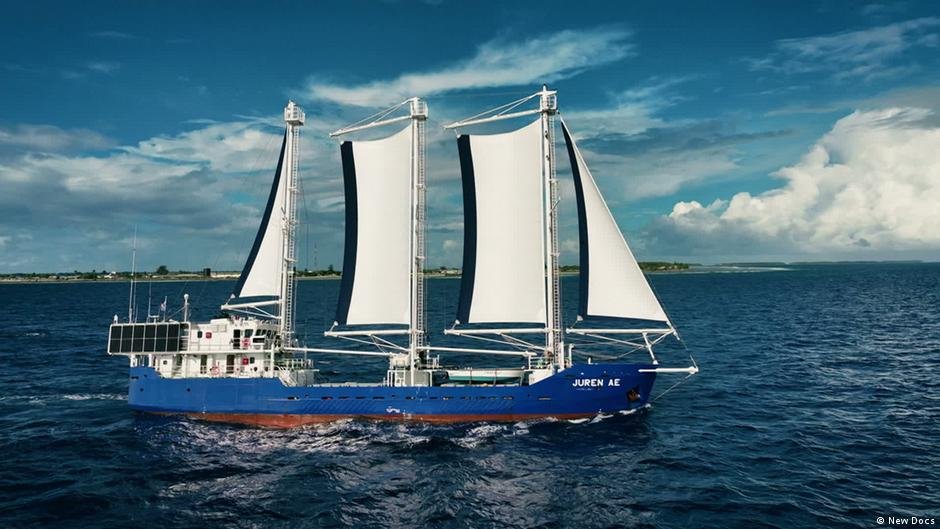
Also in France, the 81-meter “Anemos” — currently the world’s largest sail-powered cargo ship — set sail in 2024. The inter-island freighter “Juren AE,” which operates in the Marshall Islands, was developed by the University of Applied Sciences Emden/Leer. It too demonstrates the feasibility of emission-free shipping.
In technical terms, these ships are modeled after the high-tech racing yachts used by professional sailors such as Isabelle Joschke and Boris Herrmann. Carbon masts, optimized hulls and digital weather routing enable fast, safe and efficient voyages. These innovations are setting the standard — just like in the automotive industry, where motor racing technologies are incorporated into vehicles on the production line. Cargo sailboats are now demonstrating that if shipping is to become climate-neutral, wind power is crucial.
Broadcasting Hours:
DW English
SAT 31.10.2026 – 11:03 UTC
SAT 31.10.2026 – 22:03 UTC
SUN 01.11.2026 – 05:03 UTC
Lagos UTC +1 | Cape Town UTC +2 | Nairobi UTC +3
Delhi UTC +5,5 | Bangkok UTC +7 | Hong Kong UTC +8
London UTC +/-0 | Berlin UTC +1 | Moscow UTC +3
San Francisco UTC -7 | Edmonton UTC -6 | New York UTC -4
From November 01:
San Francisco UTC -8 | Edmonton UTC -7 | New York UTC -5