THE United States announced more than $USD44 million in new security programming for the Pacific at a police ministers’ conference in Los Angeles, including a maritime law enforcement centre in Palau, expanded patrol cooperation and new border-screening equipment for Tonga.
The funding targets what the US State Department described as a connected criminal network moving narcotics across the Pacific and laundering proceeds.
The announcement came at the inaugural US-Pacific Islands Conference of Police Ministers, held Oct. 21–22 and co-chaired by US Coast Guard Commandant Admiral Kevin Lunday and Palau Justice Minister Jennifer Olegeriil.
The conference followed the department’s Sept. 1 commitment at the Pacific Islands Forum in Palau to convene Pacific police ministers. Participants included officials from Pacific Island countries, Australia, New Zealand and France, as well as regional organisations and law enforcement representatives from other regions.
Across-Pacific trafficking picture
The department said precursor chemicals reach clandestine laboratories in Mexico, Colombia, Ecuador and Southeast Asia, with finished drugs then moved across the Pacific by couriers, international mail, private aircraft and semi-submersible vessels.
It said money laundering supports the trade and that, since 2024, narcotics trafficked through the Pacific by Western Hemisphere cartels have surpassed the flow from Asia.
“Each link in this chain depends on the others,” the statement said, arguing that enforcement must begin where drugs and precursor chemicals enter legitimate trade.
The package spans maritime surveillance, police investigations, port security and financial-crime enforcement.
The U.S. statement framed the effort as protecting Pacific partners and the American homeland, saying, “When the Pacific Islands are secure, the American homeland is safer.”
Palau to host regional maritime centre.
The United States is investing $7 million in a regional maritime law enforcement training and coordination centre in Palau, which will serve as headquarters for the Aumoana Regional Law Enforcement Initiative.
The centre is expected to train Pacific personnel in vessel boarding, evidence handling and maritime awareness, and host U.S. and regional liaison officers providing intelligence support.
A separate maritime-awareness package of nearly $5.5 million is intended to give regional partners a shared view of waters used by traffickers and illegal fishing fleets. I
t includes more than $1.4 million in surveillance tools for the Pacific Islands Forum Fisheries Agency and Fiji’s maritime services, a secure communications system for the Samoa-hosted Pacific Transnational Crime Coordination Centre, and a boat ramp in Fiji.
The State Department will equip four Papua New Guinea National Fisheries Authority patrol boats with electro-optical and infrared cameras, upgraded radar displays and real-time data transmission. The investments are intended to connect patrol boats, fisheries monitors and police intelligence centres.
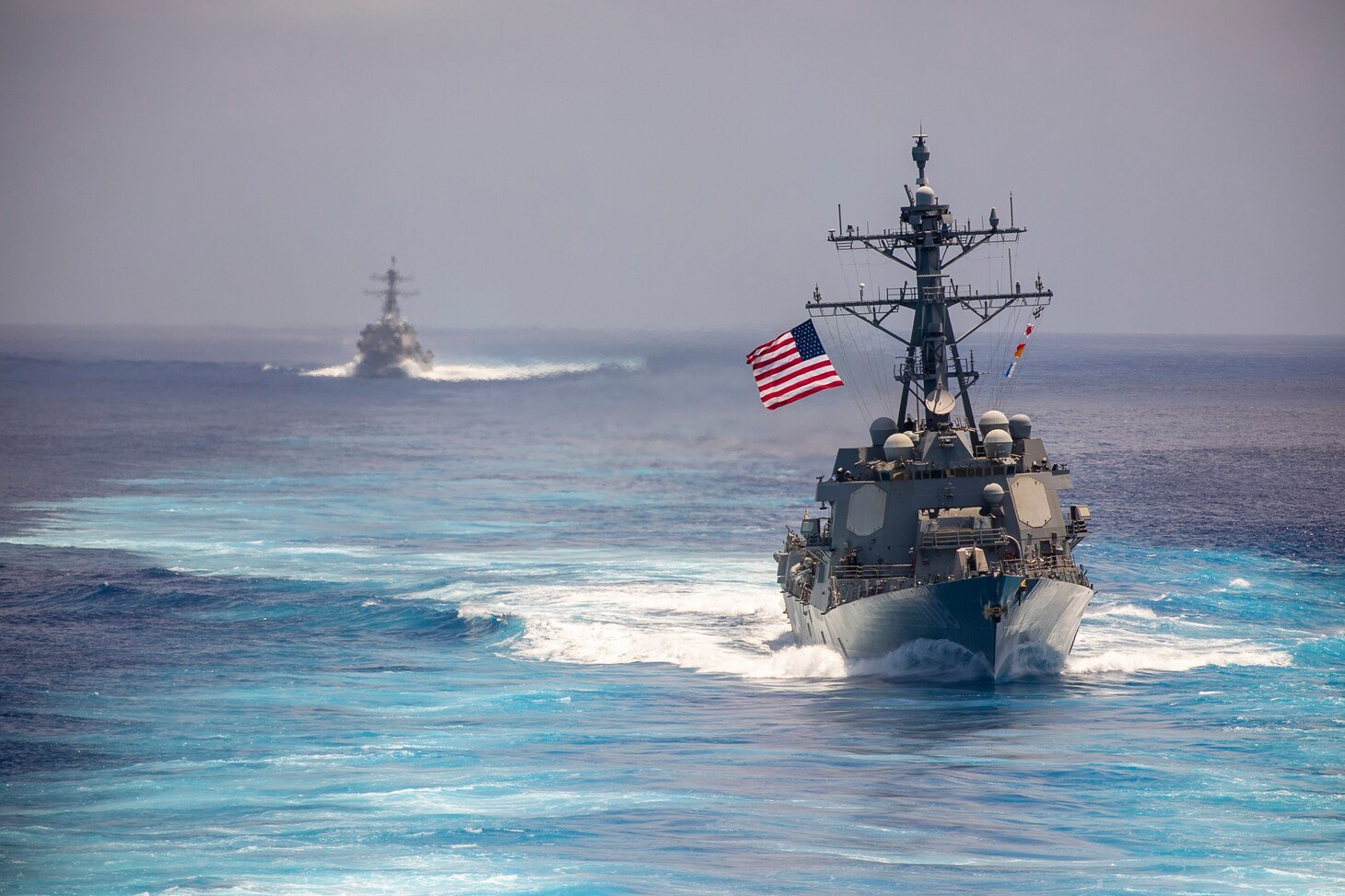
The US Coast Guard is providing $4.5 million through Project Kanaloa for training in small-boat operations, boarding, fisheries enforcement and maritime prosecutions, as well as equipment and embedded advisers. The Coast Guard also plans to expand bilateral Shiprider operations, under which Pacific officers aboard US cutters can enforce their own countries’ laws in their exclusive economic zones.
Tonga, Fiji and regional investigators
Tonga is to receive about $3.5 million to strengthen border detection. The department plans to install cargo-screening equipment at Queen Salote International Wharf in Nuku’alofa. At the same time, a U.S. task force will work with Tongan authorities to support an administrative facility for canine-detection kennels at Neiafu Police Station on Vava’u.
The United States is also providing $5 million through the FBI for Pacific police investigations into drug trafficking, bribery, money laundering and cybercrime. The program includes practical training, advice on active cases, liaison support and exchanges to the FBI National Academy.
More than $1.3 million will support investigator training in Fiji, Tonga, the Marshall Islands, the Federated States of Micronesia and Palau. In Palau, two US Customs and Border Protection officers are to join the Bureau of Customs and Border Protection for a 60-day pilot.
An additional $5 million is designated for financial intelligence and cybercrime units, including training in cryptocurrency tracing, beneficial-ownership investigations, and digital forensics.
Another $2.5 million through Homeland Security Investigations will support border and port security, case advice, screening upgrades and information-sharing exercises.
Training and regional commitments
The announcement also includes $5 million to strengthen Pacific police academies through curriculum development, instructor standards, recruitment and technical assistance.
A separate $450,000 programme will fund three years of training and mentorship in narcotics investigations, financial crimes, forensics and leadership.
The United States and Palau signed a law enforcement agreement at the conference that may also benefit the Marshall Islands and the Federated States of Micronesia.
Participants committed to strengthening maritime awareness, Shiprider cooperation and port and border security, while protecting supply chains and building capacity to investigate scam operations, cryptocurrency laundering and corruption.
The department said it would support Pacific partners in carrying the effort into 2027 and beyond.