Viviane Moraleswho left the position of Minister of Education for personal reasons, returns to the government of Abelardo De La Espriella. The president designated her as Peace Commissioner Advisordespite the fact that a change in this figure had been announced. In addition, she will assume, as manager, the direction of the Peace Agreement Implementation Unit, an entity that the head of state had also proposed eliminating, at a time when the Executive proposes reviewing the results of its implementation and dismantling what it calls the “false peace.”
The decision was made known through a brief statement in which the Government made clear the terms of its mandate: “dismantle the false peace.”
“This decision responds to the determination of the national government of examine the results of the so-called false peace, dismantle unnecessary bureaucratic structures and put an end to the use of peace discourse as an instrument of impunity and political privileges,” the statement said.
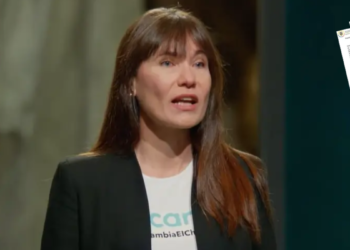
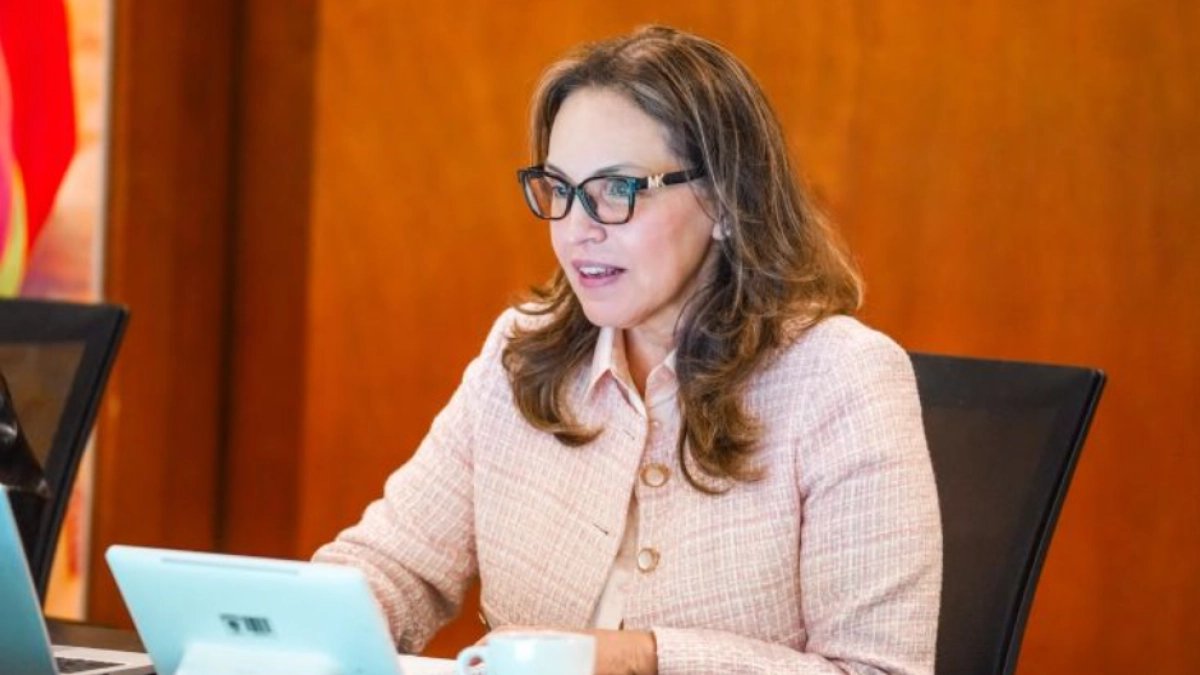
Viviane Morales resigned as minister on August 31. Photo:MinEducation.
According to this official statement, Morales will lead a exhaustive review of the implementation of the agreements, will evaluate compliance with commitments, verify the allocation of public resources and will identify the “institutional failures that have hindered justice, reparation to victims and the security of Colombians.”
This assignment, then, raises questions about the Havana agreements, since although the De La Espriella government ratified its commitment before the UN Security Council, it has also expressed a critical position regarding the results of its implementation. Added to this are the budgetary difficulties faced by entities such as the Agency for Reincorporation and Normalization (ARN), which could limit the development of their work.
“The recognition of the progress achieved and respect for International Law does not exempt us from the moral, constitutional and historical responsibility that the Colombian State has acquired with the Colombians to evaluate the results of the Peace Agreement, rigorously and objectively review its true scope and recognize, without excuses, the structural failures and challenges that still persist and that have prevented the achievement of a real and lasting peace,” said Foreign Minister Omar Bula on October 12.
Omar Bula met with the head of the UN verification mission. Photo:Chancellery
According to the statement announcing Morales’ return, she will promote the review of current policies, the “necessary reforms” and the dismantling of those structures that “have deviated from their institutional purposes.”
“False peace will not be a permanent state policy. True peace requires justice, institutional authority, compliance with the law, security and effective reparation for victims. The national government reaffirms its commitment to act with firmness and transparency so that peace translates into concrete results and real security for all Colombians,” concludes the presidential statement.
Divided opinions
Morales’ appointment has generated divided opinions among people close to the Havana agreements. “She is a good jurist and is fair-minded: I think it is a good appointment; she understands what to look for, within the new framework of the law of submission, a reasoned search for peace that complies with the constitutional mandate that “Peace is a duty and a right” and that the keys to peace cannot be thrown to the bottom of the sea,” said the former Minister of Agriculture and Finance, Juan Camilo Restrepo.
Instead, Guillermo Riveraformer ambassador and former Minister of the Interior, was not optimistic. “When she was a senator she was one of the opponents of the implementation of the peace agreement and has always expressed her disagreements with the different aspects related to said agreement, in such a way that having her in the position announced by the President holds a bleak future for the agreement,” he said.
Emilio Archilaformer presidential advisor for Stabilization and Consolidation, considered that maintaining the Peace Agreement Implementation Unit is good news for the country, as he questioned whether the possibility of eliminating both that body and the Peace Commission Council had been considered. However, he warned that the two functions should not be left in the hands of the same person, since, although there is no legal limitation, they have different natures and dynamics.
The magnitude of the pending tasks in the implementation of the agreement includes attention to more than 10 million victims, the reintegration of some 13,000 ex-combatants and their families, the voluntary substitution of crops for illicit use, Development Programs with a Territorial Approach (PDET) in 170 municipalities and the execution of 16 national sectoral plans.
“To throw that overboard for an ideological argument would be absolutely gigantic irresponsibility,” Archila said.
The announcements that De La Espriella had made as president-elect
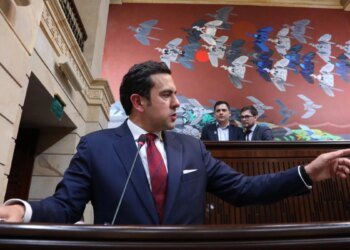
Abelardo De La Espriella led the first security council of Bolívar Photo:Presidency of the Republic
As president-elect, Abelardo De La Espriella had announced a reversal in the peace policy of the Colombian State that included a transformation of the focus of the High Council for Peace, to one focused on security.
Likewise, he announced that some ministries would disappear, among them, the Peace Agreement Implementation Unit, created by Gustavo Petro’s government after eliminating Iván Duque’s Stabilization Ministry. At that time De La Espriella proposed the transfer of his functions to what is today the High Council for Peace.
“The Commissioner for Peace is finished because there will be no more false peace processes in my government. And starting on August 7, the objective will be the security of the people and the total dismantling of the perverse system of impunity that reigns at this moment and that will end as soon as I take office,” was what the President said days before taking office.
In practical terms, the statement, dated October 22 but released a day later, makes it clear that, although the Commissioned Peace Council and the Peace Agreement Implementation Unit are maintained, the Government’s objective continues to be to thoroughly review compliance with the commitments.
Morales was the first minister to leave De La Espriella’s cabinetbut now he returns to the Government in a position closer to the head of State, from which he will have direct communication with the president.
JUAN PABLO PENAGOS RAMÍREZ
Political Writing