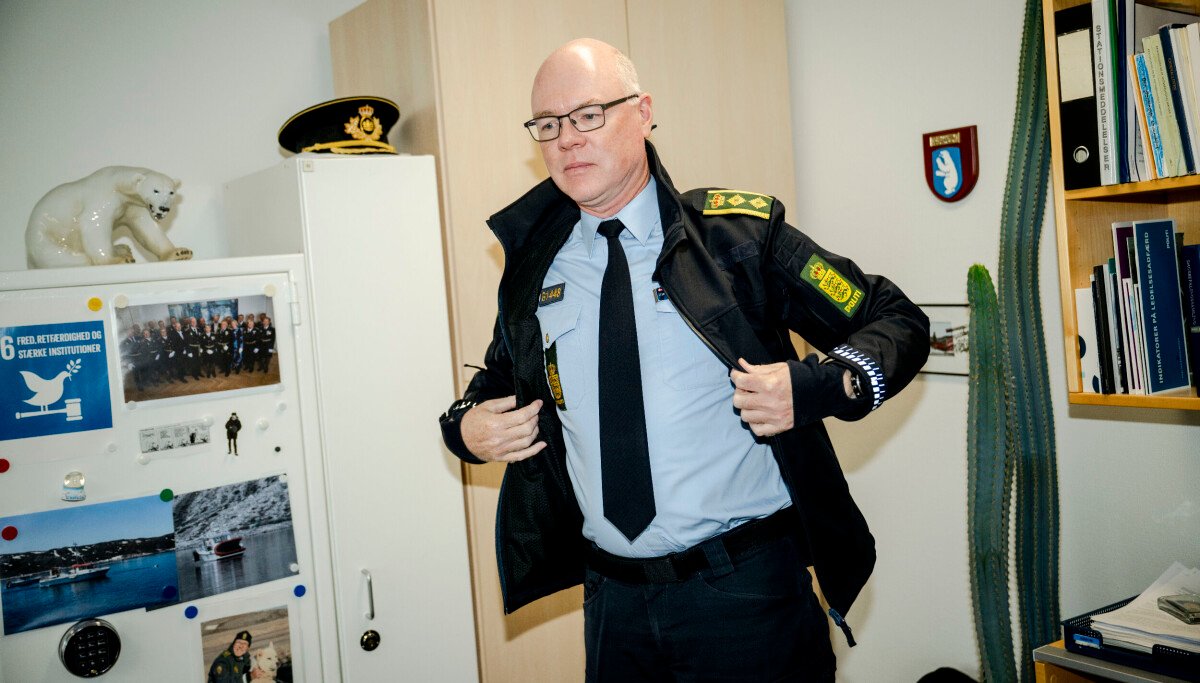
Bjørn Tegner Bay acknowledges that the municipal bailiffs lack training and closer contact with the police. He wants to strengthen daily contact, but the problem with courses and training will be a tougher nut to crack, says the police director.
Several municipal officials are missing, that the police leadership is more present, and police director Bjørn Tegner Bay takes that criticism on himself.
– It gives me a bit of a guilty conscience, he says.
The criticism stems from an investigation into the municipal bailiffs’ working conditions, which Ilisimatusarfik has carried out in agreement with the Greenland Police.
Municipal bailiffs are the local citizens who perform police duties as a side job in places without the daily presence of regular police.
The police director would like to respond to the criticism:
– I think it is a good report, which shows in a matter-of-fact way some of the things that municipal officials experience in their work. I have no doubt that the municipal bailiffs are right when they say they lack training, says Bjørn Tegner Bay.
It is part of the story that there are also positive things in the report. 24 of the 29 municipal officials who took part in the questionnaire thus experience support from the Greenland Police for their work.
But at the same time, 28 out of the 29 municipal officials believe that they lack courses or training.
The most important part
The researchers behind the study write that the current situation is to a certain extent characterized by “passive self-management”. They recommend that the Greenland Police strengthen the active management of the municipal bailiffs.
When the municipal bailiffs are part of the police, according to the researchers, not only is there a management right, but “to a great extent also a management duty and a working environment responsibility”.
The researcher behind the study, Najaaraq Demant-Poort, pointed out to Sermitsiaq in September how some of the municipal officials felt overlooked:
– From the management’s point of view, it can be thought of as a compliment when they do not interfere with the work. But it is not always that the municipal officials experience it as recognition when they do not hear anything from their management, said Najaaraq Demant-Poort.
The report singles out two of the six police districts for close cooperation and good relations. Elsewhere, the researchers point to a need to strengthen cooperation between the municipal officials and their colleagues.
The director of police will admit that there is merit in that criticism.
– I think that is absolutely correct. I myself see it as the most important part of the report. It also fits with what I myself experience when I have spoken to municipal officials – that they miss us being more present, says Bjørn Tegner Bay.
Permanent employees and regular contact
The director of police will therefore ensure that the municipal officers have more regular contact with the police-trained colleagues. This must be done, among other things, through fixed contact persons.
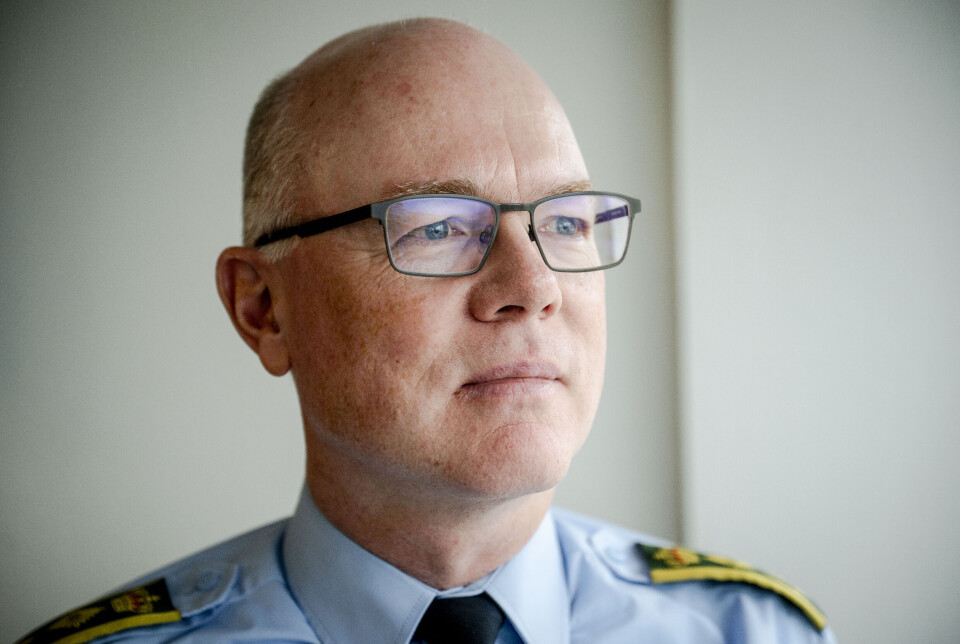
He also points to the importance of language for collaboration.
– We can see that many of the places where it works well are the places where the municipal bailiff speaks Danish, or where there are a number of Greenlandic-speaking staff inside the local police station. But language should not be the municipal clerk’s problem – it is our problem, emphasizes Bjørn Tegner Bay.
So what do you do?
– Firstly, we create a solution with fixed communication channels. Permanent employees, who speak both languages and have the necessary professional insight, must handle the daily contact with the municipal clerk. And then we do what we can to better equip summoned personnel for cooperation with the municipal bailiffs, continues the police director.
– When we have better contact in everyday life, I believe we will go a long way.
Not much other result today
However, the police director does not dare to say that the picture is very different now than when the municipal officers responded to the investigation.
– I won’t promise you that if we see it in general terms. Something has happened in some places. We have created a local initiative in Tasiilaq, and we have a working group working on the broad perspective. But I dare not say that the investigation would show a very different result today, says Bjørn Tegner Bay.
The problem with education is difficult to solve, acknowledges Bjørn Tegner Bay. According to the police director, it will be extra challenging to organize because the municipal officers typically do something else on a daily basis.
– It is difficult to find a way to create training that covers all the subjects and at the same time takes into account that the municipal officials have a civil job, which they have to prioritize. We haven’t cracked that nut yet.
Conversations pay the price
The study also points to more tangible problems to solve. The municipal bailiffs must be equipped with batons and pepper spray and more, but not everyone gets their remedies in time.
Here, the police director acknowledges that something has gone wrong regarding the equipment.
– We are already looking at what has gone wrong there. There is a completely fixed procedure for what kind of equipment the municipal clerk must have – and of course it must be in order. There, it has occasionally gone wrong in the cooperation from us to the municipal clerk. Now we will arrange the organization so that no one waits unnecessarily for equipment, says Bjørn Tegner Bay.
But Bjørn Tegner Bay will not promise equally rapid progress on all points. And it is also a matter of resources, says the police director.
– I would really like to have more time so that we can sit down together with a municipal bailiff and just have that cup of coffee after something violent has happened in the village. But in a time of major incidents that take our resources, it is often something like this that pays the price, unfortunately, says Bjørn Tegner Bay.