Text and image Euritha Tjan A Way
PARAMARIBO — “Did you ever think this would be possible? Ten years ago, could you have imagined that Guyana and Suriname would go through this development? At least I didn’t,” said Virjanand Depoo, Ambassador of Guyana to Suriname, enthusiastically. He showed his optimism with facial expressions and pantomimes. “There are many possibilities. We have to go from potential to realization. That is the challenge.”
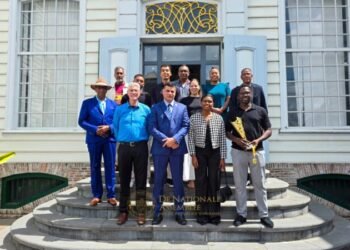
Depoo was part of the so-called ‘ambassador panel’ ‘Building a Regional Platform: Cooperation as the Foundation for Industrial Growth’. That panel was held with two others on the first day of the International Business Conference in Assuria High-Rise. Depoo hinted that political differences between Suriname and Guyana will certainly be resolved.
“In Suriname we talk a lot, but we do little. That really needs to change now”
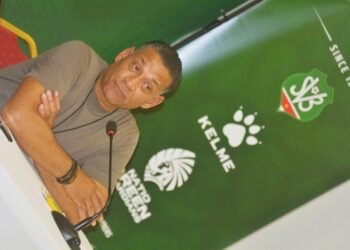
Fernandes Group CEO Bryan Renten
Lessons learned
Surinamese Ambassador to Guyana, Ivan Fernald, was also on the panel. He says Suriname can look to Guyana to know what the lessons learned are. “We don’t have to make those mistakes anymore. That is a luxury position.”
Fernald, who presented his credentials to the Guyanese president on September 16, suggests that the private sector will also have more influence on the developments that Suriname and Guyana want. “Because although I see opportunities for partnerships, there are also enormous challenges. Surinamese entrepreneurs must be able to meet very high international standards. Can we do that or do we have to work with Guyana, so that we can become a force to recon with.” According to him, the organizing Suriname-Guyana Chamber of Commerce has shown that it can fulfill the role of matchmaker.
Challenges
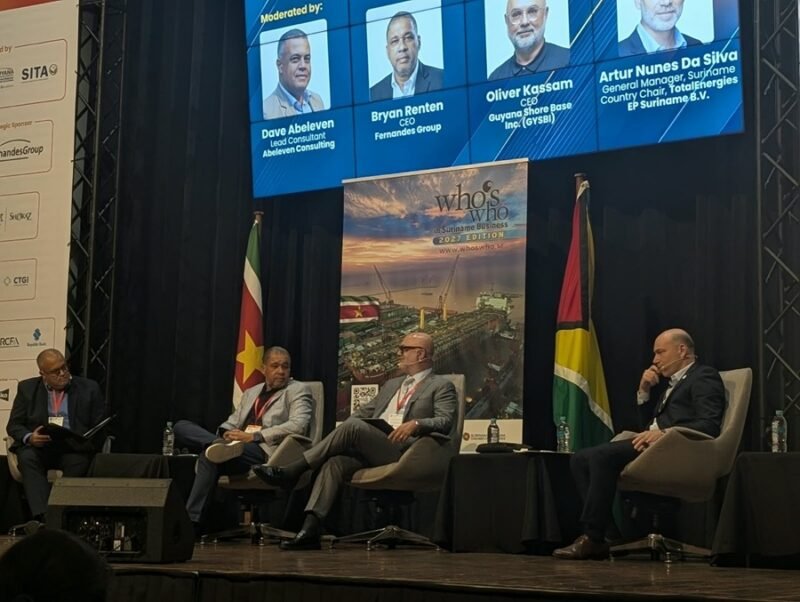
Although there are opportunities, there are also enormous challenges in working together. This was stated by Bryan Renten, CEO of the Fernandes Group, during the CEO panel discussion ‘From Energy to Industry’. Looking at the Minister of Transport, Communications and Tourism, he said: “I’m going to say it like it is: ‘how difficult can it be to ferryto manage a boat at the border between Guyana and Suriname?’ We can’t even do that!”
Fernandes, who expanded his operation to Guyana even before the oil and gas developments, is affected by this. “We were looking for an opportunity to expand our market, because we are the market leader in Suriname with our drinks and our bread. For us, Guyana and to a lesser extent Barbados seemed like options in the region,” said Renten. But after years, the basic infrastructure and connection still appear to be a problem.
He called cooperation between Guyana and Suriname something that is necessary. “It would be crazy for Guyana to have one gas to shore base has and that Suriname should also have one. That’s crazy work. We are countries with both small populations,” Renten said.
Artur Nunes Da Silva, General Manager of TotalEnergies EP Suriname, spoke about another hot topic: obtaining permits to operate. “For the number of people we need, we need ‘thousands’ of work permits and I know there is a gap between what the government could do before and what it has to do now, but we really need a better procedure.”
Local Content
Local content remains a topic of discussion when it comes to offshore investments. Renten explained that he cannot understand why people are still talking about it local contentwithout anything happening. “I recommend that the government looks into local content as a process. In two years we won’t have our maximization local contentbut let’s start with a vision. What do we want now, where does Suriname want to be in two years and four years? But let’s do something. In Suriname we talk a lot, but do little. That really needs to change now,” Renten said.
It is also important for companies that are already investing that the government makes decisions for the development of local content. “Fernandes, for example, is already investing, but does not receive any tax incentives from the government. We have to bring people from abroad because we do not have the knowledge for certain things. Then we have to get work permits. And that is a real problem.”
Parties everywhere see opportunities for Suriname and Guyana to work together. And not just in the field of oil and gas. “We must look beyond oil and gas and encourage sustainable initiatives,” Renten said. Thursday was the last day of the International Business Conference 2026.