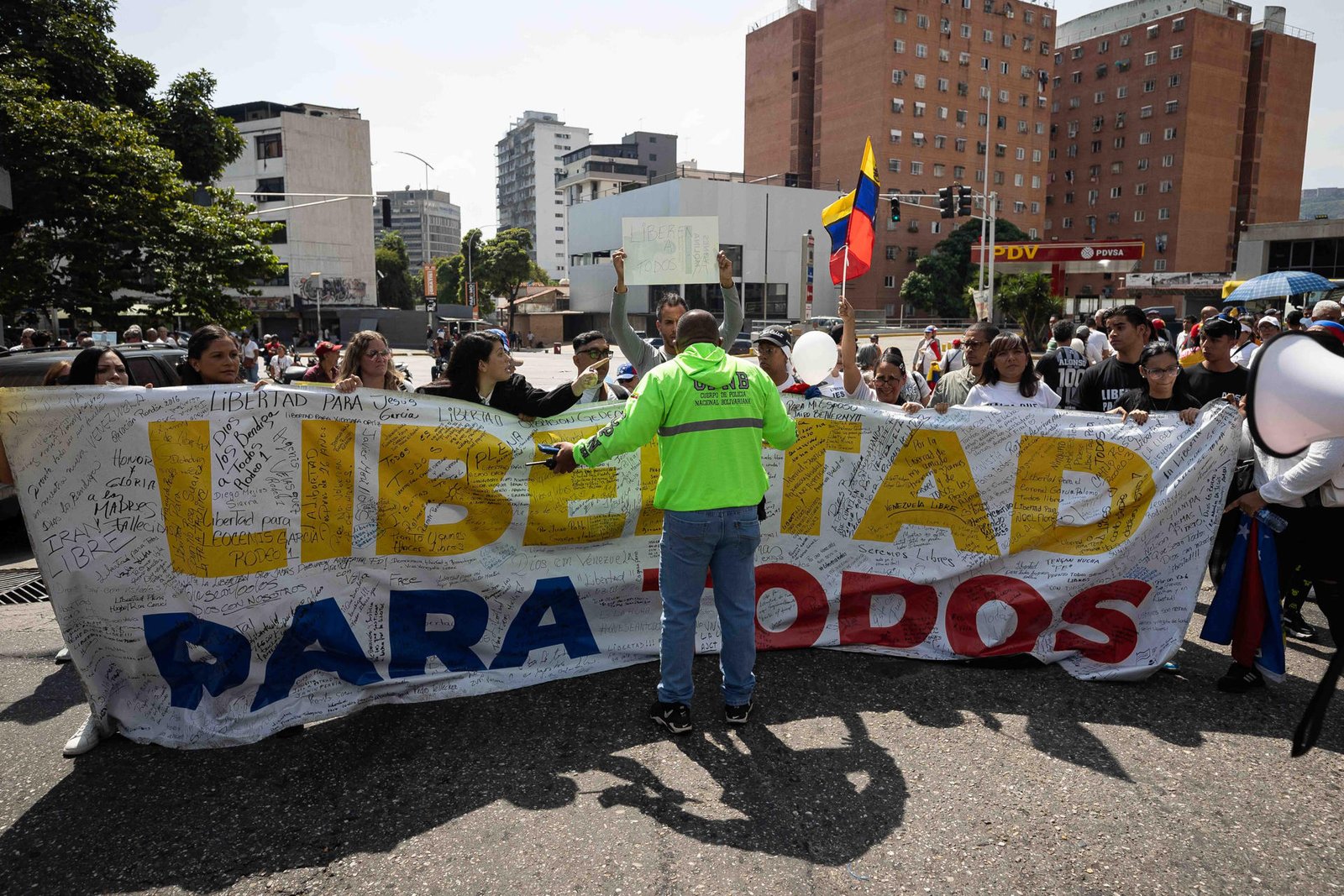
Cecodap denounced that a court with jurisdiction in terrorism denied amnesty to a 16-year-old teenager, for which it asked the authorities to review this case considering that the life, dignity and development of a young woman is at stake “in the face of the punitive power of the State.”
«The Amnesty Law is not an option that the judge can freely accept or reject. It is mandatory. If its conditions are met, it should be applied,” indicated the general coordinator of the NGO, Carlos Trapani, in a publication in X.
The lawyer maintained that the court suggests that because it is terrorism, the amnesty cannot be applied, but he said that the law does not work that way, because “it does not exclude crimes by their name but by their nature.”
To affirm that an exclusion applies, he continued, the judge had to explain clearly, demonstrating why the facts fit those supposed legal standards but, he added, that the exclusion “is taken for granted, without explanation.”
«The decision treats the amnesty as if it were an option of the judge, but it is not. The law establishes that, when its conditions are met, the criminal action is extinguished due to the effect of the amnesty and the court must declare the dismissal,” he added.
Trapani said that the most delicate element in this case is that it is a teenager, which changes the legal standard, since in criminal justice for minors, the system is not designed to punish but to protect, educate and promote reintegration and each decision must evaluate how it impacts their development, their mental health, their family environment and life project.
Furthermore, he said that when a teenager is accused of highly complex crimes such as terrorism, it is essential to ask whether he or she has been “influenced, instrumentalized or used by adults.”
«The sentence does not carry out this analysis. It does not examine the context, it does not identify possible power relations, nor does it assess whether the teenager could have been used,” said the activist.
The lawyer indicated that in this case, imputing crimes such as terrorism without a rigorous individualized analysis and without considering these dynamics not only raises questions of legality but can “constitute a form of institutional victimization.”
The Amnesty Law contemplates a period of 27 years, since 1999 – when Chavismo came to power -, but establishes that it will be granted to people linked to 13 “events” that occurred in 13 different years, which excludes the rest of the established period, as well as cases related to military operations and other crimes, such as corruption, homicide and human rights violations.
EFE