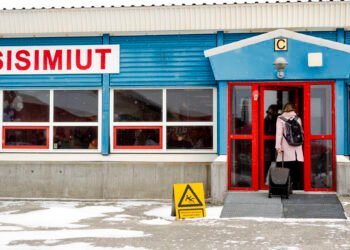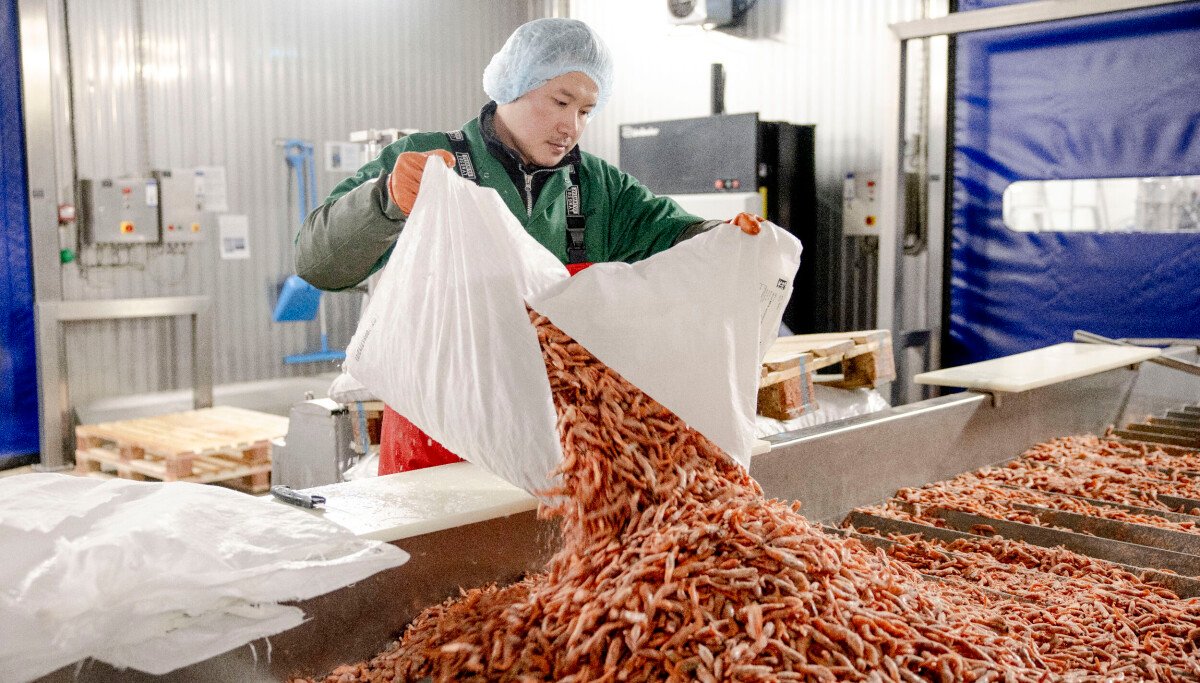
Polar Seafood is among Greenland’s largest producers of cold-water prawns from the North Atlantic. Most of the catches are produced on board factory trawlers, but the rest is processed ashore.
Falling Greenlandic shrimp quotas, especially for West Greenland, have for a long time made it increasingly difficult for the group to secure sufficient raw materials for the company’s factory in Nuuk.
This means, among other things, that fewer employees will be employed than previously at the factory.
In order to avoid the lack of raw materials from Greenlandic waters leading to a further decline in production, the company has therefore had to find alternative solutions and buy raw materials in the USA.
The lack of Greenlandic raw materials forces the company from American companies to import shrimp that have been fished in the Pacific Ocean, writes Polar Seafood in a press release.
During October, the first containers of shrimp from Seattle on the US west coast are expected to arrive in Nuuk, where they will be processed at Polar Seafood’s factory.
The American prawns are cold water prawns of the species Pandalus Jordani, fished in the Pacific Ocean. The imported shrimp must help ensure continued production and employment at the factory.
Director: – We don’t do it for fun
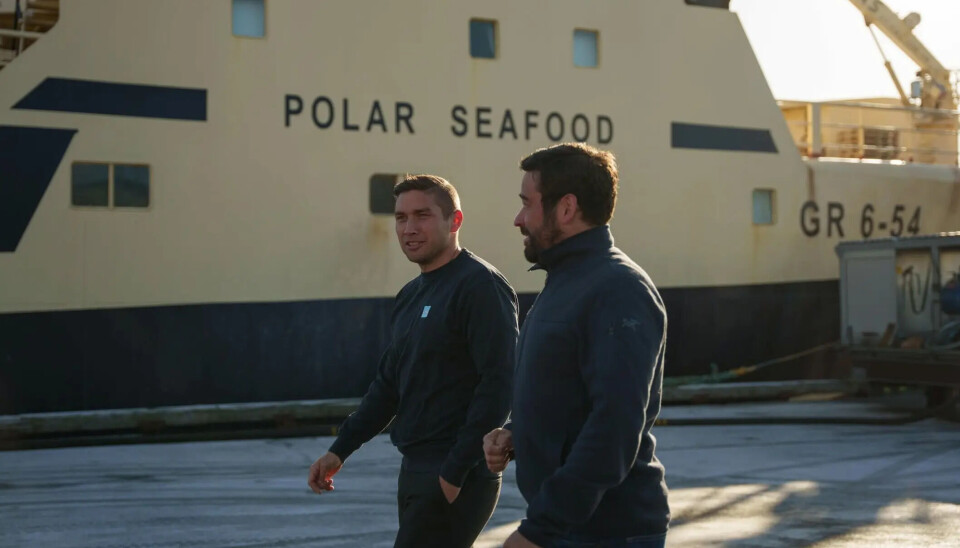
For director Bent Salling of Polar Seafood Greenland, the situation is a clear picture of the challenges facing the Greenlandic shrimp industry.
– It almost goes without saying how serious the situation is when we in Greenland have to bring shrimp all the way from the Pacific Ocean to keep our own production going. This is not something we do for fun. But we have a factory and employees that we want to keep busy, and so we have to find solutions, says Bent Salling, director of Polar Seafood Greenland.
He emphasizes that it is not about replacing Greenlandic cold water shrimp, which are of the species Pandalus Borealis, with foreign shrimp, but about ensuring that there is continued activity at the factory in Nuuk.
– Of course, we would prefer to produce goods using Greenlandic shrimp. This is what our company is built on. But when the quotas don’t give us enough raw materials to keep production going, we can’t just sit with our hands in our laps and wait. Then we have to look at what other options we have, he says.
How much of the factory’s capacity is currently being utilized?
– It is difficult to put a precise percentage on capacity utilization, but the development in the supply of raw materials gives a clear picture of the situation, he says.
In 2023, the factory in Nuuk received 12,800 tons of shrimp, while in 2024 the amount was 10,250 tons and in 2025 10,470 tons. These are frozen raw materials that are produced for cooked and peeled shrimp.
– In 2026, we expect to reach around 7,000 tonnes, a significant part of which comes from external suppliers. This corresponds to approximately 55 percent of the amount we received in 2023.
– This clearly illustrates the challenges we face in securing sufficient raw materials to maintain production, he says.
He points out that a significant challenge is the reduced flexibility in the Fisheries Act.
– Previously, there was no limit on how large a part of the annual quota could be sold on. Today, the limit is 10 percent. This means that some actors are running out of quotas, while others are far from having fished out their quota. We therefore do not expect the total quota to be fully utilized this year either, adds Bent Salling.
For many years, Polar Seafood has invested in production and jobs in Greenland. However, the current raw material situation makes it increasingly challenging to utilize the capacity at the factories.
No tenable situation
The import of prawns that have been fished in the Pacific Ocean is therefore a concrete attempt to maintain activity and employment in Nuuk despite the lack of Greenlandic raw materials.
– We have the people, we have the factory, and we want to produce. The only thing we lack is enough raw materials. That’s why we do what we can to keep the wheels turning. But it is clear that it is not a sustainable situation in the long term if we have to get shrimp from the other side of the world in order to produce in Greenland, says Bent Salling.
He does not want to disclose the expected imported purchase volumes for 2027 at this time.
– However, we expect continued challenges with the supply of raw materials. Our preliminary assessment is that the total Greenland raw material quantity in 2027 may come closer to 5,000 tonnes.
– That is why we continue to work on securing alternative raw material deliveries so that we can maintain as much activity as possible at the factory, says Bent Salling.
Buying shrimp from the Barents Sea for a factory in Iceland
Why does Polar Seafood not source shrimp from the Barents Sea from shipping companies in Norway and the EU, among others, that fish there?
– We already buy shrimp from the Barents Sea for our factory in Iceland. But the shrimp fishery in the Barents Sea has been particularly challenging in 2026, and there is currently a major shortage of raw materials at factories in both Norway and Iceland.
– That is why we have chosen to look to other markets and buy shrimp from the USA. It is a different species of shrimp that we have chosen to import to our factories in both Greenland and Iceland, says the director.
– Polar Seafood has landed significantly larger quantities in Greenland than the 25 percent that we are committed to. The challenge is therefore not a lack of will to secure Greenlandic raw materials, but that there are simply not sufficient quantities available to maintain production, says Bent Salling.
When the factory in Nuuk runs at full capacity, it has around 70 so-called standard positions.
– We currently have around 50 standard positions at the factory. This underlines how important the supply of raw materials is for employment. Our clear goal is to ensure as much activity as possible and preserve as many jobs as possible, he says.
Polar Seafood’s chief executive emphasizes that the imported shrimp are a supplement to the Greenlandic raw materials. The company’s clear ambition continues to be to create the most possible production, employment and value creation in Greenland based on the Greenlandic fishing resources, he says.
Every year, NAFO, the Northwest Atlantic Fisheries Organization and Greenland’s Nature Institute publish a report with recommendations for future quotas to ensure sustainable stocks.
The recommended catch of shrimp at West Greenland from the biologists in NAFO’s scientific council in 2026 is 75,000 tonnes, which is a decrease of 5,000 ten compared to 2025. For 2027, a quota of 80,000 tonnes is recommended. In addition, NAFO recommends for next year that 1,800 tonnes can be fished off East Greenland.