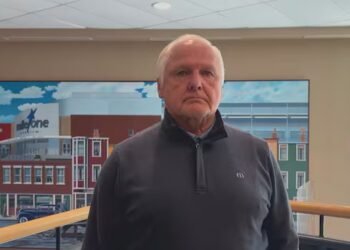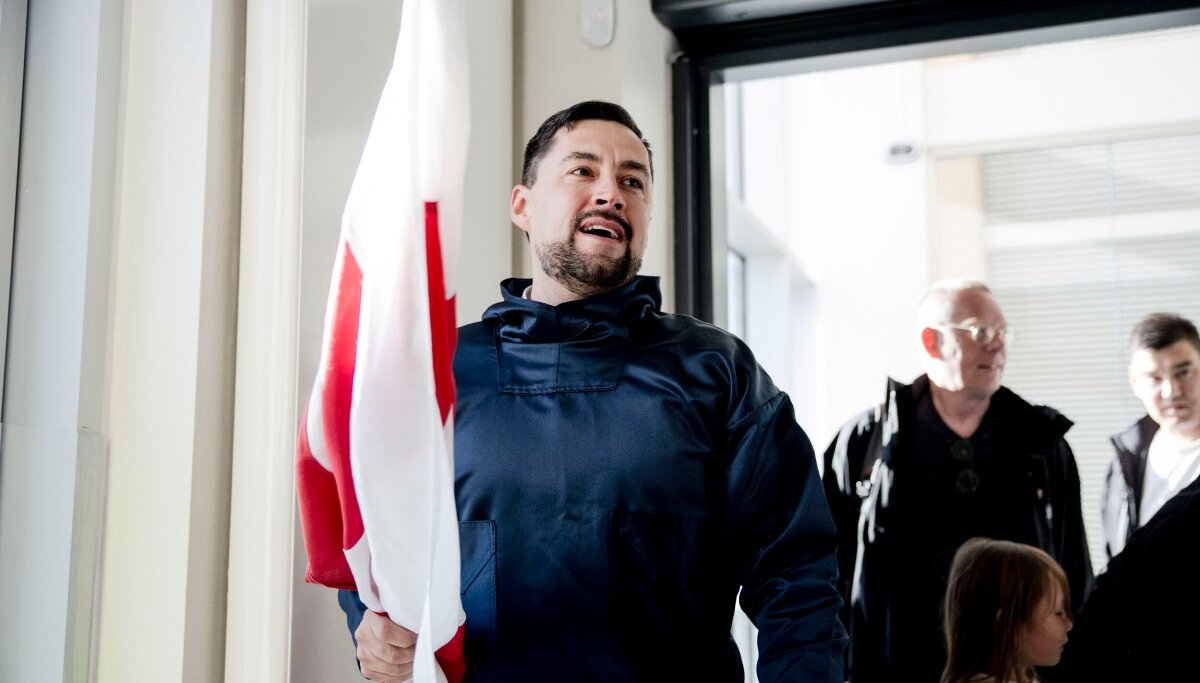
While Pele Broberg (N) believes, that Greenland should have negotiated concrete economic benefits, Naalakkersuisoq for Foreign Affairs, Business and Raw Materials Múte B. Egede (IA) emphasizes that the agreement strengthens Greenland’s rights and protection.
The new defense agreement is to be discussed in Inatsisartut on Monday 12 October, where the importance of the agreement for Greenland will be a central topic.
Pele Broberg: Greenland will not get anything out of the agreement
Pele Broberg has criticized Naalakkersuisut for not having ensured Greenland concrete gains through the negotiations. According to him, Greenland should have investigated what the country could get in return for the increased US military presence.
– It must be seen that the agreement has not achieved anything that will benefit our country. When other countries enter into such agreements, they try to find out what the country gets out of it, says Pele Broberg.
At the same time, he refers to the USA’s previous announcements about investing significant sums to keep China away from Greenland.
– Before the election, the USA promised to spend a few billion dollars to keep China away from Greenland. Now they have obtained it absolutely free. There is no money in the agreement, he says.
Pele Broberg also believes that the agreement gives the USA far-reaching access to establish military bases in Greenland, and that the consequences extend beyond Greenland’s current status.
– The US now has a permanent option to establish military bases in Greenland through the agreement, and it must apply when Greenland becomes independent, says Pele Broberg.
His criticism is thus both about the lack of direct economic benefits and about the long-term consequences for Greenland’s discretion and future self-determination.
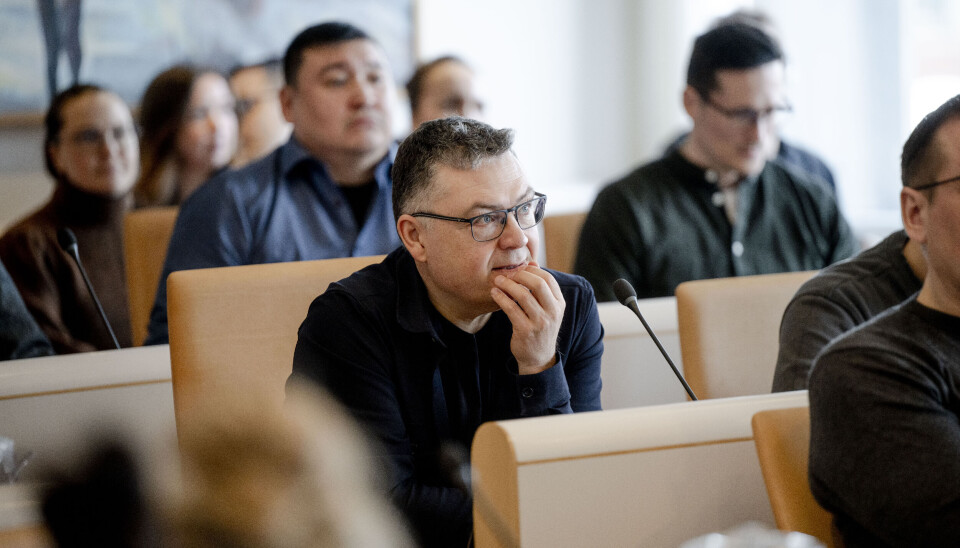
Múte B. Egede: The agreement has led to concrete results
Múte B. Egede rejects that the defense agreement must be assessed solely on the basis of whether Greenland receives direct financial payment.
– It is not true to believe that the new defense agreement, which has just been signed in New York, has not led to results, says Múte B. Egede.
According to naalakkersuisoq, one of the most significant differences between the new agreement and the existing defense agreement from 1951 is that Greenland’s rights and interests are now more clearly protected.
He emphasizes, among other things, that the agreement recognizes Greenland as a people with the right to self-determination and takes into account the possibility that Greenland may become an independent state in the future.
The agreement also contains provisions on respect for Greenlandic culture and way of life as well as environmental legislation.
Local companies must also be prioritized in connection with the awarding of contracts.
– All this was not part of the old agreement from 1951. This means that the protection, respect and recognition that we lacked in the old agreement from 1951, which still applies today, has now been incorporated and firmly established in the new agreement, he says.
Stronger legal protection at new military bases
Múte B. Egede points out that the agreement could have significance if, for example, military bases are established in Mestersvig or Narsarsuaq.
According to him, Greenland will have better opportunities to protect its interests if the new agreement is adopted by Inatsisartut.
– If, for example, a military base were to be opened in Mestersvig or Narsarsuaq under the old agreement, we would only have limited opportunities to make demands. If the new agreement is adopted by Inatsisartut, our legal tools and protection will be much stronger, he says.
It is precisely the assessment of what Greenland will concretely get out of the agreement that separates the views of the two politicians. Where Pele Broberg calls for economic compensation and questions the future military rights of the United States, Múte B. Egede highlights the legal and security policy gains.
Rejects that defense cooperation must be about payment
Pele Broberg’s criticism is aimed, among other things, at the fact that, according to him, Greenland could have negotiated economic gains in connection with the increased US military presence.
However, Múte B. Egede rejects that a financial requirement should be the starting point for defense cooperation. He refers to Greenland’s membership of NATO through the Commonwealth of Nations and the alliance’s principle of common defence.
It is not normal for the countries within the alliance to pay each other for this type of defense cooperation.
– It is not normal for the countries within the alliance to pay each other for this form of defense cooperation. If, for example, a militarily strong NATO country sets up a military base in another country which is also a member of NATO, the starting point is that no payment has to be made for it. The countries help each other because it strengthens their joint defense capacity, he says.
According to Múte B. Egede, it is also the basis for the joint defense agreement between the USA, the Kingdom of Denmark and Greenland.
– We have a shared responsibility for the defense of our citizens. As I said, it should not be about profit hunting within NATO, but about mutual defence, he says.
Naalakkersuisoq: Times have changed
Múte B. Egede also highlights the changed global security situation and the Arctic’s growing strategic importance.
– This in itself is a valuable result when you think about the global security situation, which has gone from bad to worse – also in the Arctic. We are helping to ensure that our country becomes safer, he says.
He emphasizes that Greenland does not itself have to pay for the increased military presence.
– We also do not use financial means to increase security in Greenland. Others pay to protect themselves and us and to strengthen our military capacity – and this is necessary, he says.
According to naalakkersuisoq, the development is a consequence of the changed security policy conditions.
– Times and circumstances have changed, and governments cannot question that, he says.
Local businesses can get financial benefits
Although Múte B. Egede denies that the defense agreement must first and foremost generate direct financial income for Greenland, he highlights an element that can have economic significance for Greenlandic companies.
If military bases are established in Greenland, according to the agreement, local companies must be prioritized in connection with tasks and contracts.
– Having said that, I would like to remind you that if military bases are established in Greenland, local companies must be prioritized for the tasks. It is an important new development, he says.
However, it is not clear from the information presented how large the financial gains this prioritization can concretely bring for Greenlandic companies.
Inatsisartut will discuss the agreement on Monday
The defense agreement is to be discussed in Inatsisartut on Monday 12 October. The treatment will be an important opportunity to discuss both the security policy significance of the agreement, Greenland’s legal protection and the question of possible financial gains.
On the one hand, Múte B. Egede believes that the agreement gives Greenland stronger rights and greater protection at a time of increased international tension. On the other hand, Pele Broberg calls for concrete results that can benefit Greenland financially, and raises questions about the future access of the United States to establish military bases.
It therefore becomes central in the political debate whether the rights and protection mechanisms that Naalakkersuisut highlights are sufficient, and how Greenland secures its interests in both the short and long term.