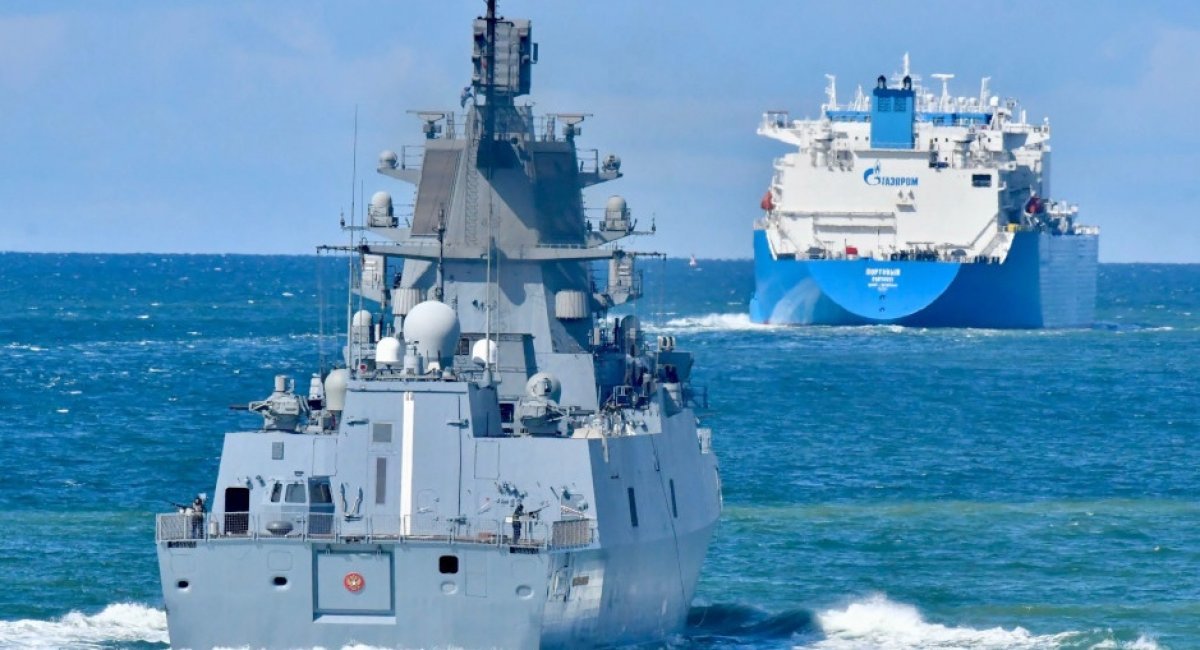
Ukraine’s Defense Intelligence has published information on 20 maritime vessels involved in exporting russian oil and liquefied natural gas (LNG), as well as bunkering ships belonging to russia’s sanctioned fleet. All 20 vessels are subject to sanctions imposed by the United Kingdom or Ukraine, while one is also under U.S. restrictions.
The vessels form part of a logistics network that russia uses to generate revenue from energy exports and finance its war against Ukraine. Moscow is expanding this network through opaque ownership structures and offshore companies to maintain energy shipments despite international sanctions.
Read more: Ukraine’s 92nd Brigade Shoots Down Jet-Powered Shahed Drone with Stinger MANPADS (Video)
One of the vessels identified is Portovyy (IMO 9246621), an LNG carrier used as a floating storage facility at the Portovaya LNG complex in Leningrad region. Since 2021, the vessel has been owned by the sanctioned russian company Gazprom.
On August 15, 2026, the Portovyy vessel left the Gulf of Finland for the first time since November 2021, carrying a cargo of russian LNG to China. The vessel traveled along the Northern Sea Route to the port of Beihai to unload its cargo. It is currently at the Zhoushan Huafeng Shipyard on Zhoushan Island, China, where it is scheduled for technical maintenance.
The Defense Intelligence also identified two LNG carriers, Avacha (IMO 9319404) and Chaivo, which russia acquired in spring 2026 through the little-known company Tudor Maritime Ltd, registered in the Marshall Islands. Both vessels were subsequently transferred under the russian flag and placed under the management of the newly established russian company Cryoline Management LLC.
Since August 2026, the Avacha ship has transported LNG from the Utrenny terminal, which serves the sanctioned Arctic LNG 2 project, to the Chinese hub of Beihai. The vessel previously belonged to China’s Jovo Energy before its acquisition by Tudor Maritime.
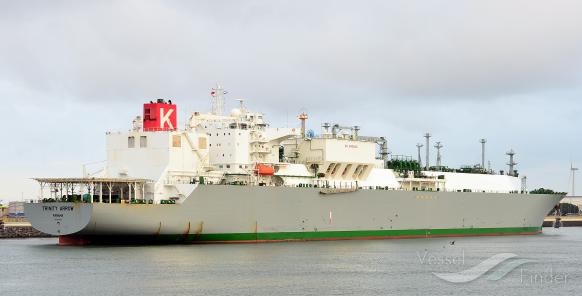
The Chaivo carrier, formerly owned by Greece’s Maran Gas Maritime, has also been involved in russian LNG shipments to China. Since August, it has transported cargoes from the sanctioned Koryak floating storage unit, located in the waters of the Petropavlovsk-Kamchatsky port, to Beihai.
According to the Defense Intelligence, russia is pursuing a two-pronged strategy to preserve these revenues: developing ice-class vessels at domestic shipyards while systematically expanding its shadow fleet through offshore networks.
Read more: UK Defence Intelligence: russia Plans to Spend 35% of Its 2027 Federal Budget on Defense