Mexico City/The phrase appeared at the beginning of October on a fence in Las Palapas Park, in Cancún, Quintana Roo, one of the most popular places for migrants on the Island and where families, musicians and restaurants converge: “Cubans who do not respect Mexico get out.” With just six words, the climate of tension caused by migration from the Island in this area of the country, which is also the most touristy, was made clear.
For municipal police officer Enrique García, however, the message “is an affront.” The agent recognizes 14ymedio that there are cases of extortion, drug sales, prostitution and some attempts to loot homes, but that these “are from a small group focused on the area of Little Havana.”
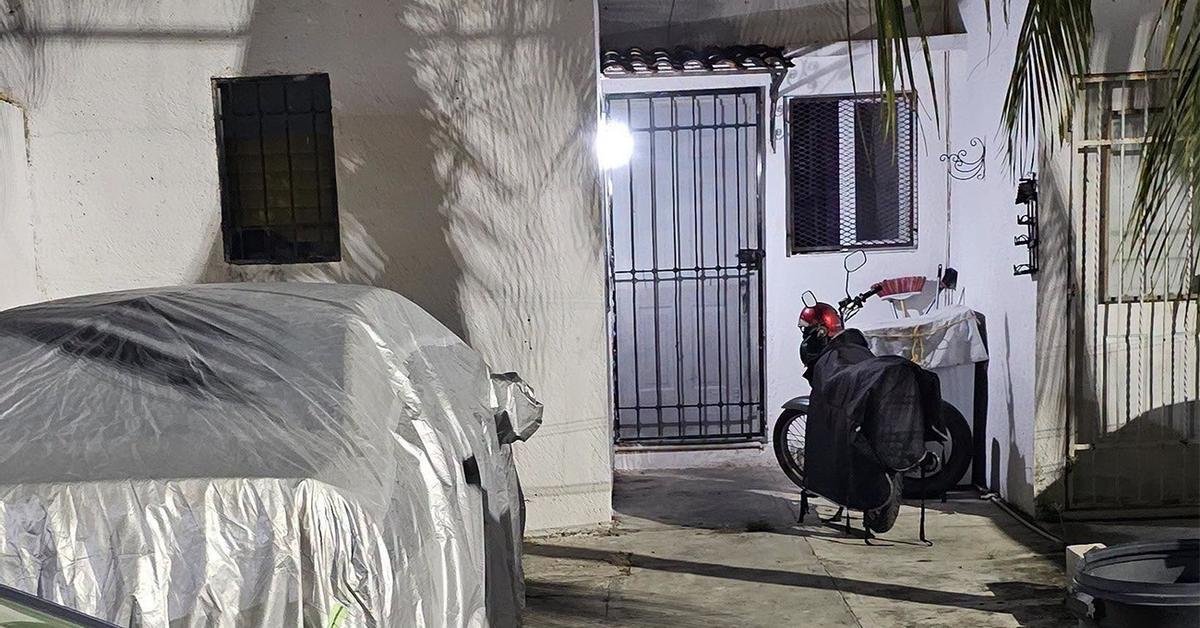
Zuelhen is one of the Mexicans who are suffering from the situation. Owner of a property in Supermanzana 504, the woman denounces the “death threats” from Claudia Lázara Sicilia Suárez and her partner, both Cubans. They owe him, he says, “two months of rent and they have also not paid four water and electricity bills for the home.”
When Zuelhen showed up at the house to try to talk to them, he says, his tenant refused to open the door and from the window told him that he would not leave because it is his house. “Don’t you know what we do?” he shouted.
Zuelhen is the owner of a property in Supermanzana 504, the woman denounces the “death threats” of Claudia Lázara Sicilia Suárez and her partner
The owner of the property demanded the pending payments “as stipulated in the contract” of one year that she has with the Cubans. However, the couple from Sicily arrived on a motorcycle and confronted her. He assured him that no one moves them because they belong to a cartel. Thus, he warned him: “Get out or I’ll take you out.”
It is because of these threats that the woman filed a complaint with the authorities, because simply not paying the rent for a home in Cancun is not a crime that warrants jail time. What follows is a complaint for termination of contract. “I want them out, they are conflictive people,” he emphasizes.
Still, he is afraid. Last September, Cuban Julian Andrean was arrested for the crime of homicide. According to the investigation folder, the 38-year-old man summoned the owner of the home he rented in Region 246, Supermanzana 246 to give him the keys.
The owner came accompanied by two other people, but before knocking on the door of the house they were attacked by gunfire. One person died at the scene and the other two were injured.
Ernesto is another of those affected by the occupation of homes. According to what he tells 14ymedio, when the owner of the cuartería (neighborhood) where he lives died, one of the tenants, a Cuban whom he knows as Yaniel, called other compatriots and now they assume themselves as the new owners.
“He intercepted me in the yard to inform me that I now have to pay the rent to him.” Yaniel warned him that if he didn’t like the new conditions, he should pack his things and leave. Ernesto comments that until now no one has come forward, no heir or any relative of the deceased. “These people want to take advantage. He’s a tenant like me, so I’m not going to pay him.”
The tourist center, with its clubs, bars, restaurants that brought prosperity to Little Havana years ago, “has gone to the bottom,” laments police officer Enrique García. “On the streets where years ago you would see tourists walking, now there are hundreds of Cubans.”

Currently, there are no official figures on the number of migrants from the Island residing in the city. The updated records of the National Institute of Statistics and Geography (Inegi) are from 2020 with around 5,000 people from the Island. The agent says: “The majority entered the country irregularly.”
“In the businesses on Yaxchilán Avenue, Uxmal, Parque de las Palapas, Tulum Avenue, Plaza Ki-huic, Nader Avenue and the surrounding area of the Municipal Palace you find Cuban flags, T-shirts with the legend Patria y Vida, pharmacies where migrants are supplied, courier businesses where they even offer to send motorcycles,” says García.
“Little Havana has been transformed. Among Cubans there are very hard-working and committed people. Those who commit crimes are focused on the Superblocks, that is the niche in which they work, patrols have been implemented and crime figures have been reduced, but there is still much to do,” he explains.
In mid-September “the attempted home invasion was thwarted” thanks to a citizen complaint, García recalls. In the operation on Marañón Street in La Supermanzana 25, two Cubans and a Mexican were arrested just after forcing the lock of the house.
Last April, a group of residents of Superblock 23 expressed their discontent. Jose Bello Garciaone of the dissatisfied inhabitants of the municipality of Benito Juárez demanded the expulsion of 300 Cubans whom he blamed for a series of violent robberies.
Some migrants from the Island claim that these are baseless accusations and a campaign has been orchestrated against them. Last May, They complained to the Island’s Foreign Ministry and its Consulate in Cancun a public response to the climate of hostility.
In the text, titled The need for active and impartial consular representationexpresses the “deep concern” of Cuban residents regarding “the lack of an official statement by the institutions.”
In recent years, Mexico has been one of the main routes for Cubans trying to reach the United States, but also a blocking point for those who do not manage to cross, are detained or end up returned from US territory. Added to this situation are those who are stranded in southern Mexico, in immigration offices or on the northern border, without documents, without stable employment and without a clear way out.