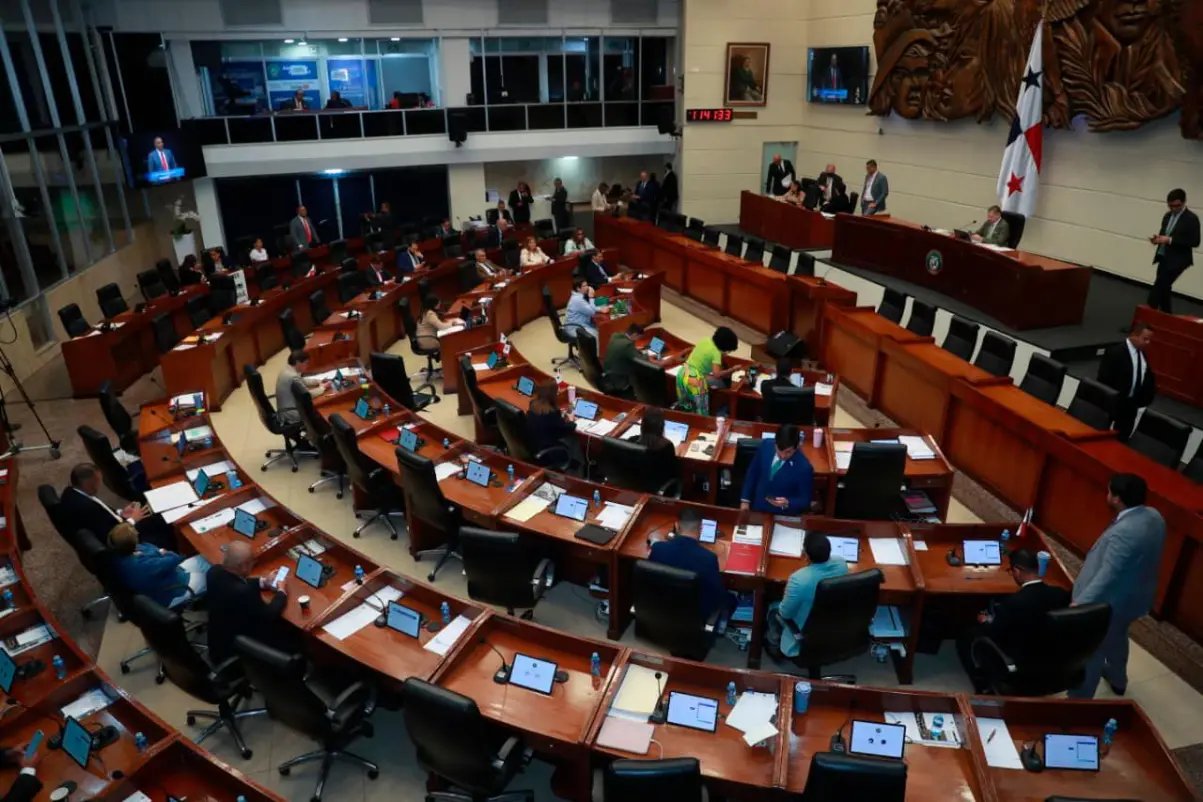
The reform to Electoral Code faces new objections in the National Assembly. The deputies Alexandra Brenes, from circuit 8-2, and Walkiria Chandler D’Orcy, from circuit 8-3, They presented a Minority Report against Bill 699 and questioned the constitutionality of several changes approved in the first debate.
The document, sent to the General Secretariat of the National Assembly, maintains that the project contains provisions that could affect political rights, voting equality, electoral financing and the powers of the electoral authorities.
The deputies, who voted against the project in the Government, Justice and Constitutional Affairs Commission, also presented an alternative text with modifications for discussion in the second debate.
One of the main questions refers to the increase in requirements to establish political parties and to support candidacies through free nomination.
According to the report, Bill 699 proposes increasing the number of adherents or signatures required by 50%. The deputies consider that this increase does not have a percentage analysis that justifies it and maintain that it could be disproportionate to the growth of the electorate.
The document cites figures from the 2019 and 2024 electoral processes to support its argument. According to the data included in the report, valid votes increased from 1,964,746 in 2019 to 2,275,746 in 2024, a growth of 15.8%.
For Brenes and Chandler, raising the requirements by 50% without a technical justification related to electoral behavior could limit the right to political participation.
The report links this point with articles 135 and 138 of the Political Constitution, related to the characteristics of suffrage and the role of political parties in citizen participation.
Nine questions
The Minority Report identifies nine areas in which, according to the representatives, Bill 699 could conflict with constitutional or conventional provisions.
The first question points to the requirement of 3% of valid votes for the registration of political parties or candidacies by free nomination. The deputies maintain that this measure could make it difficult for new actors to enter the political scene.
The second refers to the elimination of paragraph 5 of article 66 of the Electoral Code. According to the report, this modification would prevent the signatures of the initiators of a political party from counting as adherents, which, in the opinion of the deputies, would affect rights recognized in the Constitution.
Another of the points questioned is related to the internal autonomy of the parties. The project establishes that the president of the political organization is its legal representative. Brenes and Chandler believe that this decision should be subject to the statutes of each party.
Private financing is also part of the objections. The report questions the increase in financing limits and points out that, in the case of candidates for deputy, these could be between B/.300,000 and B/.500,000. The deputies consider that these amounts require technical justification to avoid differences that could affect the equality of electoral competition.
The fifth question addresses candidatures by free application. The report maintains that the new rules proposed for these candidacies do not guarantee conditions equivalent to those of political parties.
The deputies relate this point to article 146 of the Constitution and with article 25 of the International Covenant on Civil and Political Rights, which recognizes rights of political participation.
Questions to the seat allocation system
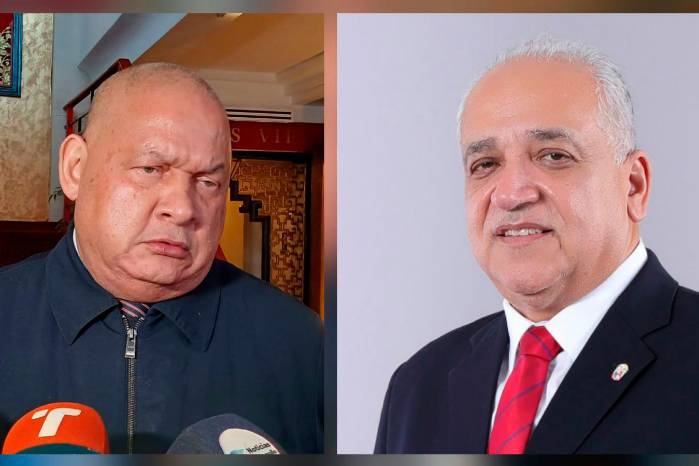
The sixth point focuses on the allocation of seats. The report questions that a party that has already obtained seats through the quotient mechanism cannot subsequently participate in the allocation by remainder or greater remainder.
According to the deputies, this provision could affect voting equality and the rights to elect and be elected.
The document also questions a provision related to officials who are elected to two positions. The project would allow an official to retain both positions, with unpaid leave in one of them.
Brenes and Chandler maintain that this possibility contradicts the principle of personal performance of public office and cite a 2021 Supreme Court ruling as precedent.
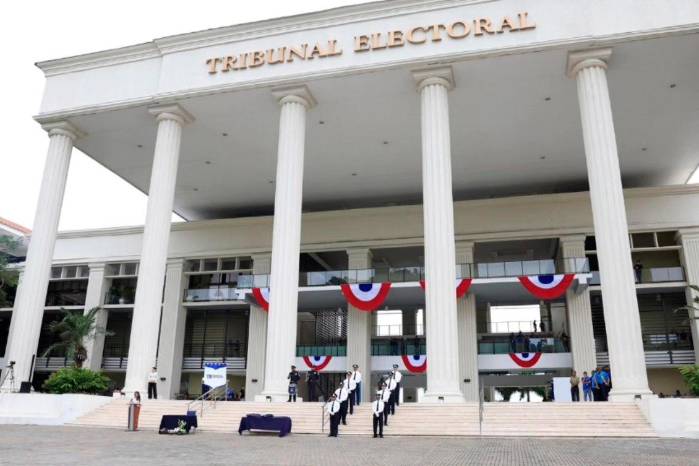
The powers of the Electoral Prosecutor’s Office and the Electoral Tribunal constitute two other points of concern.
In the case of the Electoral Prosecutor’s Office, the report questions that the project maintains the statute of limitations for electoral criminal action at three years, while the Electoral Court had proposed a period of four years.
The deputies consider that the reduction in the time available to investigate and prosecute electoral crimes may affect the ability to prosecute these behaviors.
The last point refers to the sanctioning powers of the Electoral Court. The report questions the reduction of the statute of limitations for contraventions and the reduction of certain fines.
In the opinion of the deputies, these modifications can weaken the oversight and sanctioning capacity of the electoral authority.
Election financing under scrutiny
The Minority Report also proposes changes in terms of political financing.
The deputies question that the project does not incorporate a real-time oversight mechanism for the use of the electoral subsidy and private financing.
As an alternative, they propose incorporating technological tools that allow improving the monitoring of resources used during campaigns and detecting possible income of illicit origin.
Regarding public financing, the document indicates that article 141 of the Constitution allows state contributions to political parties, but maintains that the Magna Carta does not require the allocation of 1% of the Central Government’s current income.
Based on this argument, the deputies propose reducing the amount planned for public financing by half.
The report estimates that 1% of the Central Government’s current income for 2029 would represent approximately B/.158 million.
Demand for a comprehensive review
Brenes and Chandler also question that the text approved in the first debate does not resolve some provisions that, according to them, continue to allow nominations through lists or lists for both free-nomination candidates and political party candidates.
The deputies request a comprehensive review of the Electoral Code before moving forward with the reform.
The document states that the discussion should not be limited to modifying articles in isolation, but should consider the effects that the changes can produce on the electoral system as a whole.
They ask to modify the project before the second debate
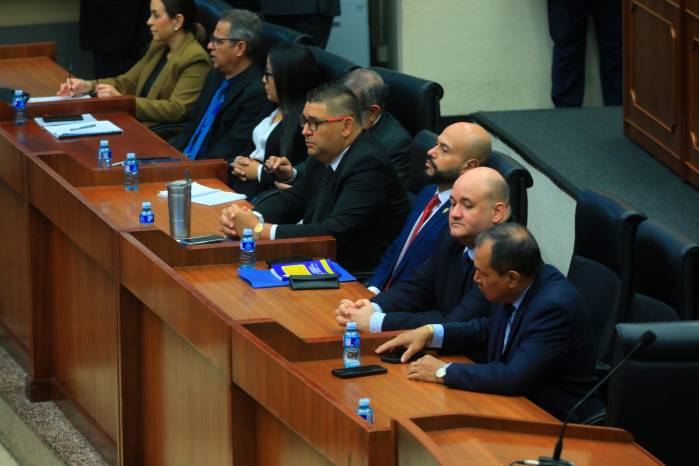
At the end of the Minority Report, the deputies request that Bill 699 not go to the second debate in the version approved in the first debate.
As a second proposal, they propose that the project advance with the alternative text that they attached to the report, which incorporates the modifications and additions that they consider necessary.
The request is based on articles 135 and 136 of the Organic Regulations of the Internal Regime of the National Assembly.
The document represents the position of the two deputies who opposed the project within the Government, Justice and Constitutional Affairs Commission. The proposal must be confronted in plenary with the position of the majority and with the arguments of those who support the reform.
Bill 699 thus enters a new stage of discussion. The second debate will define whether the questioned changes are maintained, modified or replaced by other provisions.
For the deputies who presented the Minority Report, the discussion transcends the modification of electoral rules and touches on aspects such as political participation, voting equality, campaign financing and the powers of the institutions in charge of guaranteeing the integrity of the electoral processes.
With the 2029 general elections on the horizon, the debate on the Electoral Code takes on special relevance, since the rules approved by the National Assembly will determine the conditions under which political parties, freely nominated candidates and voters will participate in the next electoral process.