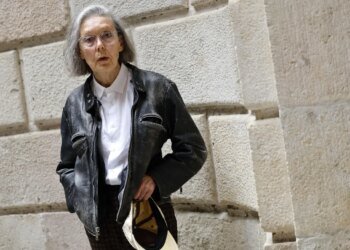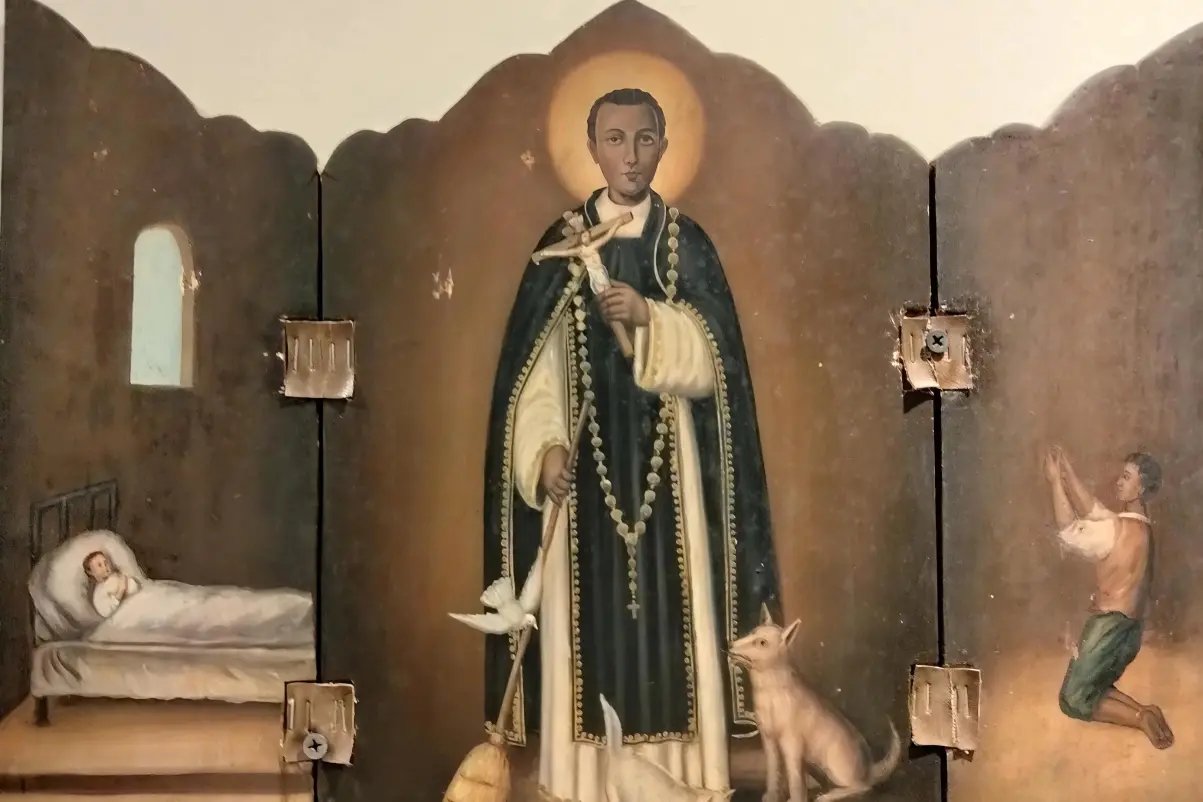
Behind the saint of the broom and the impossible miracles beats the heart of Ana Velázquez, the Panamanian woman who challenged the socio-racial knots of the Spanish Empire in the isthmus. Through the mechanism of coarctation (legal institution that allowed an enslaved person to buy their own freedom fixing with her master a definitive and unalterable price) the woman won her freedom in installments and crossed the sea, moved by a promise of love, bequeathing the world an eternal symbol of compassion. This is a chronicle about resistance, survival and the indomitable love of a black Panamanian woman.
The lineage of America’s first mulatto saint was not sown in the chains of submission, but in the silent cry for freedom on the isthmus of Panama. For centuries, traditional religious biographies confined the mother of Saint Martin de Porres to the shadows of history, portraying her as a secondary and passive figure.
However, contemporary social historiography, supported by rigorous research on scientific platforms, has come to do it justice. Ana Velázquez is no longer seen as a marginal figure, but as a historical protagonist defined by her firmness, courage, and notable spiritual and legal autonomy.
The renowned historian Celia Cussen, in her fundamental work ‘Martín de Porres: Saint of Black America’, dismantles old myths and confirms that Ana was a freed Afro-descendant woman, also called ‘horra’ (a black or mulatto person who has achieved freedom, no longer under the regime of slavery), when her path crossed that of the Burgos nobleman Don Juan de Porres in Panama. Martín was not born by chance, but from the womb of a woman who had already learned to be the master of her own destiny.
Ana’s past in Panama keeps secrets in the notarial entries of the time that failed to record which family she was a slave to. Although the minutes of the Diocesan Process of Lima formally recognize her as a “free woman,” the mystery about who her original masters were is unknown. However, historians agree on one certainty: Ana Velázquez bought her freedom penny by penny.
He achieved this by using coarctation, an institution of colonial law that allowed enslaved people to pay for their own emancipation gradually. Ana used her ‘money’ from the small savings she managed to gather by working independently on her few holidays and free shifts to reduce her debt.
Panama, converted into the vibrant commercial heart of the Spanish Empire, full of fairs, ports and a constant flow of wealth, became the setting in which this woman worked to purchase the most sacred right of a human being: to be free.
When Ana Velázquez boarded the ship that would take her to the City of the Kings (Lima) around 1579, she did not do so chained in the warehouses of the slave trade. She traveled of her own free will, driven by a promise of marriage and the hope of forming a home with Don Juan de Porres. But upon landing in the Viceroyalty of Peru, the cold colonial reality hit her head-on: the strict blood purity laws prevented the noble hidalgo from keeping his word of marrying an Afro-descendant woman.
Abandoned by the Spanish knight and with two young children in her care, Martín and his sister Juana, Ana Velázquez did not give up. He settled in the humble and populous neighborhood of Malambo, a sector of Lima inhabited mainly by the black and free population. There, the ‘free black’ or ‘horra’ woman became the sole and absolute support of her home.
Ana survived by practicing the hardest jobs in the colonial city: washerwoman, seamstress and vivandera (retail food seller).
With the fruit of his work, he paid the rent for a modest home and ensured food on the table. But his greatest achievement was educational. With his coins he financed Martín’s first letters and apprenticeship as a barber and nurse, protecting his son from destitution and demonstrating that dignity did not depend on a paternal surname that had rejected them.
As the historian Nancy E. van Deusen points out in her studies on colonial Lima, these Afro-liberty women developed a ‘deep theological understanding and executed expressions of spiritual agency.”’
To understand the feat of this Panamanian mother, it is necessary to analyze the hostile terrain she walked on. Recent studies such as ‘Dialogic Depositions’ reveal that, as early as 1574, free women of color in Panama had to band together and bravely litigate against royal decrees that sought to suffocate them economically with unjust taxes.
In Peru, the panorama was just as implacable. Free black women faced structural oppression in which abuses of power, harassment, and fraudulent debts operated as colonial tools to revoke their freedom.
Anne’s freedom was not a comfortable privilege; It was a daily struggle. And it was in that fight of love and resistance that Martín de Porres grew up.
The vulnerable environment and his mother’s constant struggle shaped Martín’s conscience, turning the experience of family discrimination into the driving force of his community dedication.
That is why, when Martín felt the call of faith and collided head-on against the walls of institutional racism, he did not give up. Although the Church forced Indians and blacks to enter temples for indoctrination, it strictly vetoed their access to the altar and consecrated life. Supported by rigid statutes of purity of blood, ecclesiastical laws formally prohibited people of African or indigenous ancestry from being ordained priests or admitted as full friars. Despite this legal exclusion that limited his vocation, Martín’s determination was greater.
In 1594 he entered the Convent of Our Lady of the Rosary, accepting the humble role of “donado” (a conventual servant assigned to the heaviest tasks in exchange for shelter and food). Historian Fernando Iwasaki points out the deep ambivalence and racial barrier of this process. However, Martín transformed this exclusion into the highest of virtues.
The later story is known, the son of the Panamanian woman became the charitable soul of Lima, the friar of miracles capable of bilocating (a mystical or supernatural phenomenon according to which a person is capable of being physically present in two different places at the same time) to console the sick, to heal hopeless bodies. But those physics-defying miracles that the Diocesan Process documented under oath did not spring from nowhere. They were the living legacy of Ana Velázquez.
Martín learned to heal because he saw his mother heal helplessness; He learned to multiply loaves in the convent because he saw his mother perform miracles with a few cents in the Malambo neighborhood, and he learned to look at slaves and viceroys with dignity because he was born from the womb of an Isthmian woman who decided that her destiny was worth more than all the chains of the Empire.
Today, when contemplating the image of Saint Martin de Porres on the altars of America with his iconic broom, history finally allows us to see that behind the saint of humility, the indomitable courage of Ana Velázquez beats strongly: the Panamanian mother of Chorrera who brought the purest holiness to the world.