Havana/The tobacco industry is in revolt in Cuba. Cigar exports are suffering the consequences of the arrest of an Asian shareholder and, now, the departure of British American Tobacco (BAT), which sold its stake in Brascuba after sharply lowering the value of its business on the Island, opens new questions about the production and marketing of cigarettes.
The State maintains controlled sales through wineries, although cigarettes are not officially part of the regulated family basket. In several provinces, deliveries of four packs per month per adult consumer continue to be announced, but delays are frequent and the planned quota is rarely equivalent to a regular supply.
The difference with the informal market is enormous. Since 2024, a pack of Criollo, Popular or Aroma has an official price 30 pesos, while other regulated varieties cost between 50 and 60. In Havana, consulted ads This Wednesday they offer wheels of ten packs of H. Upmann Clásico without filter for 7,300 pesos, Rothmans Classic for 5,500 and Rothmans ICE for 4,100, equivalent to between 410 and 730 pesos per pack at wholesale price.

/ 14ymedio
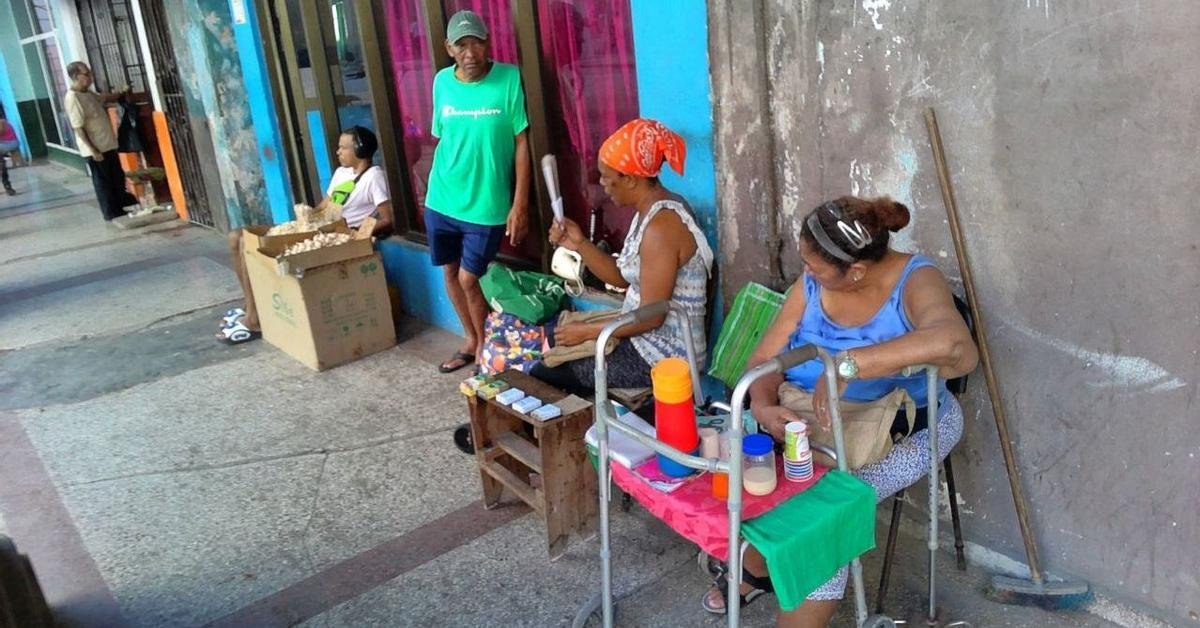
Another publication this week sets the pack of Popular Rojo at 1,170 pesos, the wheel of ten at 11,700 and conditions the purchase on a box of 50 wheels. These wholesale prices leave room so that, once in cafes, private stalls or street vendors, the pack ends up even more expensive for the consumer.
British American Tobacco (BAT) left Cuba after almost three decades of presence in the cigarette industry. In February, the multinational completed the sale to Tabagest of the 50% it held in Brascuba Cigarrillos SA, agreed at the end of 2025and thus left entirely in Cuban hands a company that for years was presented as one of the most important examples of foreign investment in the manufacturing sector of the Island.
Tabagest is part of the business network of Tabacuba, the state group that controls much of the production, processing and marketing of Cuban tobacco. For its participation, BAT received 25 million dollars, to which another 35 million were added corresponding to commercial balances between Brascuba and Brazilian subsidiaries of the multinational. Payments were agreed in euros.
Brascuba was born in 1995 from the association between the Cuban State and Souza Cruz, the Brazilian subsidiary of BAT, later fully integrated into the group.
The figure contrasts with the value that the business had for BAT. In 2024, when it began preparing an “orderly exit” from Cuba, the company recognized an accounting impairment of £74 million related to Brascuba. one year later added another 231 million pounds. The decision to leave, therefore, began before the tightening of US sanctions in 2026, but in any case BAT has not explained what specific reason led it to leave the Island.
Brascuba was born in 1995 from the association between the Cuban State and Souza Cruz, the Brazilian subsidiary of BAT, later fully integrated into the group. Two decades later, both parties decided to considerably expand the business with a modern plant in the Mariel Special Development Zone. The announced investment It was around 120 million dollars and the project aspired to increase capacity to 15,000 million cigarettes per year, with most of the production destined for the Cuban market and around 20% for exports.
The company manufactured brands such as Popular, H. Upmann and Cohiba, as well as cigarettes belonging to BAT’s international portfolio, including Dunhill and Rothmans. The departure of the multinational leaves precisely one of the most important unknowns: there is no public information that details whether these brands will continue to be manufactured in Cuba, if licensing agreements are maintained or who will replace BAT as a supplier of certain inputs, technology and commercial connections.
Hurricane Rafael added to the structural difficulties in November 2024
The dependence on foreign suppliers had already caused problems before the withdrawal. Between 2023 and 2024, for example, Brascuba stopped manufacturing more than 50 million units of Rothmans Fresh after a supplier stopped supplying the filter capsules used in that variety, according to official data Cubans.
Hurricane Rafael added to the structural difficulties in November 2024. Mariel’s factory suffered serious damagelost part of the roof and several machines were exposed to water. Production had to stop and during the first months of 2025 the shortage was felt again in the domestic market.
Tabacuba he later assured that Brascuba had recovered its rhythm. In August 2025, he stated that the plant was working again “at maximum production” and that, as a whole, the industry had produced 201 million packs during the first half of the year, compared to the 192 million agreed with Internal Trade.

/ Facebook/ Screenshot
For 2026, however, there is no updated public figure that allows us to know how much Brascuba is producing after the departure of BAT, nor how much of that volume goes to the national market and how much is exported.
The other unknown is outside Cuba. Brascuba exported for years to markets such as Spain, Germany, Mexico, Panama and several countries in the Middle East and the Caribbean. However, there is no recent public data on how much it currently sells outside the Island or which brands remain in that portfolio.
Marino Murillo Jorge, president of the Tabacuba Business Group, was seen at the beginning of October in Madrid with Carlos Luis Jorge Méndez, first vice minister of the Ministry of Foreign Trade and Foreign Investment. The reason for the trip has not been officially reported nor is there public evidence that it is related to Brascuba. Meanwhile, a central question remains unanswered after BAT’s departure: who will provide the company with the inputs, licenses and commercial connections that the multinational provided and what will happen to brands such as Dunhill or Rothmans.