A story about Innersuit spreads through the small hall in Katuaq.
Innersuit looks like humans. Their eyes are like flames, and their veins glow in the dark. They live under the sea, at the beach or at the underwater reefs. They have tiny noses and sunken cheeks.
When the ice foot and rock foot can be heard touching each other, it is said to be the Innersuit crying. Eq.
It is one of the old tales that this evening will be brought out of the darkness and told further by Connie Kristoffersen from Greenland’s National Theatre.
It is legends and myths that have gathered the audience this evening in Katuaq’s small hall, which is jam-packed with people. The lecture is part of Katuaq’s event series “Ileqquvut”, in Danish “Our traditions”.
But the event is not only about stories from the past. It is also about what happens to them when they are told further and take on new forms.
The Greenlandic legends and myths have been passed down through the generations and contain stories about both people, animals and beings from a world that is both similar and different from the one we know today.
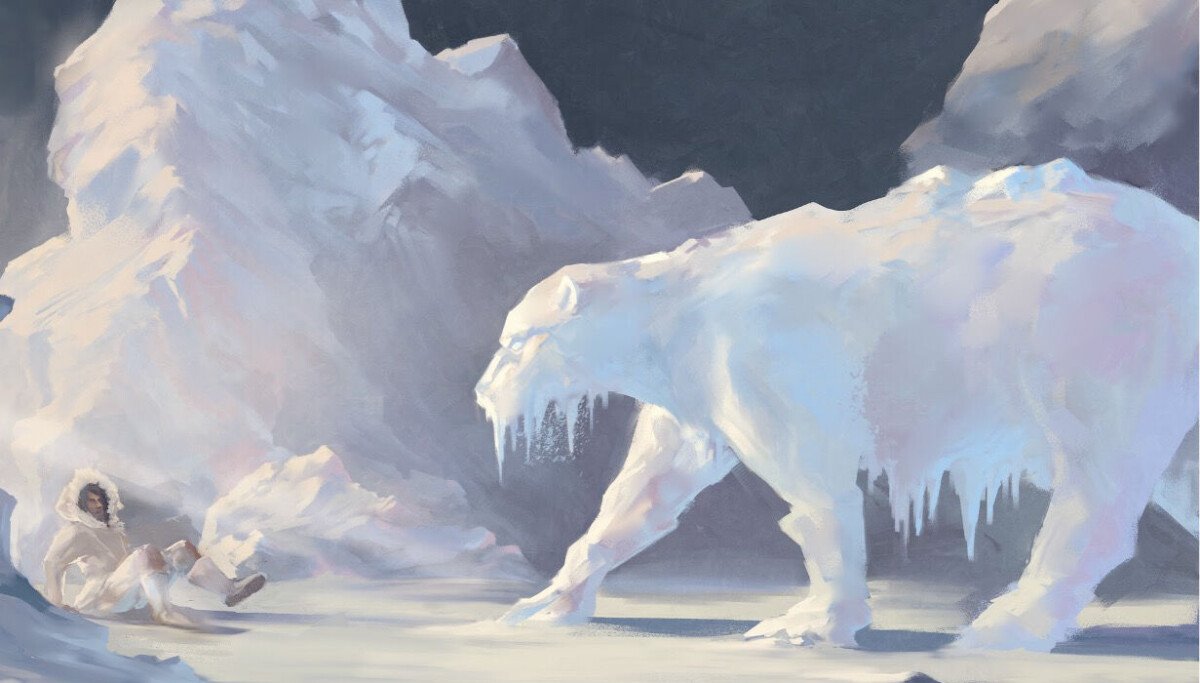
It was some of these stories and beings that Frederik “Fuuja” Larsen focused on during the event, which was held in collaboration with Greenland’s National Museum and Archives.
Because the stories do not only live in the oral tradition. They have also left traces on paper, in drawings and in archives and sometimes they tell stories that go back further than we can immediately see.
The historical
The old stories have been written down and drawn by HJ Rink, Aalut Kangermiu and Knud Rasmussen, among others. Their work has become part of the cultural heritage in which the stories live on.
And the stories don’t stop at Greenland’s borders.
Across the Arctic there are legends that remind each other. The Mother of the Sea is a well-known example. She has different names, but the story about her repeats itself and is, among other things, about man’s relationship with nature.
According to “Fuuja”, she is one of the biggest and most important stories in the Arctic countries.
The same applies to the story of Navaranaaq, which according to legend belongs in Ameralik. In Canada, there is a similar tale of Jagraganak, whose name also resembles Navaranaaq when spoken aloud. Here the story of war between Inuit and Indians in Labrador is told.
For “Fuuja”, it raises the question of where the stories actually come from.
Perhaps our ancestors brought tales with them from Canada when they moved towards Greenland?
In connection with archaeological work in Ameralik, according to “Fuuja”, no traces have been found that indicate that the killings described in the story of Navaranaaq have actually taken place.
But he emphasizes that it is not his task to determine whether the story is true.
For him, the point is that the stories can be clues in themselves. And sometimes they can meet physical traces that the archaeologists find in the ground.
According to him, there is a concrete example of this in a story from Aalut Kangermius’ paintings. The story is about an old burial site, which was later found.
In this way, the intangible cultural heritage – the story – meets the tangible cultural heritage that still exists in nature.
But the stories can also be given new life in other ways.
They can become pictures, books and art. And when they take on a new form, our view of them may also change.
This is what Maria Kreutzmann is concerned with.
From story to art
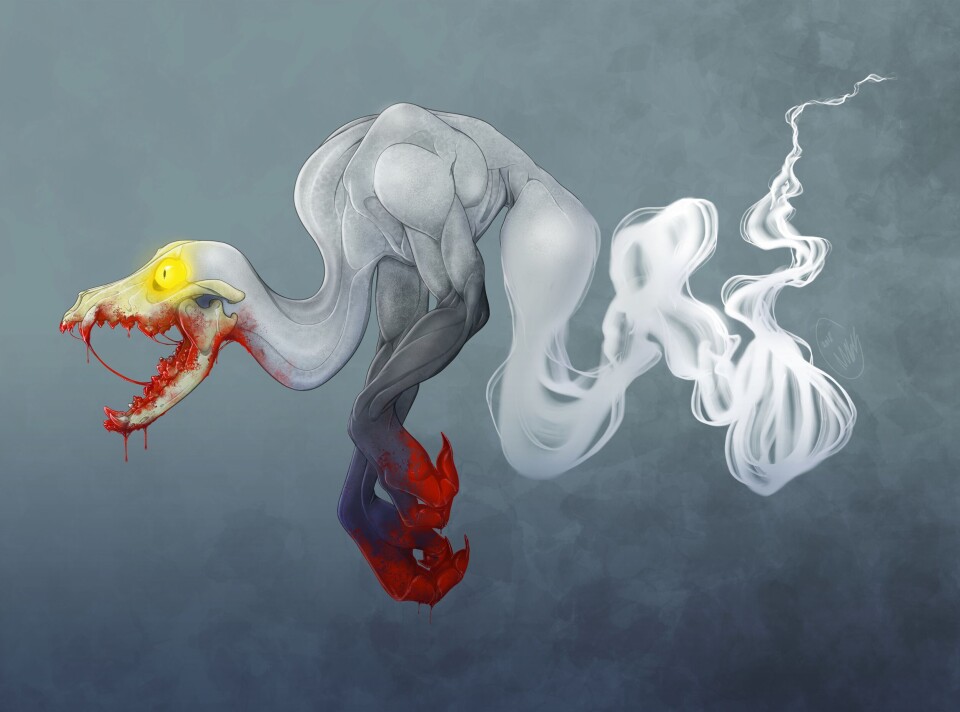
Maria Kreutzmann calls herself a professional monster hunter. She will talk about how legends and myths come to life through art.
She has helped create the books ‘Bestiarium Groenlandica’ and ‘Mythical Monsters from Greenland’, where some of Greenland’s old creatures are given new life through illustrations and stories.
An important inspiration for her is the East Greenlandic artist Karale Andreassen, whom she emphasizes when she talks about Greenlandic monster illustrations.
For Maria, however, the work is not only about reproducing the beings as they were once described.
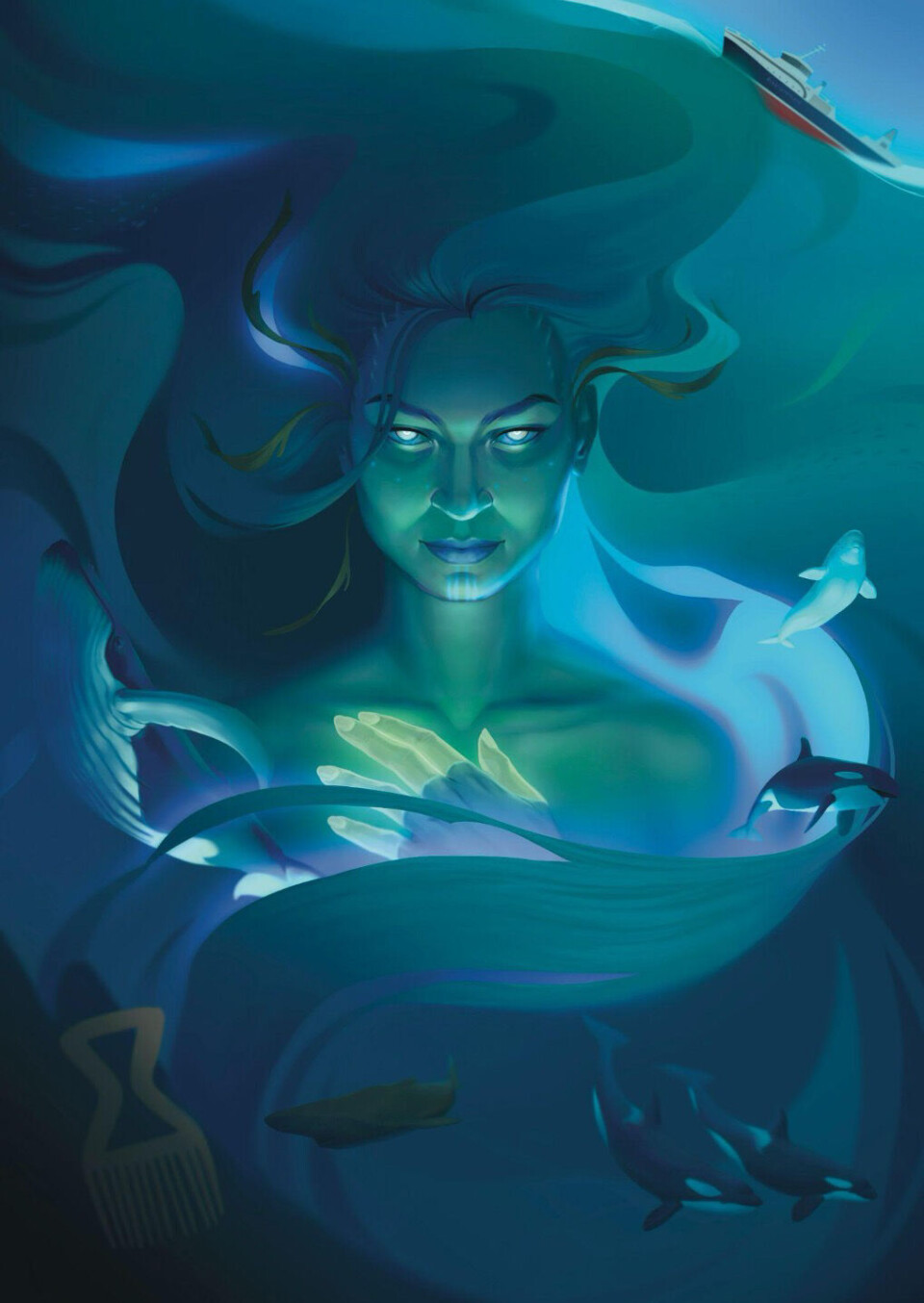
Because the understanding of them changes.
This applies, among other things, to Sassuma Arnaa (Mother of the Sea, ed.). She has had a sort of cultural-historical revival, among other things through tunniit and the way she is referred to today.
But the Sassuma Arnaa we see now is not necessarily the same as people saw 200 years ago.
It is precisely the change that Maria is concerned with.
– I love that she is so changeable, she says.
Tupilak – from fear to decoration
The same applies to tupil varnish. Maria Kreutzmann herself has stood in front of a tupilak at the National Museum in Denmark.
It had human teeth. And the eyes were like a child’s.
It is a very concrete picture of what Maria works with: How something that was once a feared creature can today also become art, figurines and collectibles.
They can also be used for something as simple as getting children to listen.
As a child in Nuuk, Maria and the other children were told not to run too far away. Because out there both a ukisik and a qivittoq were waiting. It worked.
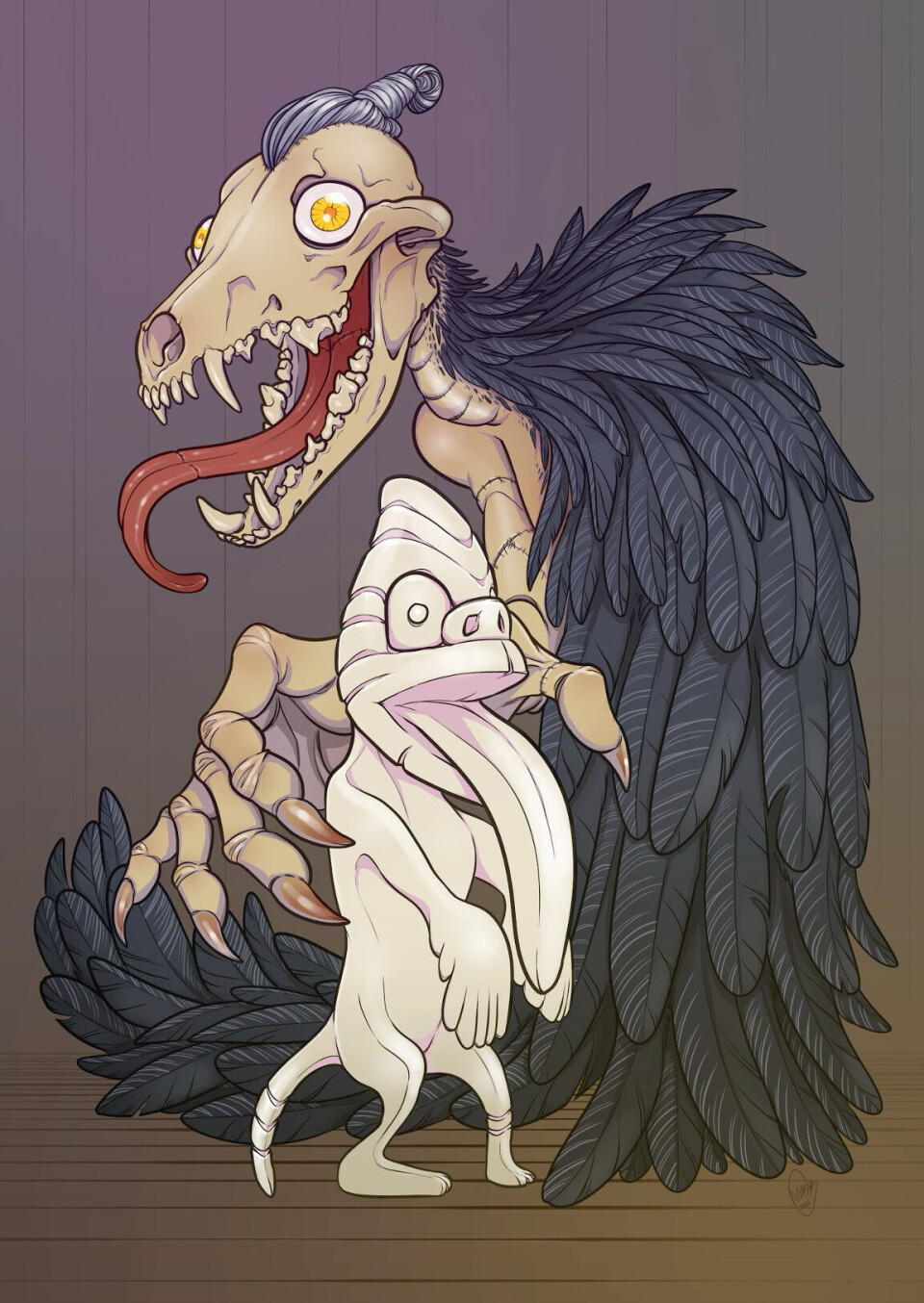
– There is nothing that can stimulate the imagination like these creatures, she says.
But the old tales can also be harsh. Therefore, Maria has had to consider how graphic her illustrations should be, when the books must also be read by children.
Nevertheless, it is precisely in the meeting between the uncanny, the imaginative and the artistic that the stories are given new life. The old beings do not remain in the past. They keep changing form – just like the way we ourselves see them.
Another story about the feared mythical creature Aajumaaq is read aloud. The old words find their way through the hall again.
Into the ears of those who listen. Into the minds of those who might one day pass Aajumaaq on to others.
This is how the stories live on. Not by standing still, but by moving from person to person. From generation to generation.