Sunday, October 4, 2026
    The GeoStrategic Consensus
    No Result
    View All Result
    • Login
    • HOME
    • AMERICAS
      • Argentina
      • Brazil
      • Canada
      • Chile
      • Colombia
      • Costa Rica
      • Cuba
      • Dominican Republic
      • Ecuador
      • El Salvador
      • Greenland
      • Guatemala
      • Honduras
      • Mexico
      • Nicaragua
      • Panama
      • Paraguay
      • Peru
      • United States
      • Uruguay
      • Venezuela
    • ASIA-PACIFIC
      • Australia
      • Brunei Darussalam
      • Cambodia
      • China
      • Federated States of Micronesia
      • Fiji
      • Indonesia
      • Japan
      • Kiribati
      • Laos
      • Malaysia
      • Marshall Islands
      • Mongolia
      • Myanmar
      • Nauru
      • New Zealand
      • North Korea
      • Palau
      • Papua New Guinea
      • Philippines
      • Samoa
      • Singapore
      • Solomon Islands
      • South Korea
      • Taiwan
      • Thailand
      • Timor-Leste
      • Tonga
      • Tuvalu
      • Vanuatu
      • Vietnam
    • CARICOM
      • CARICOM – Non-English
        • Haiti
        • Suriname
      • CARICOM Associates
        • Anguilla
        • Bermuda
        • British-Virgin-Islands
        • Cayman-Islands
        • Curacao
        • Turks-and-Caicos
      • CARICOM English
        • Antigua and Barbuda
        • Barbados
        • Belize
        • Dominica
        • Grenada
        • Guyana
        • Jamaica
        • Montserrat
        • Saint Kitts and Nevis
        • Saint Lucia
        • Saint Vincent and the Grenadines
        • The Bahamas
        • Trinidad and Tobago
    • EURASIA
      • Armenia
      • Azerbaijan
      • Balarus
      • Georgia
      • Kazakhstan
      • Kyrgyzstan
      • Moldova
      • Russia
      • Tajikistan
      • Turkmenistan
      • Ukraine
      • Uzbekistan
    • EUROPE
      • Albania
      • Andorra
      • Austria
      • Bosnia and Herzegovina
      • Bulgaria
      • Croatia
      • Cyprus
      • Czech Republic
      • Denmark
      • Estonia
      • Finland
      • France
      • Germany
      • Greece
      • Holy See
      • Hungary
      • Iceland
      • Ireland
      • Italy
      • Kosovo
      • Latvia
      • Liechtenstein
      • Lithuania
      • Luxembourg
      • Malta
      • Monaco
      • Montenegro
      • Netherlands
      • North Macedonia
      • Norway
      • Poland
      • Portugal
      • Romania
      • San Marino
      • Serbia
      • Slovakia
      • Slovenia
      • Spain
      • Sweden
      • Switzerland
      • United Kingdom
    • MIDDLE EAST AND NORTH AFRICA
      • Algeria
      • Bahrain
      • Egypt
      • Iran
      • Iraq
      • Israel
      • Jordan
      • Kuwait
      • Lebanon
      • Lybia
      • Morocco
      • Oman
      • Palestinian Territories
      • Qatar
      • Saudi Arabia
      • Syria
      • Tunisia
      • Turkey
      • United Arab Emirates
      • Western Sahara
      • Yemen
    • SOUTH ASIA
      • Afghanistan
      • Bangladesh
      • Bhutan
      • India
      • Maldives
      • Nepal
      • Pakistan
      • Sri Lanka
    • SUB-SAHARAN AFRICA
      • Angola
      • Benin
      • Botswana
      • Burkina Faso
      • Burundi
      • Cabo Verde
      • Cameroon
      • Central African Republic
      • Chad
      • Comoros
      • Cote d’Ivoire
      • Democratic Republic of the Congo
      • Djibouti
      • Equatorial Guinea
      • Eritrea
      • Eswatini
      • Ethiopia
      • Gabon
      • Gambia
      • Ghana
      • Guinea
      • Guinea Bissau
      • Kenya
      • Lesotho
      • Liberia
      • Madagascar
      • Malawi
      • Mali
      • Mauritania
      • Mauritius
      • Mozambique
      • Namibia
      • Niger
      • Nigeria
      • Republic of the Congo
      • Rwanda
      • Sao Tome and Principe
      • Senegal
      • Seychelles
      • Sierra Leone
      • Somalia
      • South Africa
      • South Sudan
      • Sudan
      • Tanzania
      • Togo
      • Uganda
      • Zambia
      • Zimbabwe
    • HOME
    • AMERICAS
      • Argentina
      • Brazil
      • Canada
      • Chile
      • Colombia
      • Costa Rica
      • Cuba
      • Dominican Republic
      • Ecuador
      • El Salvador
      • Greenland
      • Guatemala
      • Honduras
      • Mexico
      • Nicaragua
      • Panama
      • Paraguay
      • Peru
      • United States
      • Uruguay
      • Venezuela
    • ASIA-PACIFIC
      • Australia
      • Brunei Darussalam
      • Cambodia
      • China
      • Federated States of Micronesia
      • Fiji
      • Indonesia
      • Japan
      • Kiribati
      • Laos
      • Malaysia
      • Marshall Islands
      • Mongolia
      • Myanmar
      • Nauru
      • New Zealand
      • North Korea
      • Palau
      • Papua New Guinea
      • Philippines
      • Samoa
      • Singapore
      • Solomon Islands
      • South Korea
      • Taiwan
      • Thailand
      • Timor-Leste
      • Tonga
      • Tuvalu
      • Vanuatu
      • Vietnam
    • CARICOM
      • CARICOM – Non-English
        • Haiti
        • Suriname
      • CARICOM Associates
        • Anguilla
        • Bermuda
        • British-Virgin-Islands
        • Cayman-Islands
        • Curacao
        • Turks-and-Caicos
      • CARICOM English
        • Antigua and Barbuda
        • Barbados
        • Belize
        • Dominica
        • Grenada
        • Guyana
        • Jamaica
        • Montserrat
        • Saint Kitts and Nevis
        • Saint Lucia
        • Saint Vincent and the Grenadines
        • The Bahamas
        • Trinidad and Tobago
    • EURASIA
      • Armenia
      • Azerbaijan
      • Balarus
      • Georgia
      • Kazakhstan
      • Kyrgyzstan
      • Moldova
      • Russia
      • Tajikistan
      • Turkmenistan
      • Ukraine
      • Uzbekistan
    • EUROPE
      • Albania
      • Andorra
      • Austria
      • Bosnia and Herzegovina
      • Bulgaria
      • Croatia
      • Cyprus
      • Czech Republic
      • Denmark
      • Estonia
      • Finland
      • France
      • Germany
      • Greece
      • Holy See
      • Hungary
      • Iceland
      • Ireland
      • Italy
      • Kosovo
      • Latvia
      • Liechtenstein
      • Lithuania
      • Luxembourg
      • Malta
      • Monaco
      • Montenegro
      • Netherlands
      • North Macedonia
      • Norway
      • Poland
      • Portugal
      • Romania
      • San Marino
      • Serbia
      • Slovakia
      • Slovenia
      • Spain
      • Sweden
      • Switzerland
      • United Kingdom
    • MIDDLE EAST AND NORTH AFRICA
      • Algeria
      • Bahrain
      • Egypt
      • Iran
      • Iraq
      • Israel
      • Jordan
      • Kuwait
      • Lebanon
      • Lybia
      • Morocco
      • Oman
      • Palestinian Territories
      • Qatar
      • Saudi Arabia
      • Syria
      • Tunisia
      • Turkey
      • United Arab Emirates
      • Western Sahara
      • Yemen
    • SOUTH ASIA
      • Afghanistan
      • Bangladesh
      • Bhutan
      • India
      • Maldives
      • Nepal
      • Pakistan
      • Sri Lanka
    • SUB-SAHARAN AFRICA
      • Angola
      • Benin
      • Botswana
      • Burkina Faso
      • Burundi
      • Cabo Verde
      • Cameroon
      • Central African Republic
      • Chad
      • Comoros
      • Cote d’Ivoire
      • Democratic Republic of the Congo
      • Djibouti
      • Equatorial Guinea
      • Eritrea
      • Eswatini
      • Ethiopia
      • Gabon
      • Gambia
      • Ghana
      • Guinea
      • Guinea Bissau
      • Kenya
      • Lesotho
      • Liberia
      • Madagascar
      • Malawi
      • Mali
      • Mauritania
      • Mauritius
      • Mozambique
      • Namibia
      • Niger
      • Nigeria
      • Republic of the Congo
      • Rwanda
      • Sao Tome and Principe
      • Senegal
      • Seychelles
      • Sierra Leone
      • Somalia
      • South Africa
      • South Sudan
      • Sudan
      • Tanzania
      • Togo
      • Uganda
      • Zambia
      • Zimbabwe
    No Result
    View All Result
    Agentially
    No Result
    View All Result
    Home AMERICAS Venezuela

    Luis Manuel Farías: “The Red Cross is independent and is not subordinated to the government”

    The Analyst by The Analyst
    October 4, 2026
    in Venezuela
    Luis Manuel Farías: “The Red Cross is independent and is not subordinated to the government”


    For Luis Manuel Farías, In Venezuela there has been a humanitarian crisis for years that intensified with the earthquake last June. The lawyer became president of the Venezuelan Red Cross in June 2024, to lead an institution that was under the shadow of corruption, opacity and allegations of mistreatment, and that has had to go through a restructuring process.

    READ ALSO

    Plane disappears during flight from Bermuda to Boston

    Netflix: the most watched series and movies this week in Venezuela

    The new statutes, approved that year, They allowed the election of a new Government Board with Farías as president, with the participation of volunteers from the different regions of the country, after decades without an electoral process of these characteristics. The lawyer maintains that, since then, the organization has gone through a stage of transformation aimed at strengthening its structure, professionalizing its operations and regaining confidence in its management. All this in a period of intense changes for the country.

    This reorganization process has coincided with an expansion of the humanitarian response. The institution reported more than 239,000 people served during 2025 in areas such as health, emergencies, migration, return, water and sanitation, protection and institutional strengthening. It currently has 41 branches and a network that includes eight hospitals and 33 outpatient clinics, while the International Federation registers more than 3,600 volunteers in the country.

    During the earthquakes, the Red Cross deployed rescue actions, field hospitals, health care, humanitarian assistance, psychosocial support, restoration of contact between family members, and water and sanitation operations in the affected areas. This in the midst of new allegations about the links of Farías and the institution with the government of Delcy Rodríguez. Despite this, he assures that Its financing is totally private. and? During the tragedy the organization raised more than $1,000,000.

    Farías, 32 years old, is a graduate of the Metropolitan University. He defends that the institution acts as auxiliary to public powers, but without subordination to the Stateand maintains that its priority should be to meet the needs of people regardless of their political position, religion, economic condition or any other circumstance. In interview with The National, explains how this transformation is being carried out and what role the organization seeks to assume. Venezuelan Red Cross in this new stage.
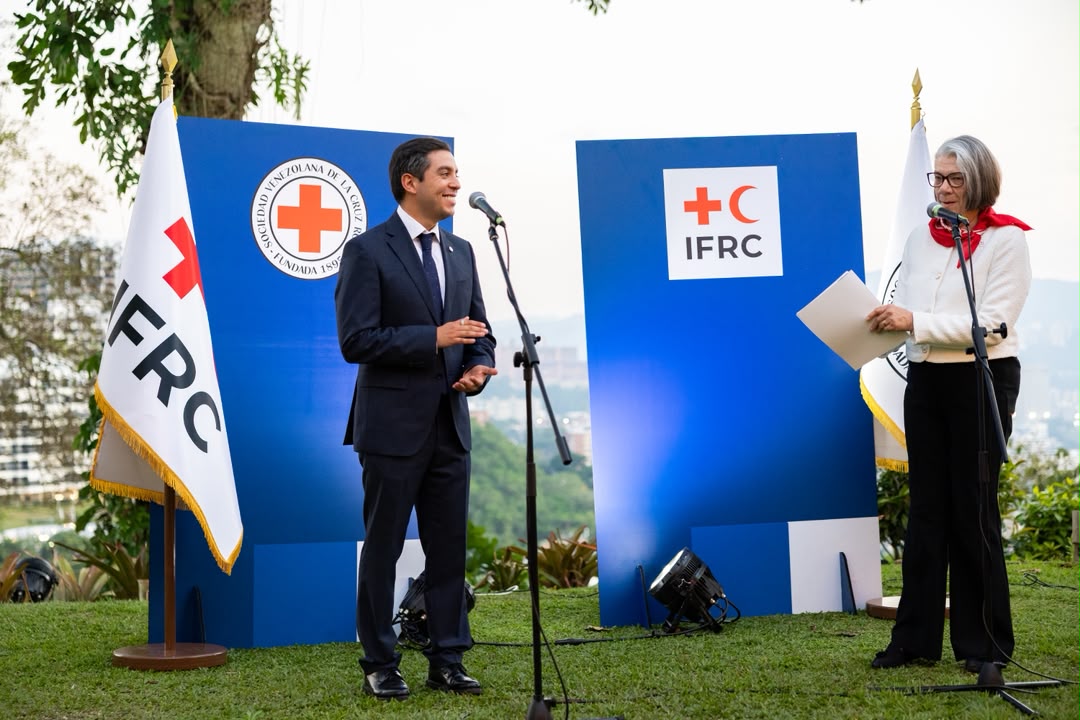
    Luis Manuel Farías at an event of the Venezuelan Red Cross | Courtesy: Luis Manuel Farías

    —Where were you when the earthquakes happened on June 24?

    —I was returning from a trip and it was very complicated to get to Caracas, so I arrived in La Guaira the next day and stayed five full days. I had already prepared an alert and when I arrived and saw what had happened, we already had the structure of the field hospital that we set up at the Jorge Luis García Carneiro stadium (former Macuto baseball stadium). It was born as a war hospital and is still maintained today. At the Red Cross we work from moment zero; Half an hour after the first earthquake, our units began to go down to inspect the area.

    —In addition to the field hospital, did you have to carry out rescue work in coordination with international teams?

    —Yes, we did rescue work and, in fact, we were in the rescue of Hernán Gilwho was the last person to emerge from the tragedy alive. It was a very complicated rescue in the Catia La Mar shopping center, lasting more than four days, carried out by the Venezuelan Red Cross together with the Costa Rican Red Cross. From there we began to call all the rescue groups that we saw that were arriving in the country: the Mexican Red Cross, the Colombian Red Cross, the Aruba Red Cross and the Greek Red Cross. We had to coordinate with teams that supported a part of the structure that did not collapse, but that could collapse at any moment, with the risk that this entailed for our volunteers.

    —Where did the resources come from for the rescues and tents that were improvised during the tragedy?

    —I confess that, in these first hours, I said: “There is no way to respond effectively to such a big disaster.” More than 200 buildings collapsed. In Catia La Mar and Caraballeda there was nothing left. However, that same night we uploaded the needs survey and what we considered should be a call for requirements into the International Federation of the Red Cross system. All these resources were brought by international units, both the human equipment and the implements for the rescues.

    —The Red Cross did not have the resources and also had a relatively new leadership, how was that reflected in the attention of tragedy?

    —It is true that, although we did not have the resources, all those who accompany me on this governing board are people from each region of Venezuela who have dedicated their entire lives to the Red Cross and have extensive experience. I myself have been at the institution for 10 years and was in the area of ​​Civil-Military Relations and Communications. I grew until I was part of the Executive Committee of the Venezuelan Red Cross before the intervention in 2023. While, during the direction of Ricardo Cusanno, I dedicated myself to verifying the data of all the volunteers in the country.

    Furthermore, at the institution we have extensive experience in disasters; The most recent had been the Cumanacoa tragedy of July 2024 in the state of Sucre. From then on we have not stopped addressing crises of multiple characteristics. Likewise, we were the actor that was at these repatriation points from the United States from day one and it has been a huge operation, where more than 30,000 Venezuelans have arrived.
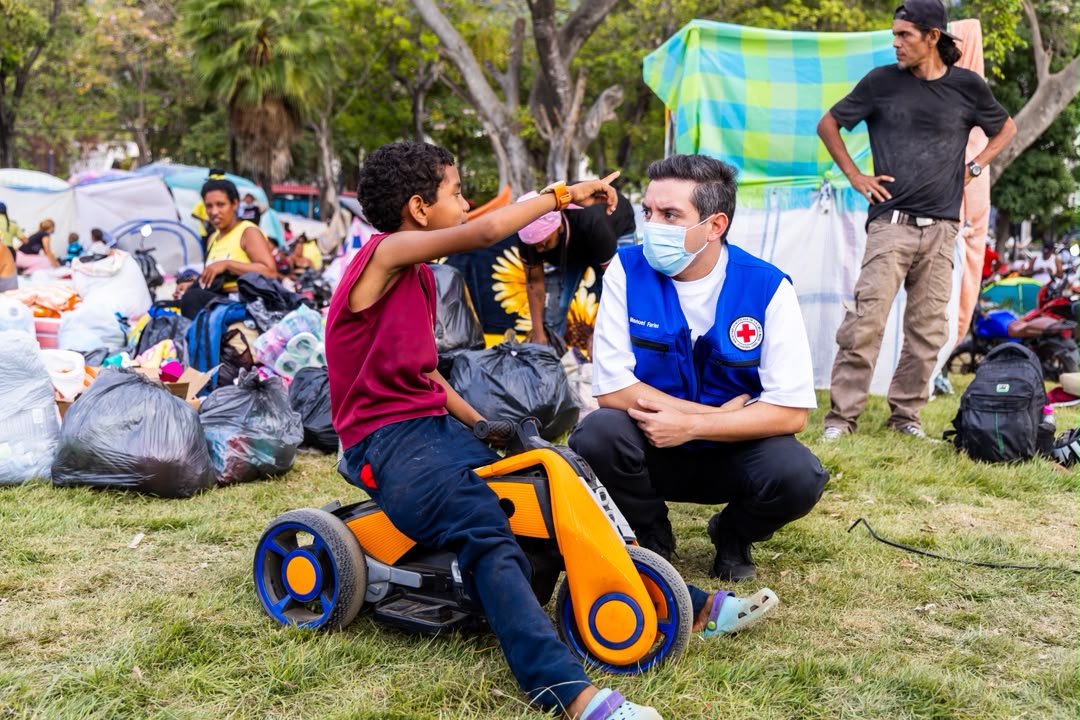
    Active campaign of the Red Cross in La Guaira after the earthquakes | Courtesy: Luis Manuel Farías

    —How has the internal management of the institution changed since you became president?

    —The Red Cross has been in the country for 131 years, but these last two years have literally been a complete refoundation. And it has been possibly the most exciting thing I have done in my life, because as a Red Cross and as a 32-year-old Venezuelan, who the only thing he has done in his professional life has been to be in the Red Cross, I dreamed of what we are building: a transparent, reliable Red Cross, that would be at the service of Venezuelans, that would make a strategy adapted to the country to understand the needs of Venezuelans and how the Red Cross, in its auxiliary role, could contribute. That mission was completely abandoned.

    —Did the statutes change?

    —Yes, that process left us with new statutes that allowed free elections where volunteers could vote. This was something that had not happened before, as unusual as it may sound: an organization that is made up of volunteers who did not have the right to vote. So the rights of volunteers were recognized, which is something very sensitive because that figure does not exist in the legal system. After that we decided to promote the Venezuelan Red Cross Law that I proposed immediately as soon as my mandate began and that was approved three months before the earthquake.

    —Did the International Red Cross intervene, in some way, in the face of the opacity that existed? Would you say they favored the change?

    —There was a petition overdue for four decades to renew the statutes that was never done. And the truth is that the International Federation of the Red Cross does not have the mechanisms to force the Red Crosses to do anything. The big question was, how come an institution that helps in wars and serious situations around the world did not have sufficient mechanisms to summon people who had stayed there for 46 years? The reality is that they could not do anything beyond urging that new statutes be renewed that would allow free elections. Because, in the end, the Red Cross of each country is an assistant to the public powers in humanitarian matters to their States and the one who had to act in the end was the State. And that’s what he did.

    Once the intervention was made, we did have the complete support of the International Federation and the International Committee to refound and renew all areas of the Red Cross. Starting because we did not have a finance department and without it, we would not have been able to address the crisis after the earthquake.
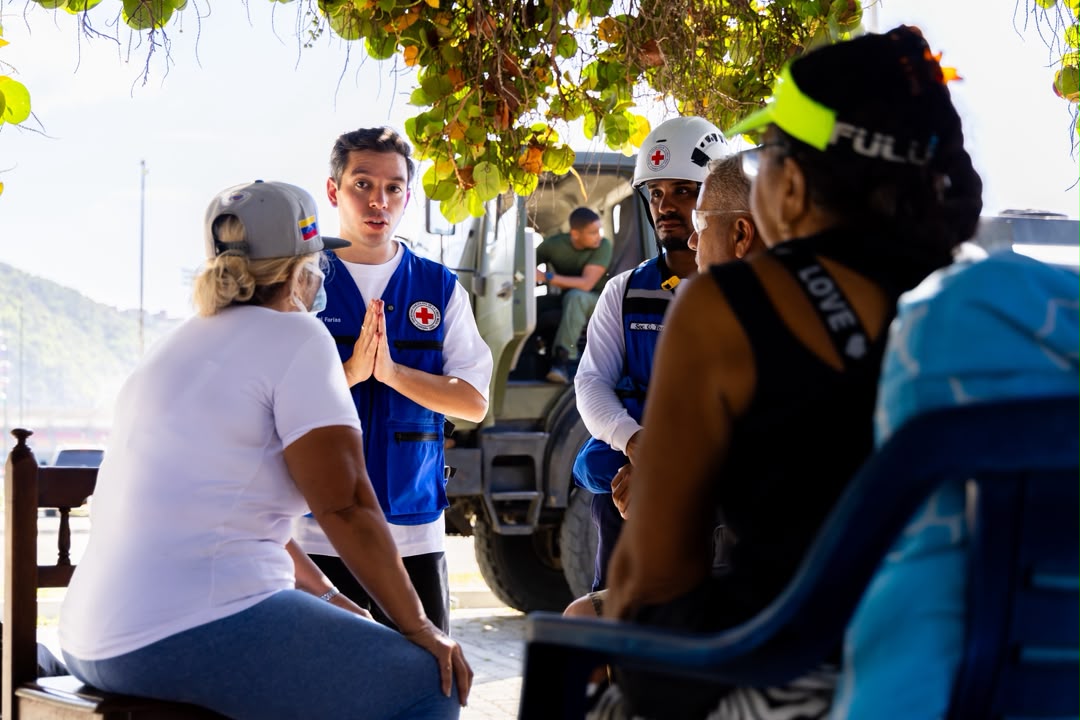
    Communities of La Guaira with the Red Cross team | Courtesy: Luis Manuel Farías

    —What accountability mechanisms does the Red Cross have?

    —We have national auditors and the support of the Norwegian Red Cross, which is in Venezuela; is working with us in that area to ensure traceability of all money that is being received. We also began to have the support of private companies such as Clover, a transnational dedicated to logistics operations, or the Banesco group.

    —What percentage of the funds come from the private sector and what percentage from the public sector?

    —100% comes from the private sector. The Red Cross does not have funding from the State, only from private companies and individuals.

    —During the earthquake, videos went viral in which citizens asked not to donate to the Red Cross. How is the perspective of individuals changing?

    —That campaign on social networks seemed heartless to me. It could only have been promoted by people who were not seeing the change and the work we are doing. But the reality is that this remained 100% on social networks because the Red Cross had never received so many donations as in this period. There are more than 70,000 individual people who donated through different means within the country alone. And then, for example, with the bank we did a fundraising campaign in all its banks, through all its subsidiaries in the world, and more than 1,000,000 dollars were raised.

    —What is the current relationship of the Red Cross with government entities?

    —The relationship of the Red Cross with the government is what it should be in any part of the world, which is auxiliary to public powers in humanitarian matters. That is not something exclusive to the Venezuelan Red Cross, but to the world. And the way it has to do it is in coordination with the national government authorities. The law enacted in March of this year by the National Assembly recognizes the Red Cross as the main partner in humanitarian issues of the State, in a perfectly regulated relationship. There is no subordination, there is collaboration.

    In addition to assistance on humanitarian issues, the International Committee is working with the different ministries on prison matters, for example, through the Prosecutor’s Office. Sometimes the Red Cross can be criticized because the person doesn’t like the actor they are working with, but that is the authority that is in charge and that is who the Red Cross should continue to work with.

    —Is there impartiality in the current Venezuelan Red Cross?

    -Completely. The Venezuelan Red Cross carries out its needs surveys independently. It is totally autonomous when it comes to deciding where it intervenes, how it intervenes and what is prioritized based exclusively on the needs of the people. It is not based on your political tendency, it is not based on your economic status, it is not based on your sexual preference, your religion, anything.

    —How many volunteers are active today?

    —As of June 24, we had 4,000 volunteers and, after June 24, we have more than 20,000 volunteer requests that we are absorbing and training. Many people who are participating in induction sessions in the world of the Red Cross.

    —Is there a humanitarian crisis in Venezuela? If so, what does it take to get out of it?

    —In La Guaira we are experiencing a very clear humanitarian crisis and, without a doubt, there are many humanitarian needs in different states of the country. Needs vary by region and social issues.

    And the work of the Red Cross is, always, to assist public powers in humanitarian matters, without supplanting responsibilities. In this sense, the Venezuelan Red Cross now needs 200,000 volunteers so that in all regions we can have people trained to attend to all needs, such as medical health, hospitals, outpatient clinics, water and sanitation.


    Source link

    Related Posts

    Plane disappears during flight from Bermuda to Boston
    Venezuela

    Plane disappears during flight from Bermuda to Boston

    October 4, 2026
    Netflix: the most watched series and movies this week in Venezuela
    Venezuela

    Netflix: the most watched series and movies this week in Venezuela

    October 3, 2026
    Bolsonaro calls Lula a “coward” and appeals to the useful vote to resolve the election on Sunday
    Venezuela

    Bolsonaro calls Lula a “coward” and appeals to the useful vote to resolve the election on Sunday

    October 3, 2026
    Trump consulted Grok about the Venezuelan reaction before capturing Maduro
    Venezuela

    Trump consulted Grok about the Venezuelan reaction before capturing Maduro

    October 3, 2026
    The intimate universe of Mercedes Pardo arrives at the ABRA Open Archive
    Venezuela

    The intimate universe of Mercedes Pardo arrives at the ABRA Open Archive

    October 3, 2026
    The negotiation table closes the week with progress in the TSJ
    Venezuela

    The negotiation table closes the week with progress in the TSJ

    October 2, 2026
    Next Post
    PSA website can be downloaded as an app for Android devices – de Ware Tijd

    PSA website can be downloaded as an app for Android devices – de Ware Tijd

    POPULAR NEWS

    2026 Regional and International Conventions of Jehovah’s Witnesses

    2026 Regional and International Conventions of Jehovah’s Witnesses

    July 7, 2026
    Thaksin, Yingluck and Paetongtarn meet Indonesian President Prabowo for investment talks

    Thaksin, Yingluck and Paetongtarn meet Indonesian President Prabowo for investment talks

    July 13, 2026
    This is how Nicolás Maduro and Cilia Flores reappeared in their hearing

    This is how Nicolás Maduro and Cilia Flores reappeared in their hearing

    July 24, 2026
    No deliverance: when gig workers fall prey to road accidents

    No deliverance: when gig workers fall prey to road accidents

    July 25, 2026

    All posts

    July 23, 2026

    EDITOR'S PICK

    Network works, these areas remain without power today and tomorrow

    Network works, these areas remain without power today and tomorrow

    September 26, 2026
    India releases UK Sikh blogger on bail after nearly nine-year detention

    India releases UK Sikh blogger on bail after nearly nine-year detention

    October 2, 2026
    Hall Contracting completes work on Ebeye seawall coastal

    Hall Contracting completes work on Ebeye seawall coastal

    September 25, 2026
    29 people were killed in a traffic accident in Zabul

    29 people were killed in a traffic accident in Zabul

    July 6, 2026

    Recent Posts

    • Oman & Kazakhstan: Moving towards broader partnerships
    • Kunar; Solar power was provided to administrative units of 15 districts
    • U.S.-China: A new superpower détente? | In Focus podcast
    • Néstor Lorenzo defended his idea of ​​playing with three centre-backs and was concerned about the lack of scoring options

      © 2026 Agentially - Navigating shifting sovereignties and global risk .

      Welcome Back!

      Login to your account below

      Forgotten Password?

      Retrieve your password

      Please enter your username or email address to reset your password.

      Log In
      No Result
      View All Result
      • HOME
      • AMERICAS
        • Argentina
        • Brazil
        • Canada
        • Chile
        • Colombia
        • Costa Rica
        • Cuba
        • Dominican Republic
        • Ecuador
        • El Salvador
        • Greenland
        • Guatemala
        • Honduras
        • Mexico
        • Nicaragua
        • Panama
        • Paraguay
        • Peru
        • United States
        • Uruguay
        • Venezuela
      • ASIA-PACIFIC
        • Australia
        • Brunei Darussalam
        • Cambodia
        • China
        • Federated States of Micronesia
        • Fiji
        • Indonesia
        • Japan
        • Kiribati
        • Laos
        • Malaysia
        • Marshall Islands
        • Mongolia
        • Myanmar
        • Nauru
        • New Zealand
        • North Korea
        • Palau
        • Papua New Guinea
        • Philippines
        • Samoa
        • Singapore
        • Solomon Islands
        • South Korea
        • Taiwan
        • Thailand
        • Timor-Leste
        • Tonga
        • Tuvalu
        • Vanuatu
        • Vietnam
      • CARICOM
        • CARICOM – Non-English
          • Haiti
          • Suriname
        • CARICOM Associates
          • Anguilla
          • Bermuda
          • British-Virgin-Islands
          • Cayman-Islands
          • Curacao
          • Turks-and-Caicos
        • CARICOM English
          • Antigua and Barbuda
          • Barbados
          • Belize
          • Dominica
          • Grenada
          • Guyana
          • Jamaica
          • Montserrat
          • Saint Kitts and Nevis
          • Saint Lucia
          • Saint Vincent and the Grenadines
          • The Bahamas
          • Trinidad and Tobago
      • EURASIA
        • Armenia
        • Azerbaijan
        • Balarus
        • Georgia
        • Kazakhstan
        • Kyrgyzstan
        • Moldova
        • Russia
        • Tajikistan
        • Turkmenistan
        • Ukraine
        • Uzbekistan
      • EUROPE
        • Albania
        • Andorra
        • Austria
        • Bosnia and Herzegovina
        • Bulgaria
        • Croatia
        • Cyprus
        • Czech Republic
        • Denmark
        • Estonia
        • Finland
        • France
        • Germany
        • Greece
        • Holy See
        • Hungary
        • Iceland
        • Ireland
        • Italy
        • Kosovo
        • Latvia
        • Liechtenstein
        • Lithuania
        • Luxembourg
        • Malta
        • Monaco
        • Montenegro
        • Netherlands
        • North Macedonia
        • Norway
        • Poland
        • Portugal
        • Romania
        • San Marino
        • Serbia
        • Slovakia
        • Slovenia
        • Spain
        • Sweden
        • Switzerland
        • United Kingdom
      • MIDDLE EAST AND NORTH AFRICA
        • Algeria
        • Bahrain
        • Egypt
        • Iran
        • Iraq
        • Israel
        • Jordan
        • Kuwait
        • Lebanon
        • Lybia
        • Morocco
        • Oman
        • Palestinian Territories
        • Qatar
        • Saudi Arabia
        • Syria
        • Tunisia
        • Turkey
        • United Arab Emirates
        • Western Sahara
        • Yemen
      • SOUTH ASIA
        • Afghanistan
        • Bangladesh
        • Bhutan
        • India
        • Maldives
        • Nepal
        • Pakistan
        • Sri Lanka
      • SUB-SAHARAN AFRICA
        • Angola
        • Benin
        • Botswana
        • Burkina Faso
        • Burundi
        • Cabo Verde
        • Cameroon
        • Central African Republic
        • Chad
        • Comoros
        • Cote d’Ivoire
        • Democratic Republic of the Congo
        • Djibouti
        • Equatorial Guinea
        • Eritrea
        • Eswatini
        • Ethiopia
        • Gabon
        • Gambia
        • Ghana
        • Guinea
        • Guinea Bissau
        • Kenya
        • Lesotho
        • Liberia
        • Madagascar
        • Malawi
        • Mali
        • Mauritania
        • Mauritius
        • Mozambique
        • Namibia
        • Niger
        • Nigeria
        • Republic of the Congo
        • Rwanda
        • Sao Tome and Principe
        • Senegal
        • Seychelles
        • Sierra Leone
        • Somalia
        • South Africa
        • South Sudan
        • Sudan
        • Tanzania
        • Togo
        • Uganda
        • Zambia
        • Zimbabwe

      © 2026 Agentially - Navigating shifting sovereignties and global risk .

      This website uses cookies. By continuing to use this website you are giving consent to cookies being used. Visit our Privacy and Cookie Policy.