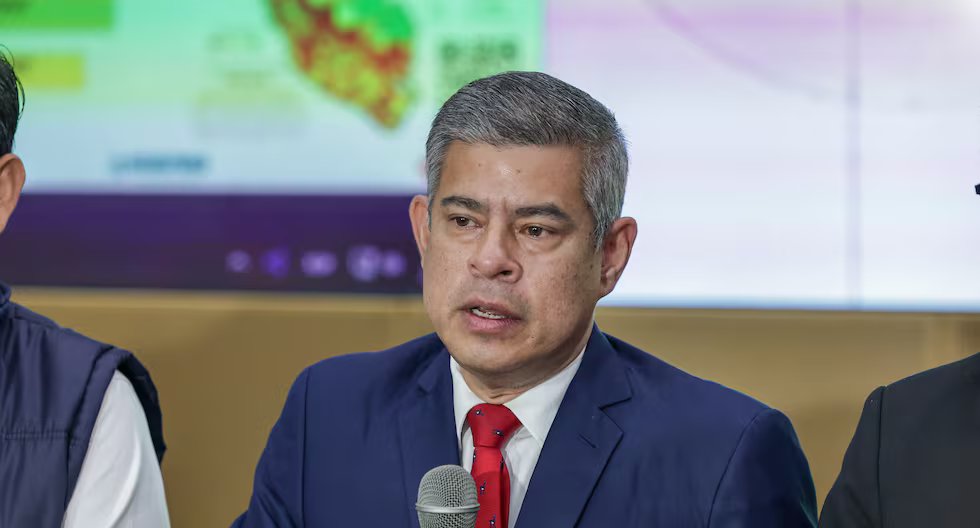

Between the unnecessary parliamentary blockade of the legislative powers requested by the government and the excessive public anxiety over management results just two months after Keiko Fujimori’s assumption of power, the president of the Council of Ministers, Luis Galarreta, should sound an urgent warning bell that the regime’s lightning rod is precisely him.
Galarreta is the second on board in the government who should be marking the advance or setback of goals and objectives, as well as the construction and orientation of results, in the long journey from 2026 to 2031, which due to the shocks of the situation seems to become short.
Galarreta would thus contribute 1) to expanding the scope of President Fujimori’s State functions, when, for example, she must deal with the Judiciary, and 2) to exercising systematic control of government performance on a day-to-day basis, including the development of goals and objectives and the measurement of results in the short, medium and long term.
Ministers have the freedom to inform and explain about this and that that concerns their own sectors, as Marco Vinelli from Agriculture, Juan Sheput from Labor, Carlos Espá from Foreign Affairs, José Antonio Chang from Education and Mauricio Arnillas from Housing have been doing frequently and well, but all of them and the others cannot be taking place in a “tour de force” through media and networks trying to bring the government closer to the people as Galarreta could do better, with greater context, dimension and authority.
Whoever is authorized to speak about a ministry is, of course, the minister of the branch. The one who has to speak for the government, after Fujimori, is the president of the Council of Ministers. That is to say: the perfect and indispensable lightning rod to avoid devastating confusion under the always charged atmosphere of Peruvian politics, full of rumors of electrical storms all the time.
With this step forward to the meeting of the press and public opinion, Galarreta will easily acquire the habit and security of specifying, expanding, completing, deepening and contextualizing many issues that week after week have to wait for the president to address, when they could be opportunely aired by the official spokesperson of the government in the PCM.
What it is about is that good government communication always and ideally accompanies good government management. But the times things went wrong, that same good government communication would have to make them transparent. Nothing worse than falling into the old and pernicious syndrome of official secrecy, having citizens drowning every day in speculation and confusion.
Galarreta has clear and concrete knowledge of where the government should and has to go, and is focused on the big, urgent and strategic issues. It also has sufficient political experience to promote and promote, within the State, a better public management system than the one that has been attempted to develop until today. He just has to more frequently combine his command chair, inwards, with his periodic press conference, outwards.