by Ivan Cairo
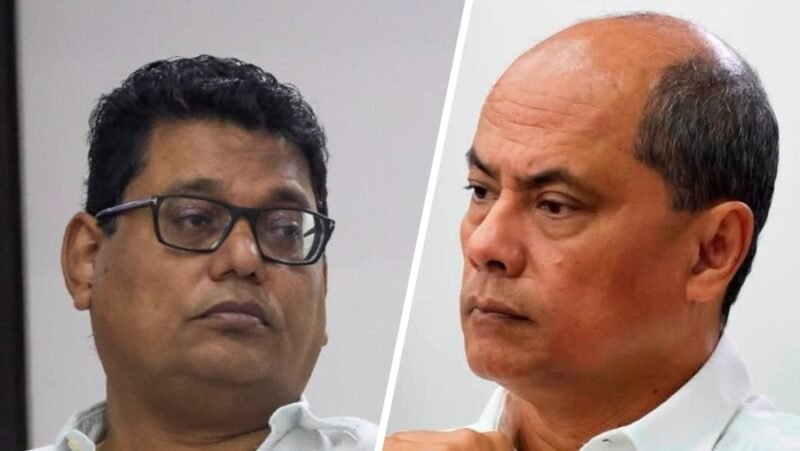
PARAMARIBO — According to an initiative proposal by DNA members Asiskumar Gajadien (VHP) and Jerrel Pawiroredjo (NPS), the president’s salary should be set at SRD 130,000 per month. The initially submitted proposal stated SRD 270,000, but according to them that is a mistake. At the same time, they want to put an end to the automatic link between the remuneration of the head of state and that of a department director.
Gajadien says in response the True Time that the original calculation incorrectly assumed four times SRD 66,000. According to him, four times the basic salary of SRD 33,000 that applied to a department director before September 1, 2026 should have been taken into account. “SRD 270,000 was four times SRD 66,000 by mistake, while it should have been four times SRD 33,000,” said Gajadien. Based on this, the initiators arrive at a target monthly remuneration of SRD 130,000 for the president.
“Four times the remuneration of a department director remains in the proposal as an indicative reference value”
The resulting remuneration of the vice president will also be adjusted. Because according to the existing scheme this amounts to 75 percent of the president’s salary, the previously mentioned amount of SRD 202,500 is corrected to SRD 97,500.
To correct the error, an amendment to the original initiative proposal was drawn up. The explanation of the change only concerns the correction of an incorrect amount. The substantive scope and system of the initiative proposal remain unchanged.
No decline in basic salary
Gajadien points out that the determination took into account the principle that the president will not suffer a reduction in her basic salary. At the request of the True Time whether the reduction of the initially stated amount from SRD 270,000 to SRD 130,000 is not in conflict with this, he answers in the negative. “This is not the case when the 15 percent increase is also taken into account.”
The initiative proposal that Gajadien and Pawiroredjo submitted is primarily intended to put an end to the automatic passing on of salary adjustments within the government apparatus to the president. Under the current arrangement, the remuneration of the head of state is linked to that of a department director. A change in the salary of such an official could therefore have consequences for the presidential remuneration without a separate decision being taken by parliament.
The initiators want to change that by independently determining the president’s salary by law from now on. They refer to Article 112 of the Constitution, which stipulates that matters concerning the president are regulated by law.
No more automatic increases
Four times the remuneration of a department director remains in the proposal as an indicative reference value. However, an increase or decrease in that salary will no longer automatically affect the president’s remuneration.
According to the proposal, future adjustments should take several factors into account. This includes the development of the general price level and purchasing power, salary development within the public sector and the financial and budgetary position of the state.
In addition, the president’s remuneration must be reviewed at least once every three years. Such an evaluation also does not mean that the salary is automatically adjusted. Any future changes will require new legal decision-making.
The initiators argue that this construction should ensure that changes in the remuneration of the head of state are assessed separately and take place under parliamentary control.
Treat as quickly as possible
Gajadien says against the True Time that the initiators want the change in law to come into effect “as quickly as possible”. He points out that other legal adjustments are also in the pipeline that relate to remuneration within the government. For example, work is being done to amend the law relating to the judiciary, whereby the periodic increases will be adjusted. When asked whether there will also be a separate bill to adjust the remuneration of members of the National Assembly, Gajadien does not provide a concrete answer in his response.
With the correction from SRD 270,000 to SRD 130,000, the amount in the initiative proposal changes significantly, but according to the submitters, the most important principle remains intact: future salary adjustments within the civil service may no longer automatically lead to an adjustment of the president’s remuneration.