SERIOUS!? / Ivan Cairo
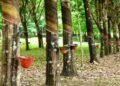
In New York, President Jennifer Simons warned the world: Surinamese forests are under pressure. A new threat has even emerged. Parties want to free up parts of the rainforest for large-scale agriculture and, the head of state informed the United Nations, “we will have to prevent that”.
Powerful words. It’s just a pity that after returning to Zanderij she may have to drive past her own Ministry of Agriculture, Livestock and Fisheries to tell them that the plans for large-scale agriculture in forest areas must be maintained.
“That is starting to look suspiciously like what we in Suriname would call a tu mofo gon: one mouth for the international stage and another for home”
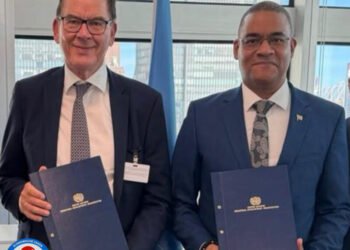
Because while the president is sounding the alarm in New York, LVV signed three agreements with Braganza Marketing Group on January 13, 2026 for user rights in areas along the Road to West Suriname. Total area: 34,185 hectares. Destination: large-scale agriculture.
Now of course anything can be true at the same time. Suriname may need agriculture and want to protect its forests. A distinction can be made between primary and secondary forest, between suitable and vulnerable areas and between controlled development and clear-cutting. Governments have policies, laws, environmental studies and land development plans for this purpose. But then the story has to be correct.
Because what does this government actually want? In New York it is said: ‘help us save the forest’. In Paramaribo, a ministry of the same government says: ‘there are tens of thousands of hectares here for agricultural development’. That’s starting to look suspiciously like what we had in Suriname tu mofo gon would call: one mouth for the international stage and another for home.
Or is there something much more clever going on? Perhaps this is not a contradiction, but higher climate diplomacy. First point to plans to convert thousands of hectares of forest into agricultural land and then say to the international community: ‘look at the pressure on our forests. If you want us to leave it alone, you can do something in return.’
A kind of ecological feint. We park the bulldozer at the edge of the forest, start the engine and then look towards the global climate fund: how much will it be worth if we turn it off again? That would be a revenue model. No carbon creditsbut bulldozer credits.
All joking aside: Simons certainly hits an important point internationally. Countries that have largely preserved their forests should not be punished by the fact that climate money only becomes interesting after deforestation has occurred. Suriname has something precious to protect precisely because of its enormous forest cover.
But credibility starts at home. Anyone in New York who warns against clearing rainforest for large-scale agriculture must be able to explain in detail in Paramaribo why their own government concludes agreements for large-scale agriculture on 34,185 hectares. Otherwise we would no longer talk about sustainable forest policy. Then the forest mainly has two mouths.