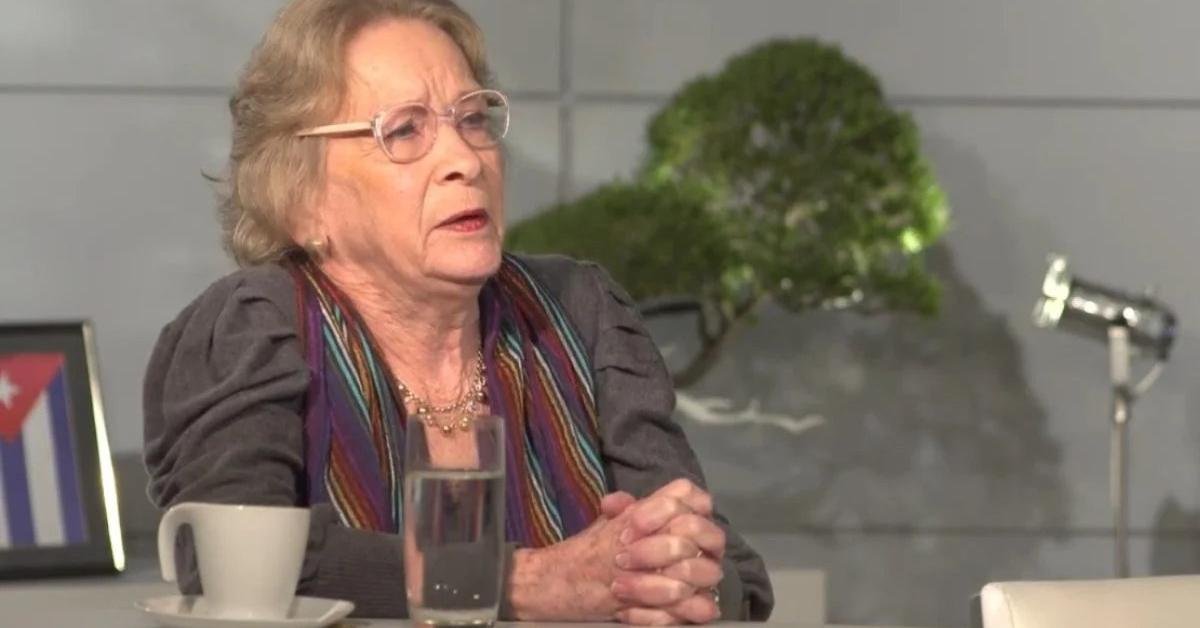
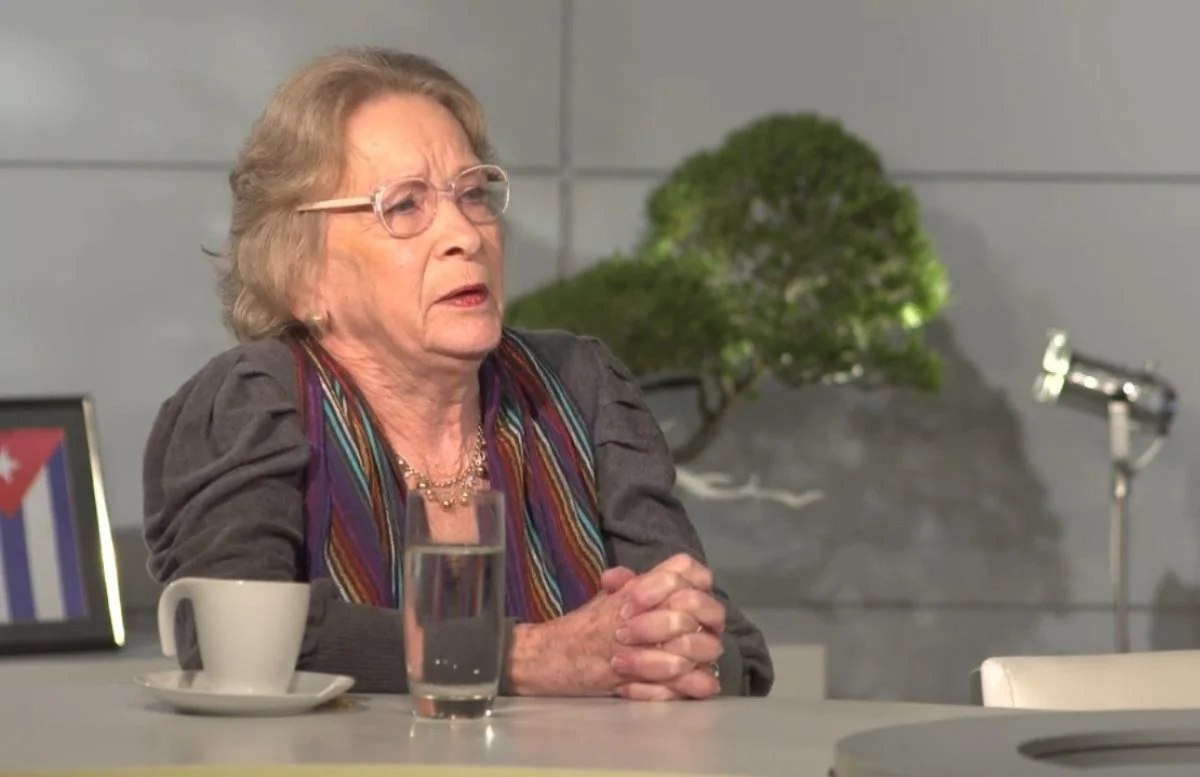
Havana/María Elena Llorente, prima ballerina and maître of the National Ballet of Cuba (BNC) and 2015 National Dance Prize winner, died this Monday in Havana at the age of 80 due to complications derived from heart failure. She died at 9:10 in the morning in the Intensive Care Unit of the Hermanos Ameijeiras Hospital, where she had been admitted for several days.
one day before, María del Carmen Hechavarríaa friend and colleague of hers for 56 years in the BNC, had warned that Llorente was “extremely critical.” According to the medical report transmitted to her by a niece of the dancer, “her renal system is not responding” and she had cardiovascular and respiratory complications, in addition to hypotension, despite having assisted ventilation.
Born in Havana on May 20, 1946, Llorente began her studies at the Escuela de la Sociedad Pro-Arte Musical and continued at the Alicia Alonso National Ballet Academy, where she had among her teachers Alicia and Fernando Alonso, Alexandra Fedórova and José Parés. She joined the BNC corps de ballet in 1962, rose to soloist in 1967 and reached the category of prima ballerina in 1976.
One of her most celebrated roles was Lisette, in ‘La fille mal gardée’, although she also stood out as Giselle and Myrtha, Odette-Odile in ‘Swan Lake’
The famous British critic Arnold Haskell, the same one who coined the expression “the four jewels” to refer to Loipa Araújo, Aurora Bosch, Josefina Méndez and Mirta Plá, defined Llorente as “a soprano of dance” to highlight the quality and expressiveness of her interpretation.
One of her most celebrated roles was Lisette, in The bad girlalthough she also stood out as Giselle and Myrtha, Odette-Odile in Swan LakeAurora in The sleeping beauty of the forest and Kitri in Don Quixote. In addition, he premiered works by Cuban choreographers such as Iván Tenorio, Alberto Méndez and Gustavo Herrera, and incorporated several pas de deux that would later assume other leading figures, among them those of The Bayadere, The corsair and the Tchaikovsky pas de deux.
Among his partners there was Lázaro Carreño, with whom he shared the stage for years. “For me, having danced with María Elena Llorente has been the same as with the many other dancers with whom I have danced throughout my career. Each one gave me at the time what I was able to take advantage of from each one; they were all different,” the dancer recalled when talking about Llorente and his other companions. in an interview published by Cubaencuentro in 2011.
In May 1977 she performed as a guest artist at the Alvin Ailey Dance Theater in New York, a presence that Harry Belafonte called “an important historical event.” Her last performance as a dancer was in 2002, during the Havana International Ballet Festival, with Souvenira choreography created for her by Eduardo Blanco.
But his farewell to the BNC, however, was far from corresponding with that recognition. In 2020, company internal sources told 14ymedio that Llorente and her husband, Salvador Fernández, designer and deputy technical director, had been forced to retire under the direction of Viengsay Valdés.
To the maître They gradually removed her functions until she was left with practically no work content: she no longer intervened in the formation of casts or directed rehearsals. The BNC historian Miguel Cabrera came to consider internally that the exclusion was something “that needed to be thought about much better.”
“For me, the company is my life. Everything I have and everything I know I owe to it,” Llorente had said in 2009. Fernández died suddenly in Havana on December 21, 2024.
Llorente’s remains will be buried this Monday in the family pantheon of the Colón cemetery, in Havana.
September 21 is a date marked by another loss for Cuban dance. That same day in 2003, Mirta Plá, one of the “four jewels” of the National Ballet, died in Barcelona.