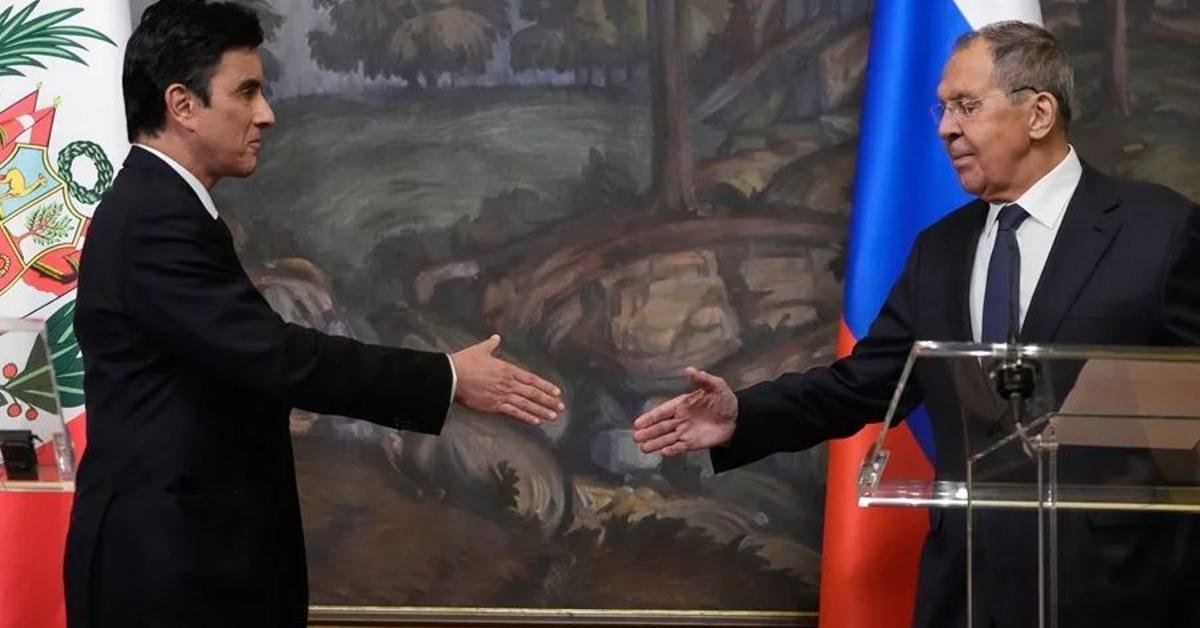
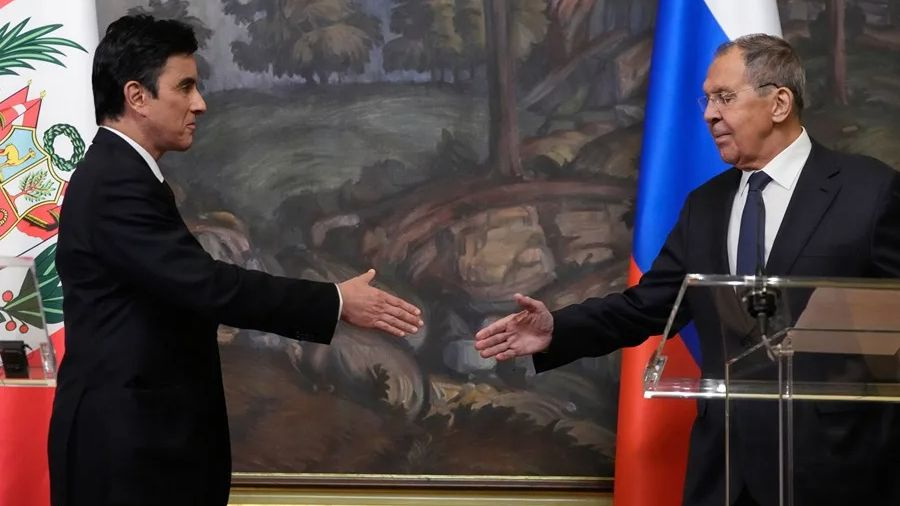
Moscow/In the first visit of a head of Peruvian diplomacy to Russia in twelve years, Foreign Minister Carlos Espá thanked the welcome and the willingness to engage in frank dialogue with Lima, but he immediately stressed that his visit is related to the concern of the relatives of the Peruvian combatants.
In this sense, he estimated the number of Peruvians whose destination wants to visit Lima at 459. Espá asked Moscow to “advance political, humanitarian and consular efforts” to find out his situation and whereabouts. He also requested to “expedite procedures for the repatriation of those who, unfortunately, have died” at the front.
“We have conveyed to His Excellency the deep concern of the families and loved ones of our compatriots and we have raised the need to have the greatest amount of verifiable information about the situation and whereabouts of our compatriots,” he said at a joint press conference with Russian Foreign Minister Sergei Lavrov.
Espá thanked his Russian colleague for his willingness to “address with frankness and a constructive spirit” the issues that brought the Peruvian delegation to Russia and that are, he stressed, of “highest priority” for the Peruvian Government.
“We have raised the need to have the greatest amount of verifiable information about the situation and whereabouts of our compatriots”
“It has been a very frank conversation,” insisted Espá, who added that there are “a series of mechanisms” that the parties plan to use following the request from the Peruvian side.
“And I also take this opportunity to publicly point out that all these efforts made by the Government of Peru and my presence here (…) respond solely and exclusively to the need of the Peruvian State to respond to the claim of the families” of the Peruvian combatants, he said.
Before the meeting with Lavrov, Espá announced that he hopes to “establish adequate channels of communication with the Russian authorities” to learn about the situation of his compatriots.
At the same time, he called on Peruvians not to be convinced by job offers that promise high income in exchange for traveling to Russia.
Lavrov stated that these are combatants who “voluntarily signed contracts with the Russian Armed Forces”
The head of Russian diplomacy, for his part, assured that Moscow has given “detailed” clarifications to his colleague about the work that is being carried out to satisfy Lima’s request and in which the Russian Ministry of Defense, the country’s Ministry of Foreign Affairs and the Peruvian embassy in Moscow are involved.
“Working contacts have been established on this issue and a visit was made to the relevant facilities in Rostov-on-Don,” said the Russian minister, who promised that “this work will continue.”
At the same time, Lavrov stated that these are combatants who “voluntarily signed contracts with the Russian Armed Forces” and asked to specify as much as possible the requests regarding the fate of one combatant or another so that the relevant bodies can respond as soon as possible to these claims.
The Russian minister added that he also informed his Peruvian colleague of “the latest news” regarding the development of the situation on the war front in Ukraine. “Peru is a very important and valuable partner for us in the Latin American region,” he said.
The Peruvian Prosecutor’s Office began an investigation into possible human trafficking after receiving hundreds of complaints from people who lost contact with their relatives.
In May, Lima denounced Moscow’s recruitment of Peruvian citizens to participate in combat as mercenaries on the Russian side. At that time, the Peruvian Prosecutor’s Office began an investigation into possible human trafficking after receiving hundreds of complaints from people who lost contact with their relatives after they received job offers in Russia.
According to independent Russian media, which cite official statistics, the number of trips by Peruvians to Russia increased this year, coinciding with information about their recruitment to fight on the Russian side.
Previously, other Latin American countries, such as Bolivia, Cuba and Colombia, also reported cases of recruitment of their citizens to fight in Ukraine, in the case of Bogotá, on both sides of the conflict.