A new digital mechanism to verify documents extracted remotely and officially approve them:

H. M
Expressive image.
Public authorities are moving to expand the actual reliance on electronic administrative documents, which will gradually put an end to a problem that has long burdened citizens, which is requiring them to re-extract the same document from the issuing administration, whenever they are forced to submit it to another administration or public body, by circulating a digital mechanism to verify the authenticity of extracted documents through the national portal for government digital services.
This approach comes in implementation of the high instructions of the President of the Republic, Abdelmadjid Tebboune, given during the Council of Ministers meeting held on July 12, 2026, related to expanding the areas of exploitation of the national portal for government digital services, and enhancing interconnection between sectors, allowing the transition from simply digitizing documents and services to making the electronic document actually usable between various departments.
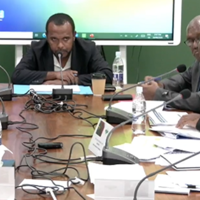
In this context, the High Prefecture for Digitization supervised, on Thursday, the organization of a training day, at its headquarters, for the benefit of information systems officials in the sectors, devoted to introducing the mechanism for verifying electronic documents extracted through the National Portal for Government Digital Services, which is the mechanism that was designed and developed by the interests of the High Prefecture for Digitization, with the aim of enabling administrative bodies placed under the guardianship of the ministerial sectors to exploit it.
This mechanism allows the administration that receives the document to verify its authenticity electronically, without burdening the citizen with the responsibility of returning to the administration that issued it in order to extract a new copy or obtain a paper document proving the validity of the information contained therein. Thus, the electronic document becomes reliable in administrative transactions, instead of remaining just a digital copy that the citizen, after extracting it, needs to convert again into a paper document.
This step is of particular importance for the citizen, because true digitization is not only measured by the number of documents that can be extracted remotely, but also by the extent of the ability of different departments to recognize and use these documents without imposing additional procedures on the file owner. A citizen who obtains a document from a public administration is not supposed to have to travel there again simply because another administration does not have a way to verify the authenticity of the document electronically.
The generalization of this mechanism would contribute to reducing movements, reducing pressure on administrative departments, and reducing the circulation of paper documents, as well as reducing repetitive procedures that accompany some administrative files. Linking information systems between sectors also opens the way for building a new relationship between the citizen and the administration, based on exchanging information and verifying it digitally instead of asking the citizen every time to be the link between administrations.
On the other hand, the process reflects the transition of the government digitization project to a more advanced stage, the main goal of which is not only the digitization of the service, but also making the various components of the administration work within an interconnected system. The presence of a digital portal is not sufficient if the document extracted from it remains linked to paper procedures when submitted to another party, and therefore the adoption of the electronic verification mechanism comes to address this gap and expand the scope of benefit from digital services.
This process falls within the High Governorate’s path to digitization, which aims to embody an integrated digital system and enhance reliance on the electronic document in administrative transactions, leading to comprehensive digitization of government services, whereby the citizen becomes able to extract the document and use it without turning administrative procedures between sectors into a new reason for moving and waiting.
Thus, the next stage of digitization will be linked to the extent of the success of administrations in adopting the electronic document and recognizing it among themselves, because the ultimate goal of digitization is not just transferring paper to screen, but rather changing the method of providing the public service itself, making the administration more coherent and the procedure simpler, and the citizen has less need to move between different departments to finish one file.