There are many tips from laboratories and specialists as the presidential elections approach:
father-in-law
Expressiveness
Montaigne Institute: Dropping the 1968 agreement and its dangers to bilateral relations
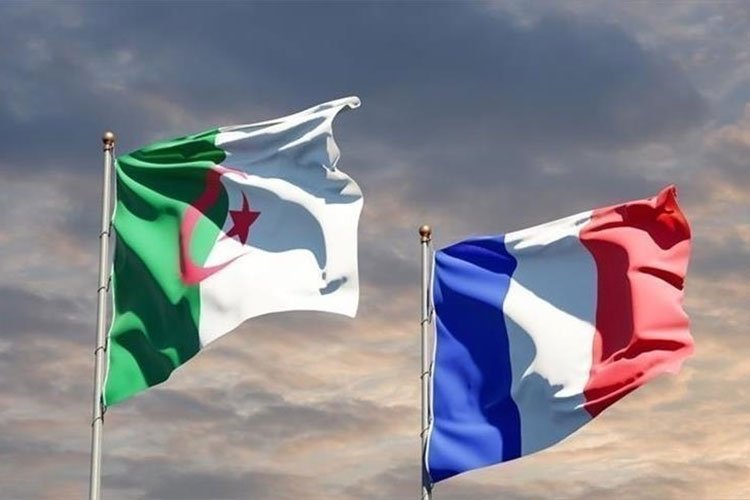
There have been many approaches and advice from French research centers and specialists regarding dealing with the Algerian authorities in light of the crisis that is afflicting bilateral relations. These efforts come close to a political transition that seems fraught with risks in France, in light of the strong possibility that the extreme right will arrive, for the first time, at the Elysee Palace.
What is new in this file is that the prestigious French Montaigne Institute conducted a study in which it attempted to explore appropriate scenarios for Paris’s dealings with Algeria in the next stage, in light of the tensions that characterize relations between the two countries at many levels, most notably immigration, economy, trade, and language.
The study was entitled “France – Algeria: Scenarios for Overcoming Emotion,” and it outlined three options for French policy towards Algeria. It calls on the French government to follow a practical approach in this relationship, with the upcoming French presidential elections approaching next year, according to a summary published on the research center’s website on the 10th of this month.
The study claims to have moved away from the emotional approach in order to help political authorities build a pragmatic stance. The priorities were formulated based on the concerns of the French party and away from the other party, and were identified in immigration, economic relations, and everything related to memory and identity (language).
As for immigration, the study says that it constitutes a concern for France, because Algeria is considered the first country whose nationals obtain more residence permits than others (650,000 permits in 2024). This is what the study called (legal immigration), which is framed in particular by the 1968 agreement, which establishes a special system for the movement, work, and residence of Algerian citizens and their families, a fact that it said conflicts with the priorities of French immigration policy.
The second aspect of this axis is illegal immigration, the management of the affairs of the Algerian population residing in France, and the return of Algerian citizens against whom expulsion decisions were issued by the immigration services in France. This is one of the controversial issues over which disagreements have decreased since the departure of the former French Minister of the Interior, Bruno Rotayo, last year.
The second axis is economic relations, which Paris attaches utmost importance given the importance of Algeria to Paris. The volume of trade exchange between the two countries reached 11 billion euros in 2024, which is a lower level than the volume of trade exchange with Morocco or Tunisia, the study says. This exchange is mainly focused on fossil fuels (hydrocarbons), which represent more than half of the volume of trade exchange and about 90 percent of French imports from Algeria.
The study believes that although France has a very diversified investment portfolio in Algeria, the potential of the economic relationship remains largely untapped. Moreover, France faces increasing competition from countries such as Italy, China and Turkey, which are leading while France lags.
The third axis of the study is “a group of broader issues related to Francophonie, memory, and geopolitics.” The study stopped when the place of the French language declined in Algeria under the influence of Arabization and the rise of the English language, beginning with the new school year, which witnessed, for the first time in the history of Algeria, French being moved to fourth grade compared to English being advanced to the third year of primary school, which caused great controversy in political and media circles in Paris.
The study acknowledged the failure of French President Emmanuel Macron’s project on the memory file, just as the position on the Western Sahara issue caused an unprecedented crisis between the two countries, while it claimed that there was consensus on other regional issues, such as the Sahel region, which has become an obsession in Paris in recent years, after it was hunted there by local governments.
To confront all of this, the study draws three scenarios. The first is that France will continue its current policy, which has not been able to address the basic problems, or adopt the option of estrangement, by unilaterally continuing to drop the implementation of the 1968 agreement, which would trigger a diplomatic crisis that may be difficult to overcome. As for the third scenario, it will “reduce tension” by adopting a more conservative approach in managing these relations.
Based on these scenarios, the study recommends adopting the third option while combining the first and second options, that is, stopping work on the 1968 Agreement, while maintaining openness to aspects of rapprochement and opportunities for cooperation, especially in the economic and geopolitical fields. This is a way out that Algeria cannot engage in according to unofficial statements, because it considered the 1968 Agreement a red line, as an extension of the Evian Agreements.
Recently, visions and opinions have emerged from specialists, tending towards a moderate approach in Algerian-French relations, calling for avoiding escalation, in an attempt to shape French public opinion contrary to what some far-right candidates for the French presidential elections are taking, in the form of Marine Le Pen, who is considered one of the advocates of extremism in relations with Algeria.