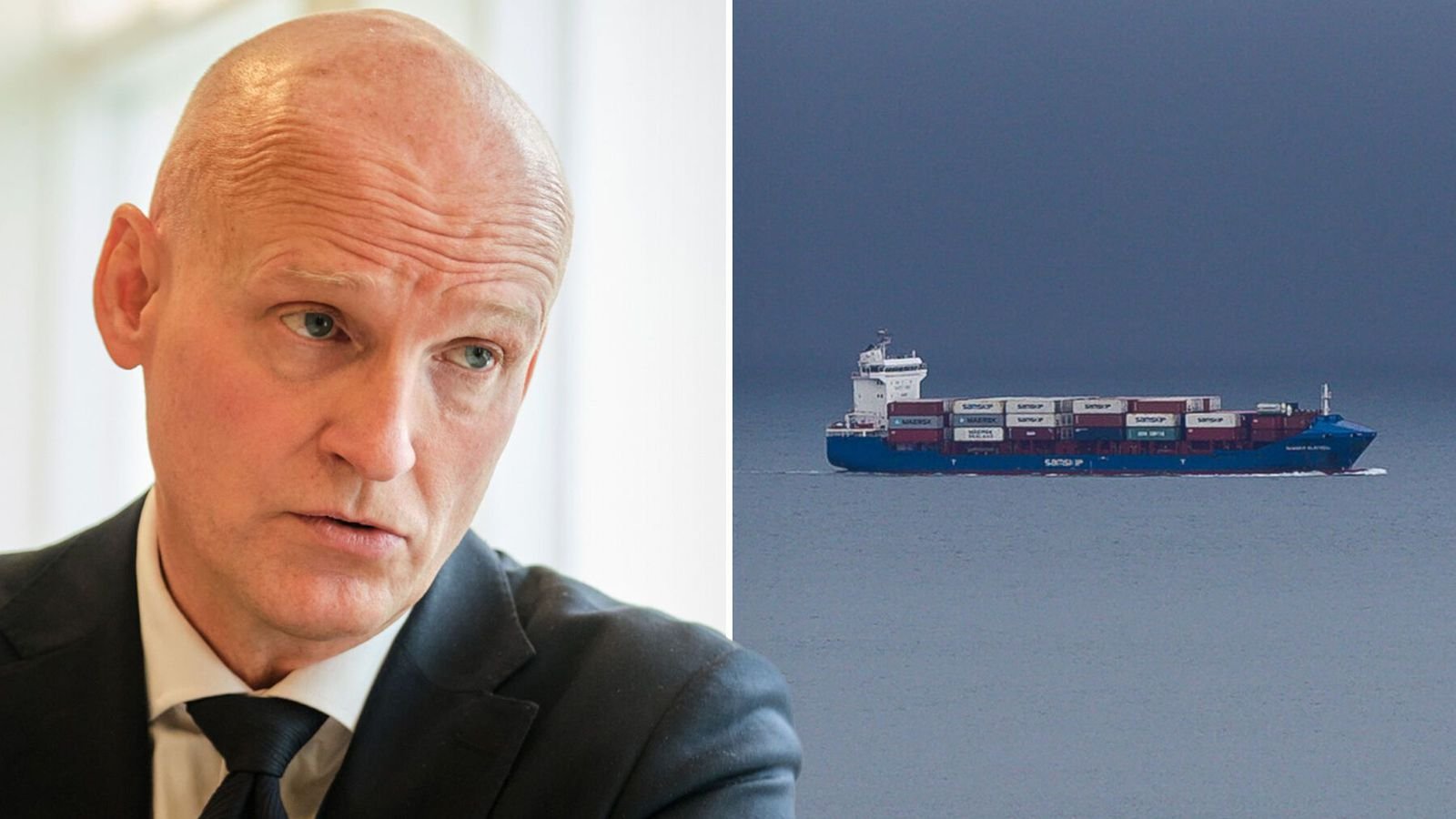
Eyjólfur Ármannsson, the Minister of Infrastructure, said that he intends to push for fees on coastal shipping under the so-called European Union Emissions Trading System (ETS) to be “cancelled” in The Island’s podcast last week.
The minister testified the report of a working group commissioned by his ministry from February on how coastal navigation could be promoted. Among the group’s proposals was for the government to push for coastal shipping to be excluded from the ETS “in the same way that domestic flights are excluded”.
However, domestic flights are covered by the ETS system and have been since the beginning. Commercial airline operators are covered by the system if their annual emissions reach ten thousand tons of carbon dioxide equivalents per year. Icelandic domestic flights have done so since the system was established.
The purpose of the ETS trading system with emission allowances is to make industrial companies, airlines and shipping companies pay for the emissions of greenhouse gases they cause and to create incentives for them to reduce emissions.
The emission of greenhouse gases is the cause of climate change and global warming, which threatens the stability of human societies and the Earth’s ecosystems.
The ETS is designed to make it progressively more expensive for companies to emit greenhouse gases. Companies covered by the scheme receive free allowances for part of their emissions, but their number has been reduced in stages.
Since the ETS was introduced in 2005, emissions from covered industries have halved. Other emissions within Europe have fallen by a fifth over the same period.
Refer to “probably” in the exemption of active air operations
Magnús Jóhannesson, the former head of the ministry who led the working group, says he cannot answer exactly where the information about domestic flights not falling under the ETS system came from, but he believes it came from the ministry.
“We didn’t have any doubts about that,” he tells Vísi, referring to the ministry.
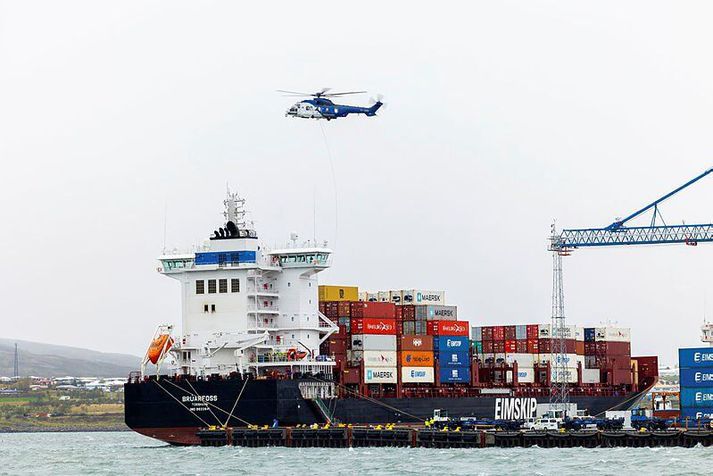
The Ministry of Infrastructure says in a written response to Vísis’ question that the wording about domestic flights in the working group’s report “presumably” referred to the fact that commercial aviation operators that emit less than ten thousand tons per year are exempt.
Domestic flights in Iceland have exceeded these limits since the beginning. Flugfélag Íslands released twelve to eighteen thousand tons per year from the car, according to figures on the website of the Environment and Energy Agency. After the company merged with Icelandair, the release of the domestic flight has been settled with the international flight.
“It is very unfortunate that the government bases this kind of argument about an exemption for coastal navigation on the fact that domestic flights in Iceland are excluded. It is just an assumption that does not hold up,” says Hrafnhildur Bragadóttir, climate expert.
The ministry did not answer Vísi’s follow-up question about whether it was not misleading to describe domestic flights as exempt from the ETS system when Icelandic domestic flights had been part of it from the beginning.
No authority to waive costs
It is also not clear on what basis the Icelandic government could in any way “cancel” costs due to the ETS system for coastal shipping. Shipping between ports in the EEA area is covered by the system, and those rules were included in the EEA agreement in 2023.
The Ministry refers the guidelines of the EFTA Surveillance Authority (ESA) on state aid for climate issues, environmental protection and energy issues, which it wants to be examined separately. They discuss the government’s clear authorizations for coastal navigation when sea transport emits less than land-based transport.
“The Minister of Infrastructure expects that those possibilities will be fully examined,” says the answer.
Mixed with a carbon tax?
It is unclear whether the ministry is mixing up national carbon taxes on fossil fuels on the one hand and the costs of emitters when purchasing emission allowances in the ETS system on the other.
The ministry’s working group proposed, among other things, that carbon taxes be abolished with the argument that shipping companies would be made to pay twice for emissions if they had to both pay those fees and submit emissions allowances in the ETS system.

The ministry did not answer Vísi’s follow-up question about whether the ESA guidelines authorized the cancellation of the costs incurred by emitters when purchasing emission allowances.
When the mileage fee was introduced at the end of the year, a legal amendment was also approved that allows shipping companies to apply for a refund of the carbon tax if they comply with emission allowances. Such refunds could first occur next year before this year.
Had to renegotiate
Hrafnhildur says it is not a simple matter to free coastal shipping from the costs of the ETS system. Rules on emission allowances for maritime transport have been included in the EEA Agreement in 2023 and will cover all ship discharges within EEA ports. Exemptions for Icelandic ports or sailings between them have not been negotiated.
Although there are limited exemptions in the system for shipping between ports in the outermost regions of the European Union and their home countries, such as between the Canary Islands and mainland Spain, they do not cover coastal shipping to Iceland.

“The directive on the trading system does not give Iceland the authority to abolish these ETS costs for coastal shipping,” says Hrafnhildur.
In order to abolish ETS fees, Hrafnhildur says that the Icelandic government would have to take it up separately at the level of the joint EEA committee in connection with a review of the ETS directive.
“It would actually be necessary to renegotiate these aspects for Iceland.”
Opportunities inherent in the system for operators
The Icelandic government now has a temporary exemption from the stricter rules of the ETS system for international flights, which has allowed them to give air carriers emission allowances that the treasury could otherwise have earned. The special solution expires after this year, but the government is now tempted to get it extended.
The European Union is now preparing review of the ETS system but stakeholders in heavy industry have pressed for a relaxation of the requirements for them to reduce the emission of greenhouse gases that cause climate change on earth.
Hrafnhildur says that Minister Eyjólf’s words that the ETS system is bad in Iceland, since its purpose is primarily to move transport to trains, are an oversimplification. The main purpose of the system is to reduce the emission of greenhouse gases. In the case of maritime transport, this can happen with increased fuel efficiency, technological innovations and sustainable fuels to name a few.
The ETS system also provides various opportunities for airlines and shipping companies. Thus, the system assumes that companies covered by it can apply for support for energy transition from the Innovation Fund of the European Union.
The carbon disposal company Carbfix received a grant of around seventeen billion ISK from the fund for a carbon disposal plant in Iceland in 2022. Hrafnhildur points out that it is a higher amount than the Icelandic state has received in revenue from the sale of emission allowances since the beginning of the system.