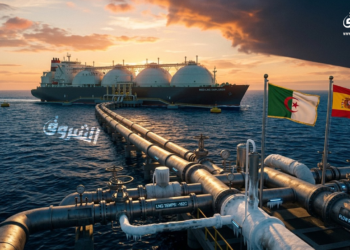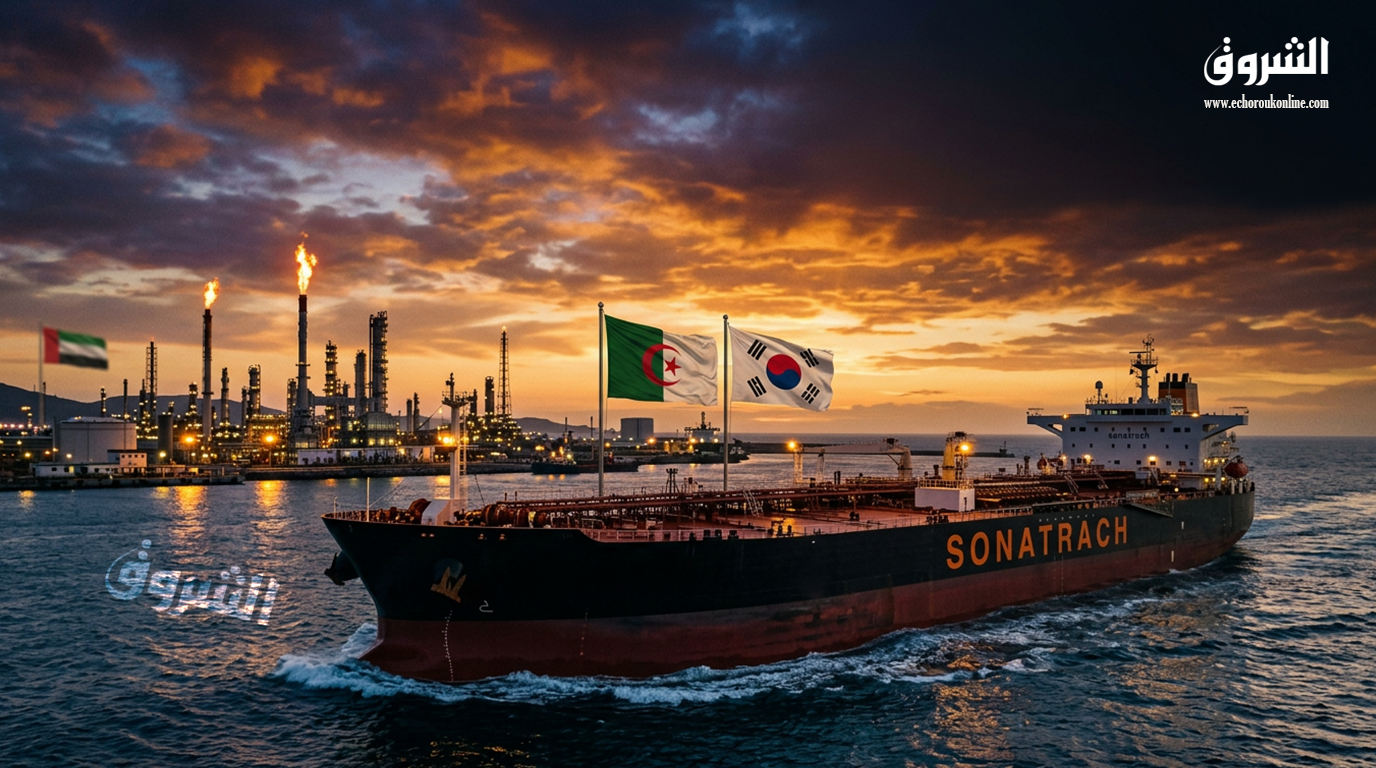
Algeria became the first supplier of naphtha to South Korea during the first half of 2026, with a share of 17.2% of the country’s total imports of this material, ahead of the UAE, the United States, India and the Sultanate of Oman, according to data from the Korea International Trade Association (KITA) reported by the Embassy of the Republic of Korea to Algeria.
KITA figures showed that Algeria’s share of South Korea’s naphtha imports amounted to 17.2% during the first six months of the year, compared to 14.5% for the United Arab Emirates, 13.0% for the United States, 9.7% for India, and 9.3% for the Sultanate of Oman.
Thus, Algeria records progress for the first time over the UAE, which topped the list of naphtha suppliers to South Korea during the years 2024 and 2025. Algeria’s share also rose steadily from 12.9% in 2024 to 15.6% in 2025, before reaching 17.2% during the first half of 2026.
And it counts Naphtha An essential raw material in the Korean petrochemical industry, which enhances the importance of Algeria’s position as a source of this material, given its strong base in the energy sector. Hydrocarbons represent about 90% of Algeria’s exports and about 65% of state revenues.
Algeria has five refining complexes, including the Skikda complex, with a total capacity exceeding 30 million tons annually, while the national company Sonatrach continues to expand its capabilities in this field.
Algeria’s Mediterranean location gains strategic importance in this context, as its supply routes do not pass through the Strait of Hormuz, through which navigation and supply routes have witnessed a state of instability, which has contributed to the restructuring of some energy trade routes.
These developments highlight the importance of diversifying supply sources for energy security, at a time when South Korea continues to rely on naphtha imports to meet the needs of its petrochemical industry.
The Embassy of the Republic of Korea in Algeria confirmed that it will continue to support expanding the scope of economic cooperation between the two countries, including cooperation in the energy sector.
The figures are based on trade statistics from the Korea International Trade Association (KITA) and data from the Korea Trade and Investment Promotion Agency (KOTRA), under customs clause HS 2710.12.4000.