Chairman of the Geopolitical and Environment Committee of the Advisory Council for the Reconstitution of Niger:
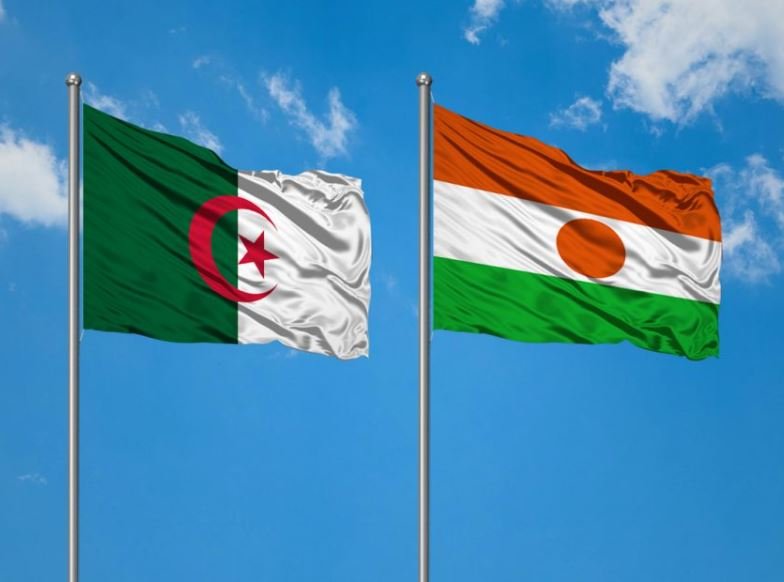
Professor Bana Ibrahim, Chairman of the Geopolitical and International Environment Committee of the Advisory Council for the Reestablishment of the Republic of Niger, believes that Algeria’s recent decision to send a detachment of military units to his country to protect energy and economic facilities reflects a political will aimed at adding a practical dimension to the deep-rooted relations between the two countries, especially since it comes in response to a request issued by the Nigerien authorities.
During an interview with “Al-Shorouk”, on the sidelines of the work of the Dong Fung Scholarship at Peking University, Professor Bana Ibrahim confirmed that Algeria and Niger are capable of establishing regular coordination between defense and security institutions, training individuals, exchanging relevant intelligence information, and strengthening border control means, provided that cooperation expands to customs departments, departments in charge of combating smuggling, and local authorities.
In this context, our speaker, who is also Vice-Chairman of the Diplomatic Committee for the Confederation Sessions of the Parliaments of the Sahel Alliance, asserts that the new option will improve the conditions necessary for the implementation of major joint economic projects, most notably the Trans-Saharan Gas Pipeline.
What symbolic and constitutional significance do you give to the Algerian Parliament’s decision?
I believe that we are witnessing an important development in relations between Niger and Algeria. But to understand the dimensions of this development, we must look beyond the military decision itself.
Our two countries share a common history, social ties, economic exchanges, and a security reality that does not stop at the borders inherited from colonialism. The human ties that unite the people of the Sahara are much older than the emergence of our modern states.
The decision taken by Algerian institutions on October 25 and 26, 2026 reflects a political will aimed at giving a practical dimension to these deep-rooted relations.
From a constitutional standpoint, this decision is of special importance. Algeria relies on provisions included in its 2020 constitution to allow sending military forces abroad. This option represents a departure from a long tradition of reticence regarding the involvement of Algerian forces outside the country’s borders.
From the Nigerian point of view, the key element is that this cooperation is in response to a request from our sovereign authorities.
However, I would like to emphasize that true trust between two countries is not measured by the mere presence of their military forces on the same land, but rather by respect for obligations, equality of interests, and the ability to maintain each party’s sovereignty in a sustainable manner.
According to these criteria, this new phase of relations between the two countries should be evaluated.
What practical outcome can be drawn so far from the announced military deployment?
A distinction must be made between the results already achieved within the framework of our military cooperation and the military deployment that was decided upon recently.
We have already recorded concrete steps, including the delivery by Algeria of four helicopters to our army in August 2026. This contribution to strengthening the capabilities of the Nigerian Armed Forces is a verifiable reality.
As for the new military deployment, it is too early to present an operational outcome regarding it, as the details of its implementation and initial results have not yet been publicly determined.
What we can evaluate today are the objectives sought from it.
Protecting energy facilities, securing economic hubs, and monitoring some border areas are all goals that respond to real needs. The Sahara is crossed by legitimate trade networks, but it also witnesses organized crime activities and the movements of armed groups.
However, we should not confuse securing an energy facility with solving the overall security problems facing Niger.
For us, the success of this cooperation must be reflected in measurable results: reduced attacks, improved population protection, greater security for transporters, and safer movement of people and goods.
Based on these results, not just advertisements, we can evaluate this cooperation and judge its effectiveness.
How can the military protocol be transformed into a sustainable mechanism for security and development?
A military agreement will have sustainable value only if it contributes to building capabilities and establishing mechanisms that will continue to operate even after the circumstances that necessitated its signing have passed.
I believe that our two countries are capable of working to establish regular coordination between defense and security institutions, training personnel, exchanging relevant intelligence information, and strengthening border control methods.
But this cooperation should also extend to customs departments, the departments responsible for combating smuggling, and local authorities.
Cross-border smuggling cannot be combated by military means alone; Rather, it is necessary to fight the financial networks that finance it, improve the performance of border crossings, and develop economic alternatives available to the population.
I believe, above all, that a mistake into which several African countries have fallen must be avoided, which is the belief that a foreign military presence, even if it is affiliated with a friendly country, can permanently replace building their own self-defense capabilities.
Our primary goal must remain the strengthening of Nigerian capacities, within the framework of a partnership in which tasks, responsibilities and boundaries are clearly defined.
Security should enable development, and development, in turn, should contribute to reducing the factors that fuel and perpetuate insecurity.
Can this cooperation accelerate the implementation of major economic projects, especially the trans-Saharan gas pipeline project?
Certainly, effective security cooperation can improve the conditions necessary to implement our joint projects, but it alone is not sufficient to ensure their success.
Let us take the Trans-Saharan Gas Pipeline Project as an example. It is a project that concerns three countries, namely Nigeria, Niger and Algeria, and could create an important energy corridor linking sub-Saharan Africa with North Africa and international markets.
For Niger, the benefit should not be limited to the mere passage of the gas pipeline through its territory.
Rather, we must seek to ensure fair returns, provide job opportunities for our youth, develop technical competencies, complete the accompanying infrastructure, and benefit, whenever economic and technical conditions allow, from the project’s implications for improving our country’s access to energy.
The same applies to oil investments and trade exchanges.
Securing facilities is essential, but residents must tangibly see the benefits these investments bring.
We also have other achievements that should be consolidated. The entry into exploitation of the trans-Saharan fiber optic link between Algeria and Niger demonstrates that our cooperation is capable of achieving tangible results in the field of digital infrastructure.
I am convinced that the best way to give our rapprochement a sustainable dimension is to ensure that it has a positive impact on the living conditions of the population.
What role can Nigerian parliamentary diplomacy play in this cooperation?
I would like to clarify an institutional issue. Niger is currently going through the reconstitution phase, and our institution, the Reconstitution Advisory Council, does not exercise exactly the same powers as Parliament would exercise under a normal constitutional system.
However, this does not prevent us at all from contributing to parliamentary diplomacy, through our actions, recommendations, and the dialogues that we can conduct with representative institutions in foreign countries.
As Chairman of the International Geopolitical and Environment Committee, I believe that the institutional dialogue with our Algerian counterparts deserves further development.
We can think about organizing meetings and exchanges with the relevant committees of the Algerian National People’s Assembly and the National Assembly on issues of regional cooperation, security, development and economic integration.
It would also be beneficial to involve representatives of border communities, economic actors and traditional authorities more.
The relationship between two countries should not depend exclusively on the nature of the relations between their leaders at the current stage, but rather it should be built gradually through institutions and common interests.
Finally, we must remain attentive to our regional surroundings, as Niger belongs to the Confederation of Sahel States, which includes Mali and Burkina Faso. Therefore, strengthening our cooperation with Algeria must be consistent with our confederal obligations.
Our interest is to enhance integration and reduce regional tensions, not to replace old rivalries with new ones.
What message would you like to send to regional and international partners regarding this model of African-African cooperation?
The message I would like to emphasize is simple: African countries must be able to determine their own security priorities and choose partnerships that they see as compatible with their maritime interests.
Niger has affirmed its will to regain full control over its political, economic and security options.
This trend does not mean that we should isolate ourselves or reject all forms of international cooperation, but rather it means that cooperation must be based on respect for our sovereignty and on clearly defined interests.
Algeria is an African country with which we share common borders, one history, and many issues of common concern. It is natural, therefore, that we seek together to find solutions to some of the challenges facing us.
But I think an important thing should be made clear: the presence of military forces of a neighboring country does not automatically make cooperation successful just because that country is African.
What will make the difference are the terms of this commitment, the actual respect for Nigerian sovereignty, the results achieved, and the absence of mechanisms that might lead to long-term dependency.
It is this principle that should guide Niger’s partnerships in the security field.
If our cooperation with Algeria allows for better protection of the population, strengthening our own capabilities, and supporting our economic projects, then it could constitute a useful experience for other African countries.
What is your last word that you would like to address to the Algerian people?
I would like, first of all, to address the Algerian people a message of brotherhood and appreciation.
Our peoples do not know each other today. Rather, they have relations that extend for generations, through trade, migration, family ties, and the life of desert communities.
Niger is aware of the history of the Algerian people, their sacrifices for independence, and the extent of their adherence to their national sovereignty.
For our part, we are embarking on our own path of re-establishment, with its accompanying realities, challenges and ambitions.
I hope that this new phase of our relations will be a platform for building sustainable trust, based on mutual respect and achievements whose benefits directly benefit our two peoples.
And the borders that separate us administratively remain a space for meeting, exchange and cooperation.
Most importantly, our rapprochement will contribute to building a desert region where security allows people to live, work, trade and move in dignity.
Long live the friendship between the Nigerian and Algerian peoples. May God protect our two countries and maintain peace in our region.