Danish sled patrols in battle on life and death against the Nazis in Northeast Greenland during the Second World War is a well-described story, while other military actions and installations along the East Coast are under-examined.
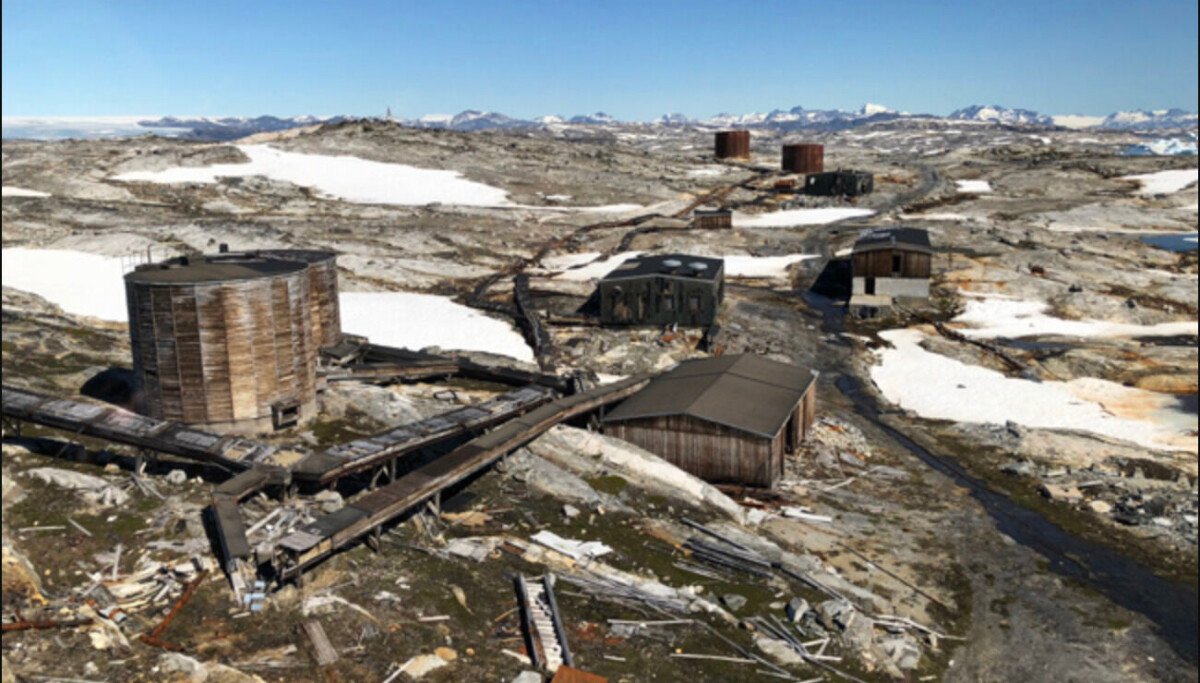
Documentation is urgent, however, because seven stations and facilities from Ittoqqortoormiit to Cape Farewell are on the list of Danish clean-up by the American military during World War II and the time that followed. And then there are no longer any physical traces of a decisive period in Greenland’s history.
Danish sled patrols in battle on life and death against the Nazis in Northeast Greenland during the Second World War is a well-described story, while other military actions and installations along the East Coast are under-examined.
Documentation is urgent, however, because seven stations and facilities from Ittoqqortoormiit to Cape Farewell are on the list of Danish clean-up by the American military during World War II and the time that followed. And then there are no longer any physical traces of a decisive period in Greenland’s history.
The Bay of Whales radio and weather station at Ittoqqortoormiit was cleared in 2020-21.
The Ikkatteq air base at Tasiilaq needs the final clean-up. (Several installations remain to document the history, and a local plan makes the site accessible to residents and tourists).
On the other hand, the other installations in East Greenland are “unknown land”: the Loran stations Orssuiagssuaq and Qutdleq, the rescue station Commanche Bay, the weather station Skjoldungen and the weather and radio station Camp Cort Adler, which are located in Kommuneqarfik Sermersooq and Kujalleq Municipality.
Next stop Comanche Bay
Greenland’s National Museum & Archives has so far visited nine of the places on the list, which are documented in reports – before the bull zones move in.
The museum visited the Ikkatteq air base at Tasiilaq in 2018, but has yet to document the five stations and facilities along the coast of Southeast Greenland. The concrete travel plans, which must be coordinated with the museum’s other tasks during a short but hectic field season, have not yet been decided. It will probably be most practical to start with the loran station Orssuiagssuaq and the rescue station Comanche Bay, which is closest in sailing distance to Tasiilaq and the village of Isertoq.
The museum’s area manager for the conservation department, Mikkel Myrup, has visited six of the 17 places on the list in connection with the clean-up.
– Comanche Bay contains an exciting history, and it will be interesting to see how much is left today, says Mikkel Myrup to Sermitsiaq.
The United States established Comanche Bay, in Greenlandic Igtip Kangertiva, as a rescue station south of Isertoq to be able to rescue military aircraft that were forced to make an emergency landing on the ice sheet. Personnel and construction equipment were landed in July 1942 from the ship “Comache” from the US Coast Guard. The associated weather station on top of a 351 meter high mountain was named Atterbury Dome after the “Comanche” captain.
When a Boeing B-17 Flying Fortress soon after made an emergency landing on the ice not far from Comanche Bay, a rescue operation ran into difficulties. Two men died in dangerous crevasses near the crash site, and following the accident the base was closed in the fall of 1942.
The World War continued unabated and Comanche Bay was re-established in 1943. The two stations were closed at the end of the war.
Waste is also part of the story
Naalakkersuisut’s chairman Kim Kielsen and Environment Minister Esben Lunde Larsen entered into an agreement in 2018 on Danish clean-up of the abandoned bases from the American era in Greenland. The work is led by a steering group with the Ministry of the Environment and the Ministry of Defense and the Department of Nature and the Environment.
The steering group acknowledges that they did the math without a host:
– In the run-up to the conclusion of the agreement, the issue of preserving facilities and equipment was not a theme.
But it is, on the other hand, an all-important theme in the Act on the Protection of Cultural Heritage, which places Greenland’s National Museum & Archives as the guardian of our past. This also applies to the American bases and installations, which represent an important story about Greenland’s strategic role in the Allied defense of Europe during the Second World War.
– The presence of the US military has had significant impacts on Greenlandic society, and the air bases and weather stations represent an important part of modern Greenlandic history and the modern geopolitical relations between Greenland, Denmark and the USA, the museum emphasizes.
Aaja is not buying the delays
The political agreement of January 2018 predicted that the cleanup would last six years. The Defense Establishment and Terrain Command enters into the contracts with Greenlandic engineering and construction companies, and according to the latest project plan, dated 26 May 2026, the clean-up at Ikkatteq, where work has stalled, and at the five stations in Southeast Greenland will be completed in 2034 – 16 years after the political ink was dry
The steering group acknowledges that the task has been more complicated and lengthy than initially expected.
Among the obstacles are limited prior knowledge of the 17 sites, but also the involvement of Greenland’s National Museum & Archives and the municipalities, clarification of ownership, bad weather with ice and the corona epidemic 2020-22.
Inuit Ataqatigiit member of parliament Aaja Chemnitz was not impressed when Danmarks Radio’s P1Morgen on 17 February focused on the delays.
– In 2026, we cannot continue to blame the corona epidemic for delays. If the clean-up falls behind, the state must deploy additional resources to make up for what was lost. The money is in the treasury, so it’s about the will to follow the clean-up to the door, said Aaja Chemnitz.
Inuit Ataqatigiit’s current Member of Parliament Naaja H. Nathanielsen is not so sure.
– I don’t know the concrete clean-up plan, and therefore I don’t know whether it will go quickly or slowly, says Naaja H. Nathanielsen to Sermitsiaq.
– Greenland’s National Museum & Archives must document the locations, and this naturally takes a few seasons. The engineering companies probably also had to do their analyzes over a few seasons. So my logic tells me that the concrete clean-up could not be started until 2020 at the earliest, when all field work was made difficult for several years due to covid. So, in reality, maybe only a start on the work in 2022-23.
– Therefore, I do not want to jump to a conclusion that the implementation of the agreement is going too slowly – in addition to the fact that it comes 30 years too late, says Naaja H. Nathanielsen.