EPFL: tiny drones powered by sound waves
Keystone-SDA
Researchers at the Swiss Federal Institute of Technology in Lausanne (EPFL) have invented small drones that use sound waves as fuel to power through air and on water.
Researchers achieved this by equipping the vehicles with cavities that convert sound into propulsion.
Thrust varies depending on the specific frequencies of the sounds emitted.
+ Swiss robotics moves from research to delivering products
The innovation developed by the MicroBioRobotic Systems Laboratory (Microbs) at EPFL’s Faculty of Engineering Sciences and Technology consists of creating hollow structures that are circular or bell-shaped, known as ‘cavities’.
When sound waves cause the air inside these cavities to vibrate, the oscillating air is expelled as a concentrated jet, whilst the incoming air flow is more diffuse.
This imbalance generates a thrust capable of propelling the tiny drones, states a press release from EPFL, which reports on a paper published in the journal Science Advances.
+ Drone test site lined up in central Switzerland
The researchers exploited a property known as Helmholtz resonance. The obscure refers to a phenomenon familiar to everyone – first studied by the German scientist Hermann von Helmholtz – of gently blowing through the neck of an empty bottle.
Levitation trick
As well as producing a note, the breath causes the air trapped inside the container to oscillate.
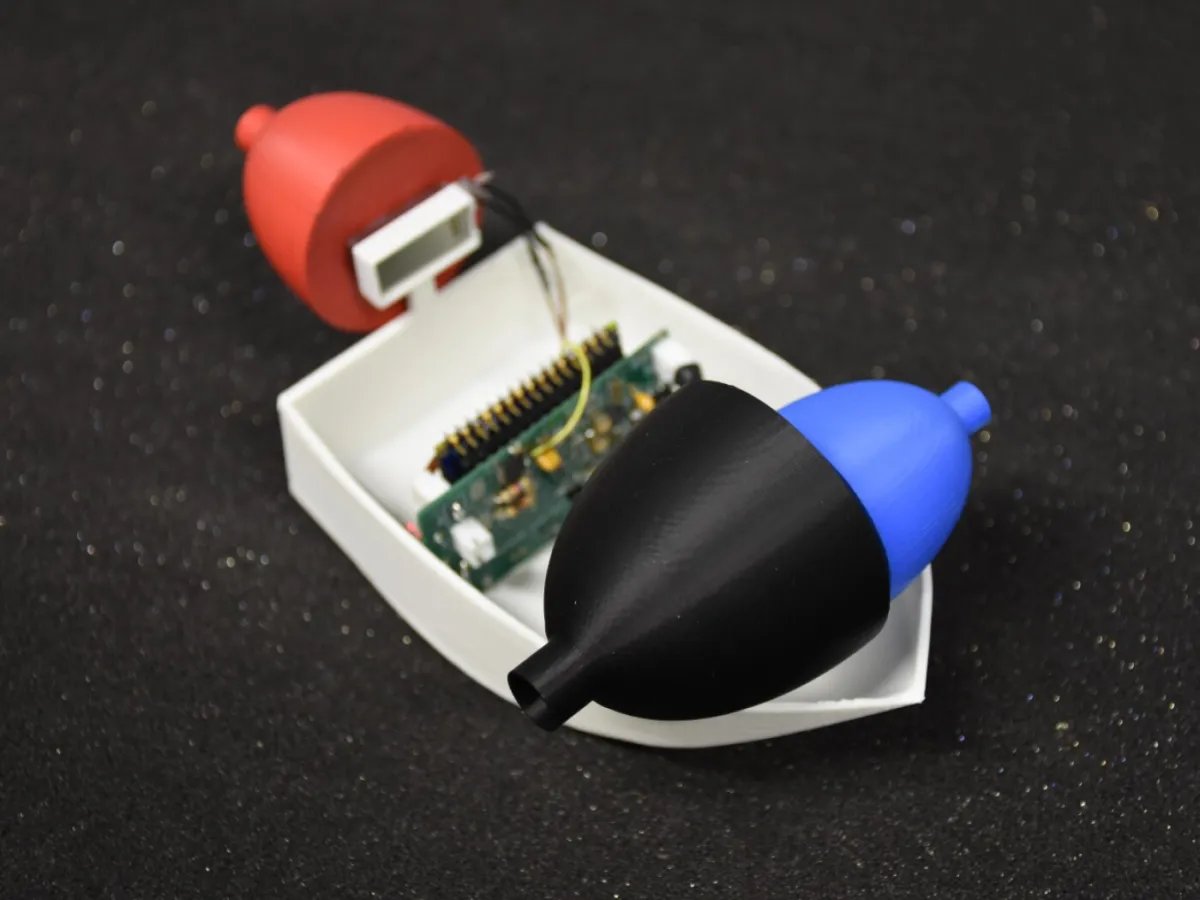
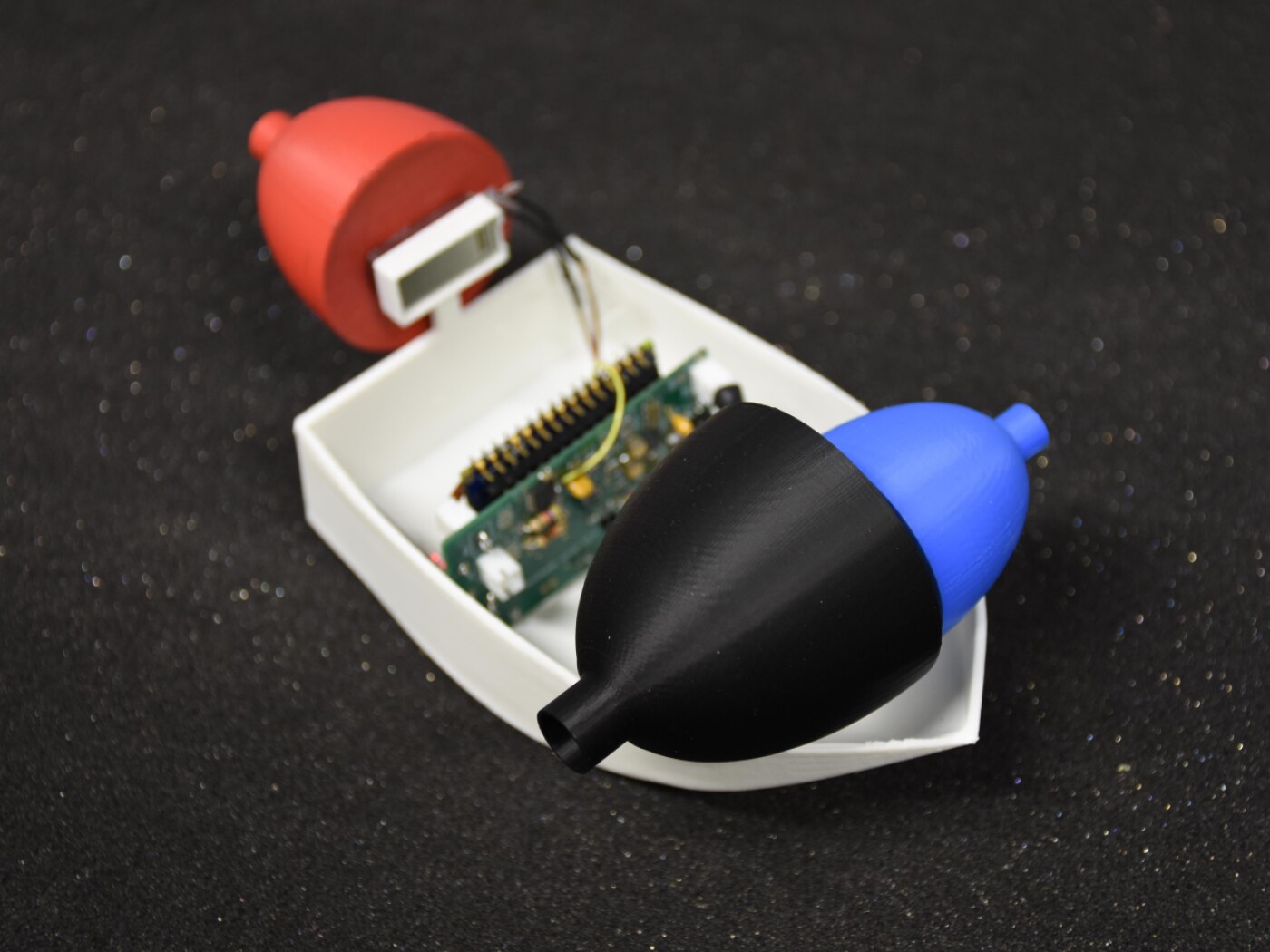
Microbs, for example, has built model boats, about one centimetre long, equipped with up to three cavities, each tuned to a different frequency and positioned to propel the tiny vessel in a specific direction.
By adjusting the frequency of the sound waves emitted by a loudspeaker, the researchers were able to selectively activate different cavities to move the boats, make them navigate around obstacles and even programme them for autonomous navigation. Similar experiments have been carried out with flying microdrones.
As these devices rely on hollow cavities rather than motors, gears or magnetic components, they can be made extremely small and lightweight. In the future, several sound-sensitive structures could be integrated into a single flexible device, each of which would respond to a different sound frequency.
“This would allow specific parts of the device to move, bend or vibrate, which could lead to the creation of aerodynamic robotic devices capable of changing shape in response to sound,” said Selman Sakar, director of the EPFL laboratory.
The technique has also been used sound waves to levitate objects in the air.
More