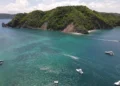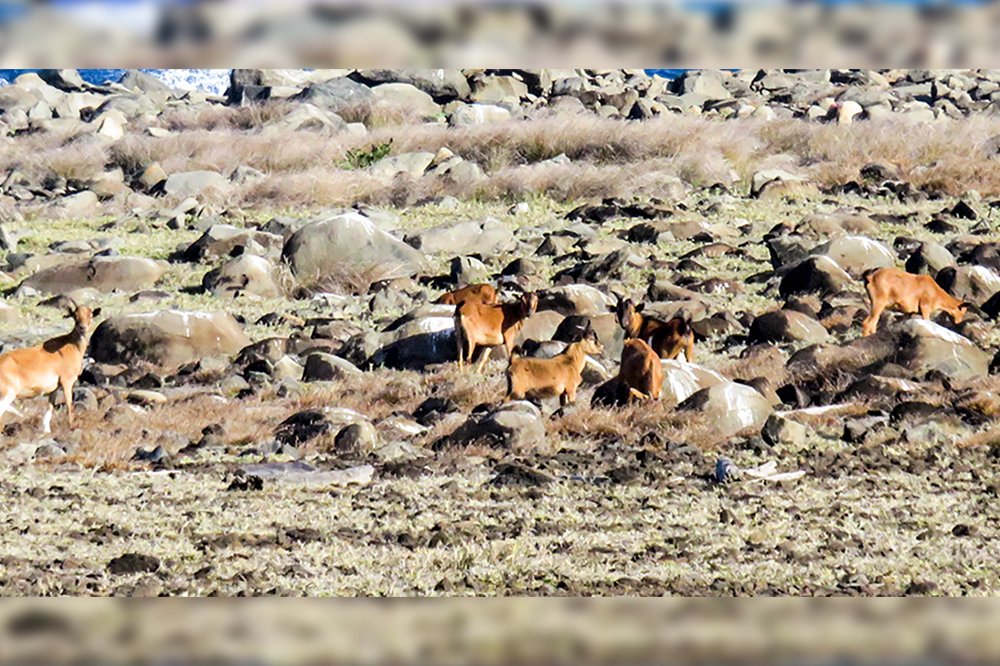
THE SUCCESSFUL REMOVAL of dozens of invasive goats from Battowia, one of the Caribbean’s most important seabird nesting islands, has been hailed as a major milestone for the Grenadines Seabird Restoration Project implemented by EPIC and its partners.
For years, free-roaming non-native goats have damaged the island’s fragile ecosystem by overgrazing native vegetation, accelerating erosion, and reducing the quality of habitat that seabirds depend on for nesting, a July 16 release from EPIC states. “Removing this invasive animal is a critical step toward allowing the island’s natural vegetation to recover and restoring habitat for species such as the Red-footed Booby, Magnificent Frigatebirds, Laughing Gulls, and the Brown Booby within one of its most important breeding colonies in the region,” the release also states in part.
The Grenadines are home to three globally important and 18 regionally important seabird nesting sites, as well as the most extensive coral reef complex in the southeastern Caribbean. EPIC explains that seabirds contribute directly to reef health by transferring nutrient-rich guano, or poop, into surrounding coastal waters, particularly in locations where numerous seabirds are nesting and roosting. This nutrient-transfer promotes coral growth and in turn supports reef-dependent fish populations. It points out too that fisheries in the Grenadines are vital for local food sources, employment, and export revenue. Seabirds are also vital to maritime livelihoods through helping fisherfolk locate fish, navigate at sea, and interpret changing weather conditions.
Explaining the process EPIC outlines that the Battowia restoration operation required extensive planning, coordination, and specialized field expertise. Invasive species specialists, with experience in offshore Caribbean island restoration and invasive species removal, were hired to carry out the work with oversight from EPIC’s local field team. A research permit was applied for and granted by project partner, the St. Vincent and the Grenadines Forestry Department. Logistical considerations had to be navigated including the transportation of equipment and people, by air, land, and sea. Daily conditions were not always ideal during the month-long effort, and on some days, work had to be put on hold until the weather, wind, or waves cooperated to provide safer passage to or from the offshore island worksite.