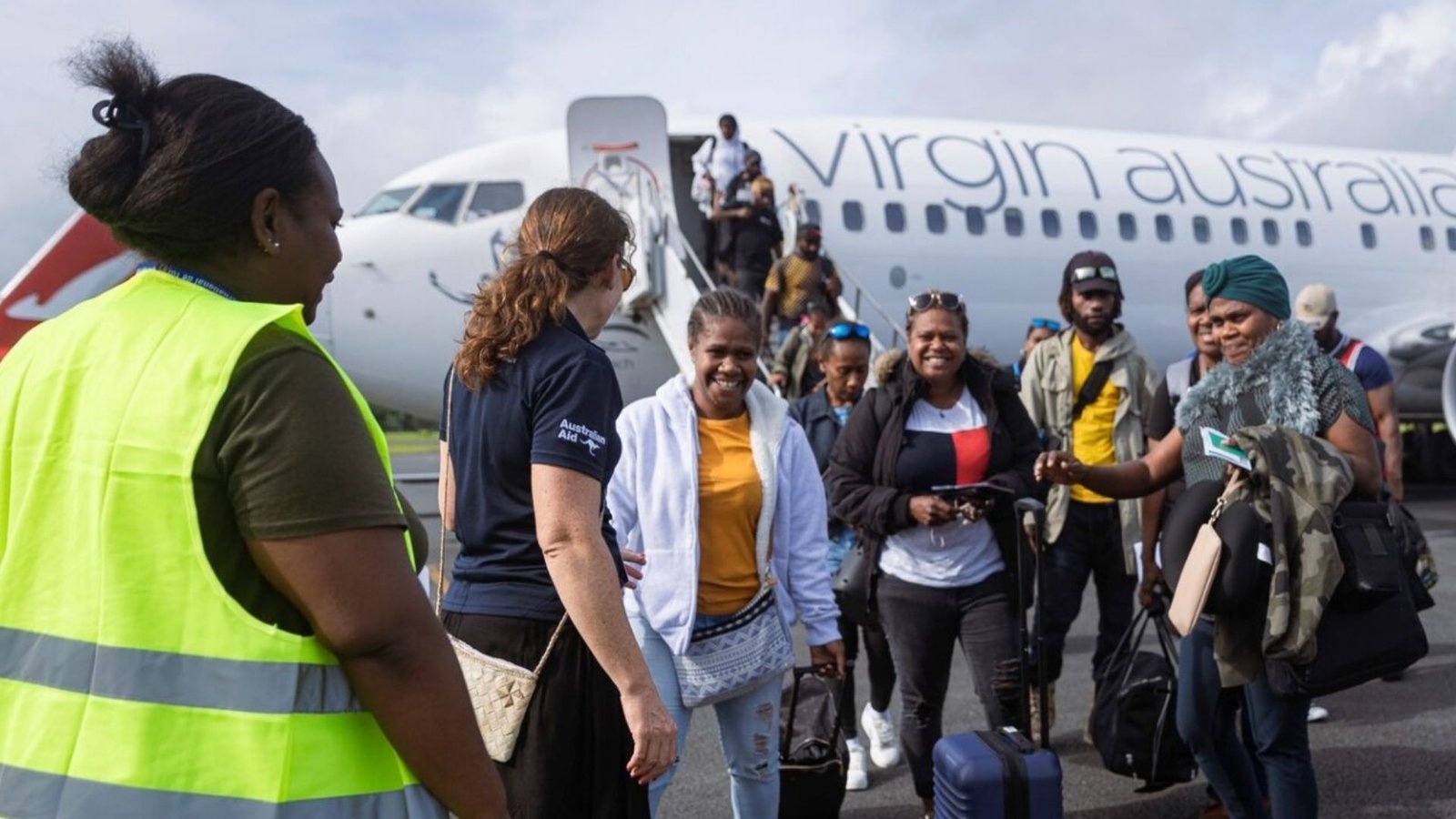
For many Pacific families, migration has never just been about moving countries: it is about building a future while staying connected to home.
But new migration changes being considered in Aotearoa New Zealand and Australia are raising fresh questions for Pacific communities about how families will settle, reunite, and belong.
In New Zealand, the government is expected to announce changes to the parent category resident visa, which allows migrants to bring their parents to live permanently in the country.
The visa system, which reopened in 2022, currently allows 2500 parent residence visas each year through a ballot system.
Thousands of families have expressed interest with critics saying the process feels like a lottery for people who have waited years to reunite with their parents.
The changes come as Pacific Settlement Support Services (PSSS) expands its work supporting Tongan migrants before they arrive in Aotearoa.
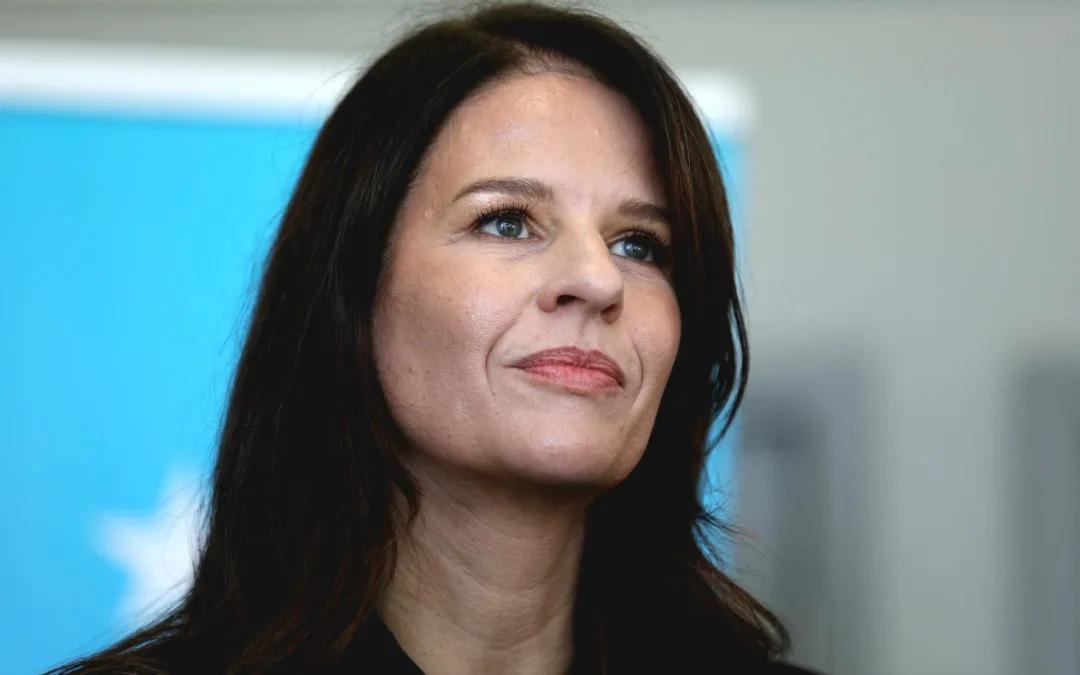
NZ Immigration Minister Erica Stanford. Photo/RNZ/Nick Monro
Speaking with John Pulu on PMN Tonga, PSSS founder Mandy Siitia said preparing families before they leave home is critical because many arrive without knowing how life in New Zealand works.
“Often by the time they come, they haven’t prepared themselves,” she said. “The obvious is just like not even wearing the right clothes.
“As simple as that, right down to the smallest things like organising car seats for cars when they get picked up from the airport, understanding whether or not they can use their driver licence here, and more importantly, bringing the right documentation.”
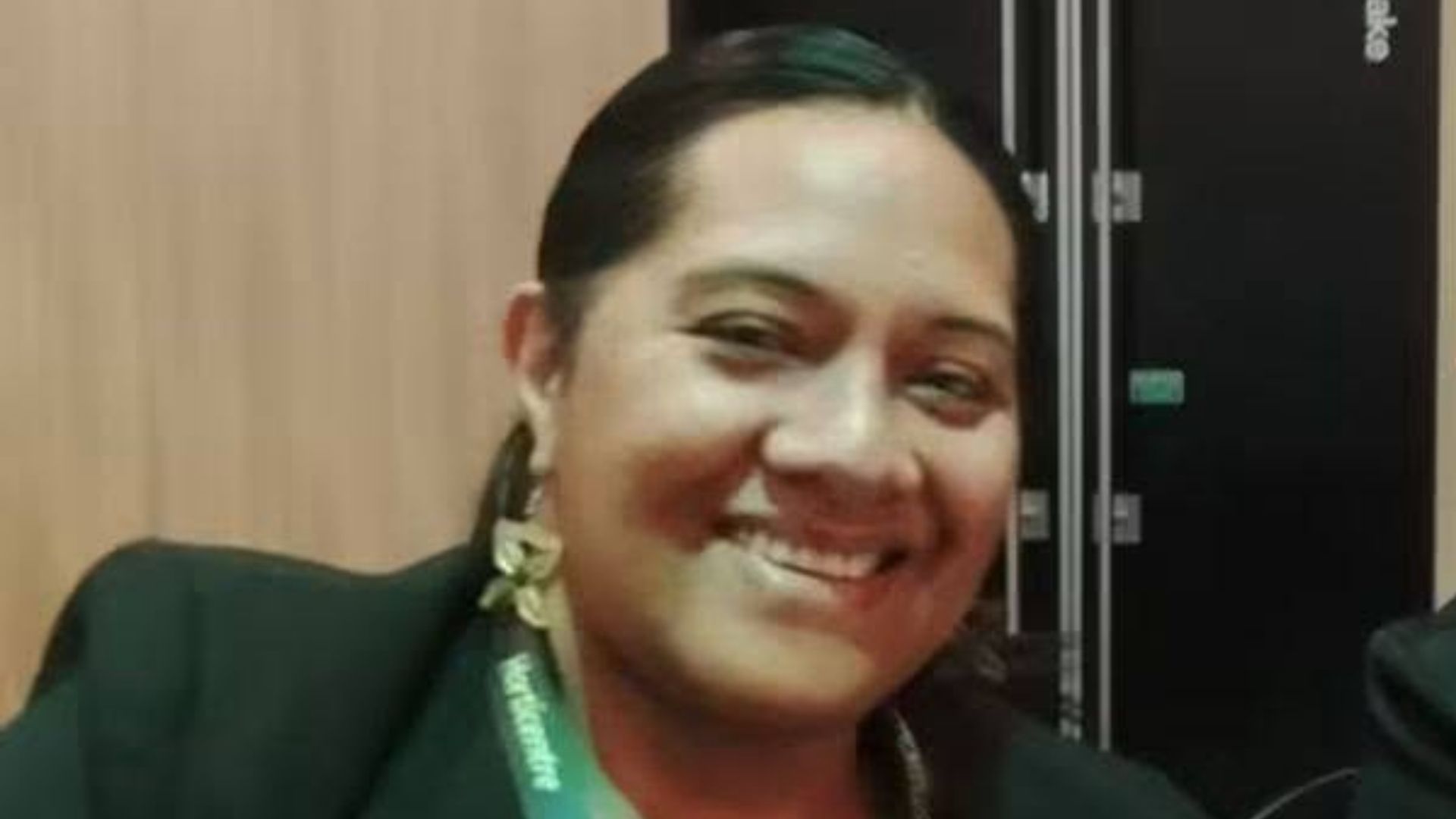
Pacific Settlement Support Services executive Mandy Siitia says preparing migrants before they arrive is key to helping Pacific families settle successfully in Aotearoa New Zealand. Photo/Facebook
Siitia said Pacific migrants should not automatically be viewed as people needing welfare support, but as people needing the right information to settle successfully.
“Just because we’re Pasifika, we’re immediately labeled as a group of people that need support when we first get here, but not the support that we should be giving, which is settlement support.”
She said many new migrants arrive with skills, jobs and the ability to contribute.
“They come over quite intelligent, they’re already quite skilled, they can speak good English, they can even understand it well.”
PSSS is now working with Siaola to provide pre-migration workshops in Tonga, helping people understand the cultural and practical changes ahead.
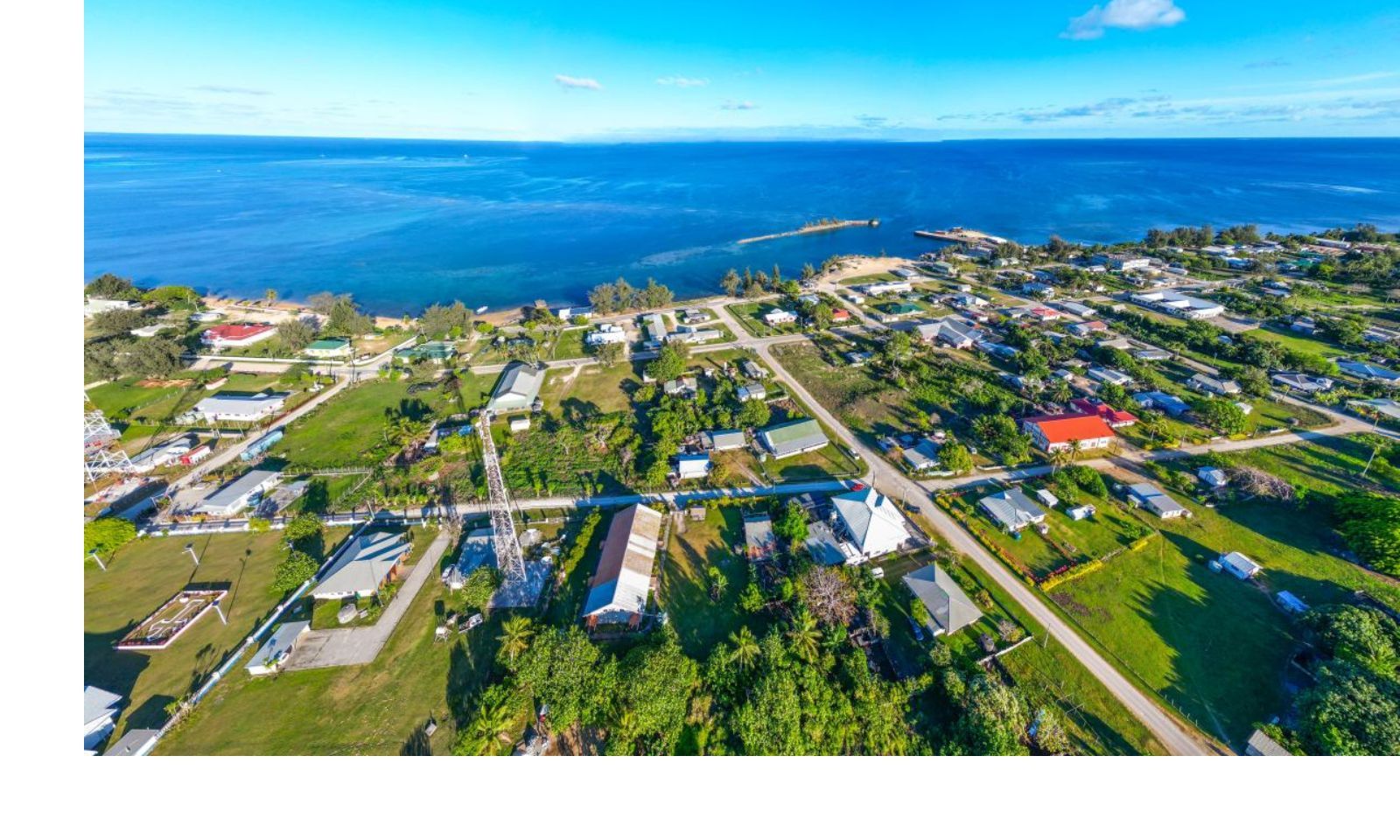
Tonga is one of the Pacific nations where organisations are helping prepare migrants before they move overseas, providing information and support to help families adjust to life in Aotearoa New Zealand and maintain strong connections with home. Photo/Tonga Tourism
Cassandra Vaea from PSSS also said the goal was to help migrants prepare mentally before making the move.
“We need to assist them in a way, there’s the shift of mindset, the expectation of cultural shock, embrace a learning mindset, accept temporary discomfort, and there’s nothing that is going to be perfect,” Vaea told Pulu.
Meanwhile across the Tasman, Australia is also moving towards tougher citizenship requirements.
The proposed changes include stronger English language testing, a longer pathway before applying for citizenship and a greater focus on demonstrating Australian values.
Former Australian Prime Minister Malcolm Turnbull said the changes were designed to ensure migrants were better integrated.
Watch Cassandra Vaea and Mandy Siitia’s full interview on PMN Tonga below.
“It is important that they understand that they are making a commitment to our Australian values,” he told media.
For Pacific communities living across New Zealand and Australia, migration policies affect more than individuals – they shape how families stay connected across generations.
As governments look at tighter rules, Pacific organisations like PSSS say the focus must remain on helping people settle well while recognising the important role migrants play in both countries.