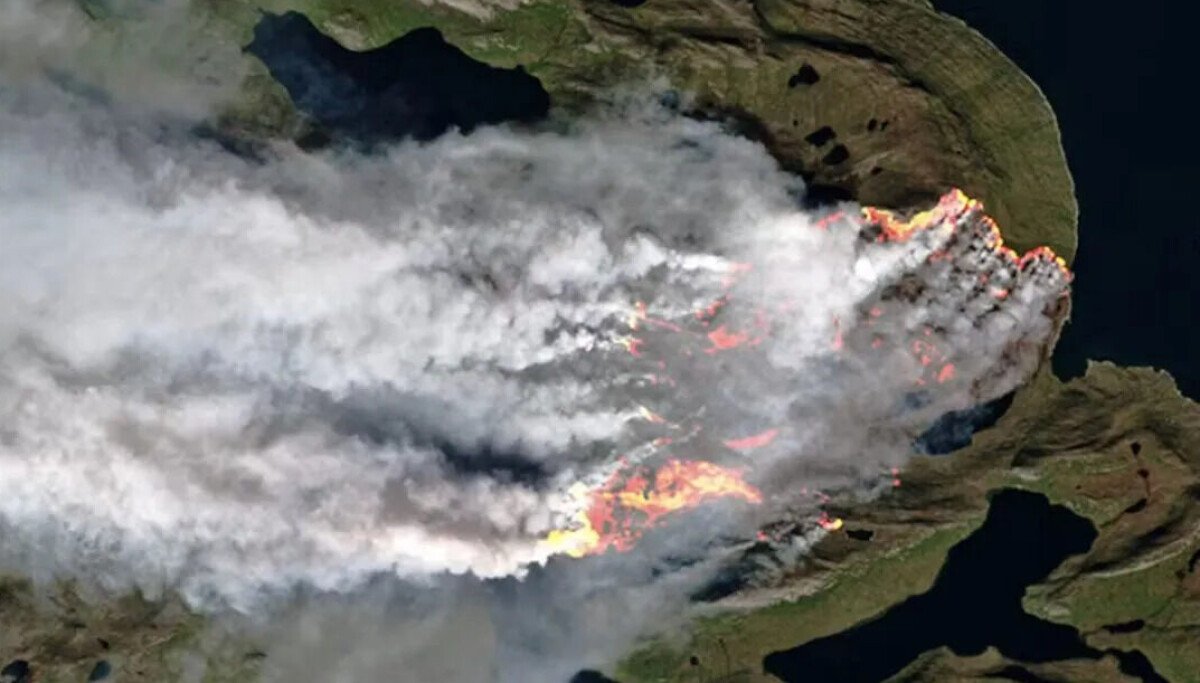
After a number of quiet years the wildfires have returned to western Greenland.
Two recent fires have once again focused on a landscape that most probably associate more with glaciers and melting ice caps than with flames.
But when we visited the area in 2023 to investigate a series of unusually large wildfires that raged a few years earlier, local residents told us they wouldn’t be surprised if the fires returned.
They told how parched the landscape had become before the fires. This made it easier for the fire to take hold and harder to get the fires under control.
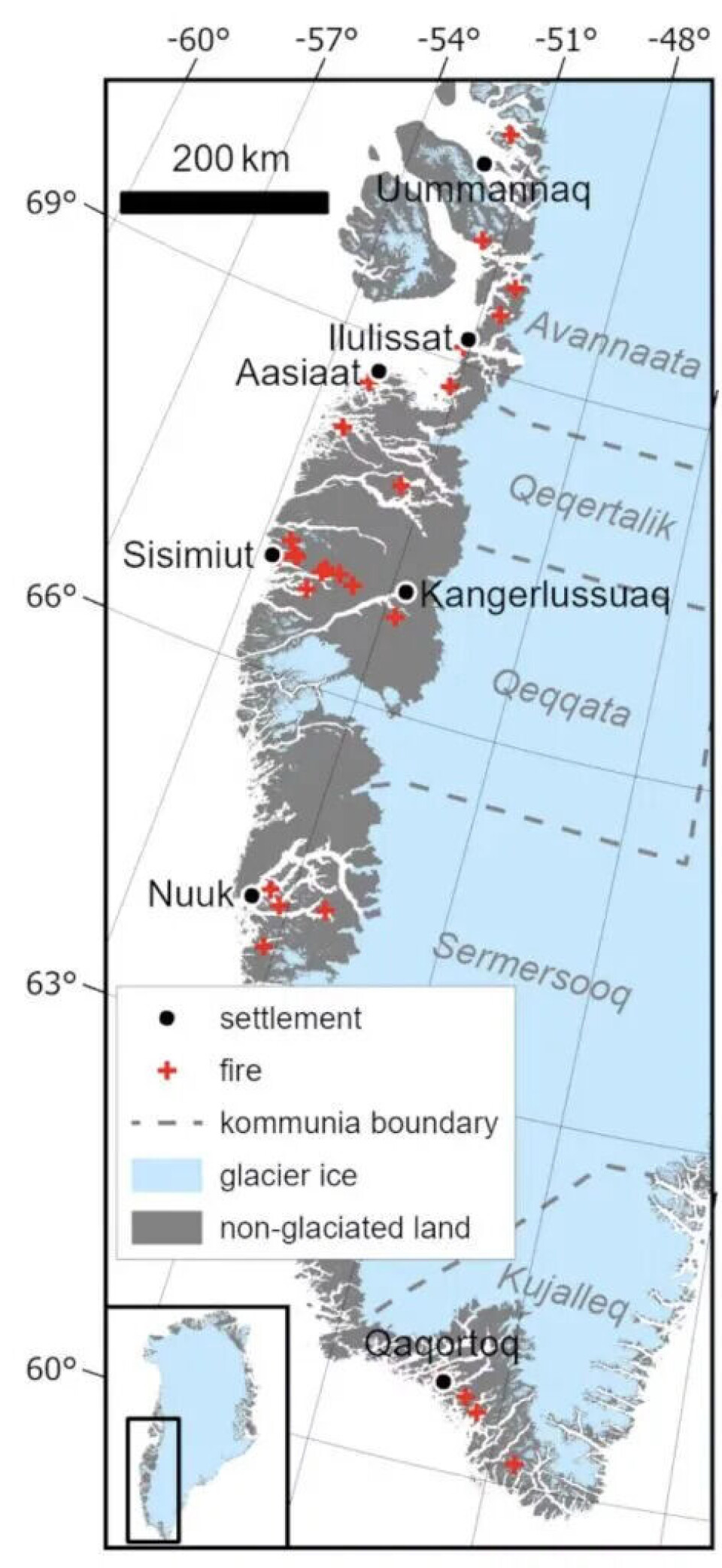
Therefore, the recent incidents are not entirely behind the people in the area around Sisimiut on the west coast of Greenland.
Part of a new Arctic reality
Our research indicates that wildfires may be part of a new Arctic reality.
During our fieldwork in 2023, we spoke to firefighters, local businesses, people who move and work in the countryside, tourism officials and international visitors.
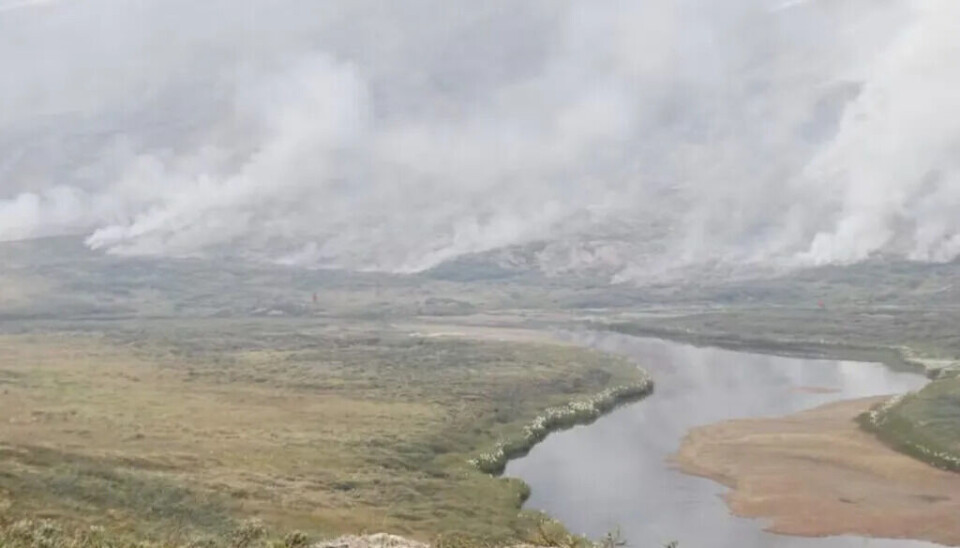
What they had in common was that they all had direct experience with the previous fires, and the overarching message was clear: the fires were unlike anything they had experienced before.
The older generations were especially shocked. As one local resident put it:
– It was something new, even for us.
Their recollections agree with our own analysis, which is based on satellite data and newspaper reports, and which shows that there were no landscape fires in West Greenland from 1995 to 2007, but that since then there have been more than 20.
Many of the fires, including one that burned in the tundra for several weeks, coincided with an unusually warm and dry period between 2015 and 2020.
Although the following summers were wetter and gave the wildfires a temporary respite, this year’s fires indicate that dry conditions have returned.
It wasn’t just the local residents who were surprised.
This part of Greenland attracts thousands of cruise guests and adventure tourists, and many hike the multi-day long Arctic Circle Trail between Kangerlussuaq and Sisimiut.
The hikers we spoke to were shocked to encounter fires:
– I have of course heard of wildfires before, but you associate it with Australia or California (…) it never occurred to me that it could also happen in Greenland.
The risk has changed the way the landscape is managed.
Many of the fires occurred along the route, so local authorities have reminded visitors to use campfires responsibly and distributed a short wildfire information note that we have prepared.
Greenland has always had wildfires to a certain extent, and people who traditionally roam the countryside have had a safe relationship with fire for generations.
For example, they light fires on rocky ground away from vegetation and are careful with smoking ovens, and this knowledge is still passed down from generation to generation.
But the unusually dry conditions in those years made the landscape itself much more flammable.
The burning tundra
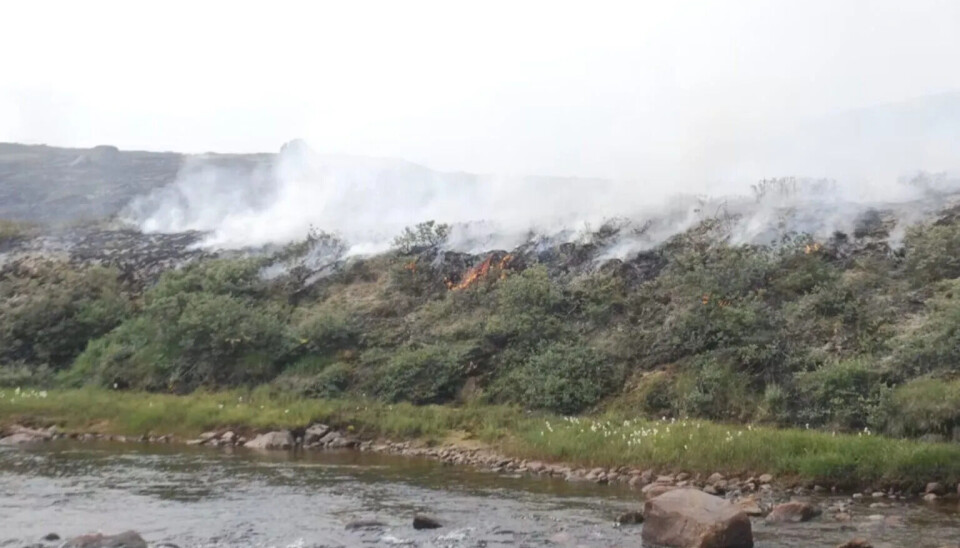
Unlike the wildfires that dominate the headlines elsewhere, wildfires in Greenland typically burn in the tundra, where they spread through mosses, shrubs and organically rich soil types such as peat, which are increasingly exposed as the permafrost melts.
This makes the fires particularly difficult to fight.
Firefighters in Sisimiut told us that the fires not only burn above the surface, but can also smolder underground for days or even weeks, spreading unnoticed before flaring up again.
During long periods of drought, nearby lakes can also become too shallow to supply enough water for extinguishing operations, making an already difficult task even more difficult in Greenland’s remote tundra.
The fires have far-reaching consequences.
Smoldering tundra releases large amounts of carbon that has been tied up in the soil for centuries, contributing to the greenhouse gases that warm the climate.
When soot from the fires settles on the nearby Greenland ice sheet, it can even accelerate the melting by darkening the surface.
The fires also produce fine particles that can travel long distances and pose a serious health risk to communities far from the flames.
Greenland’s future with wildfires
Scientists have warned for years that climate change will increase the number of wildfires in the Arctic.
In areas like Siberia, it is already happening. Seen in that light, the fires in 2015-2020 may be a sign that Greenland is heading in the same direction.
As the climate warms and the conditions that fueled the fires become more common, wildfires are likely to become an increasingly familiar feature of a landscape long defined by ice.
– We definitely have the fires in the back of our minds, one of the people we interviewed told us in 2023, when our fieldwork took place during a week of constant rain.
But even then, local residents were clear: if the dry conditions returned, the fires would follow suit.
This summer, after an unusually warm and dry winter, that is exactly what has happened.
This article was originally published at The Conversation and was translated by Stephanie Lammers-Clark.