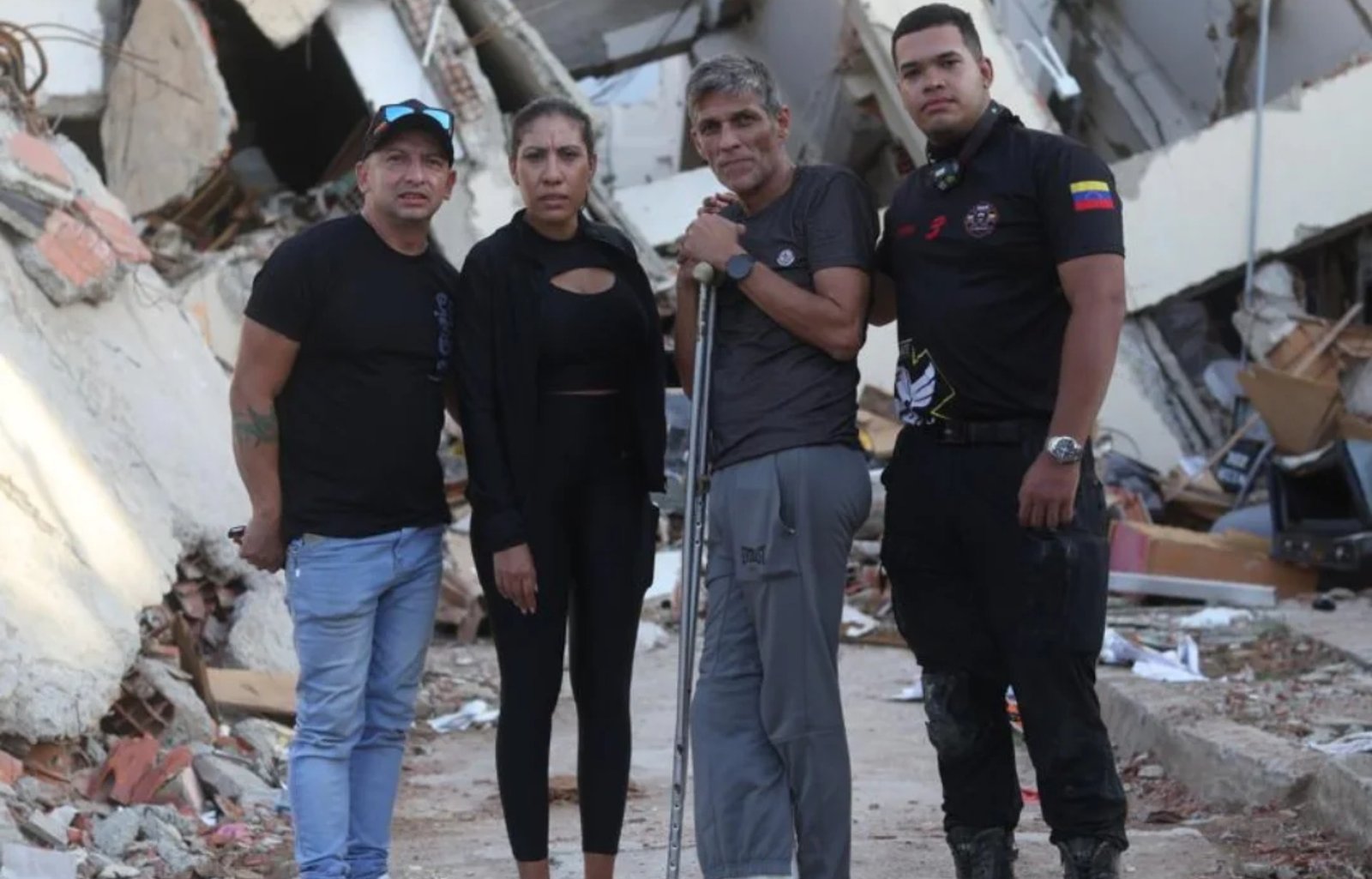
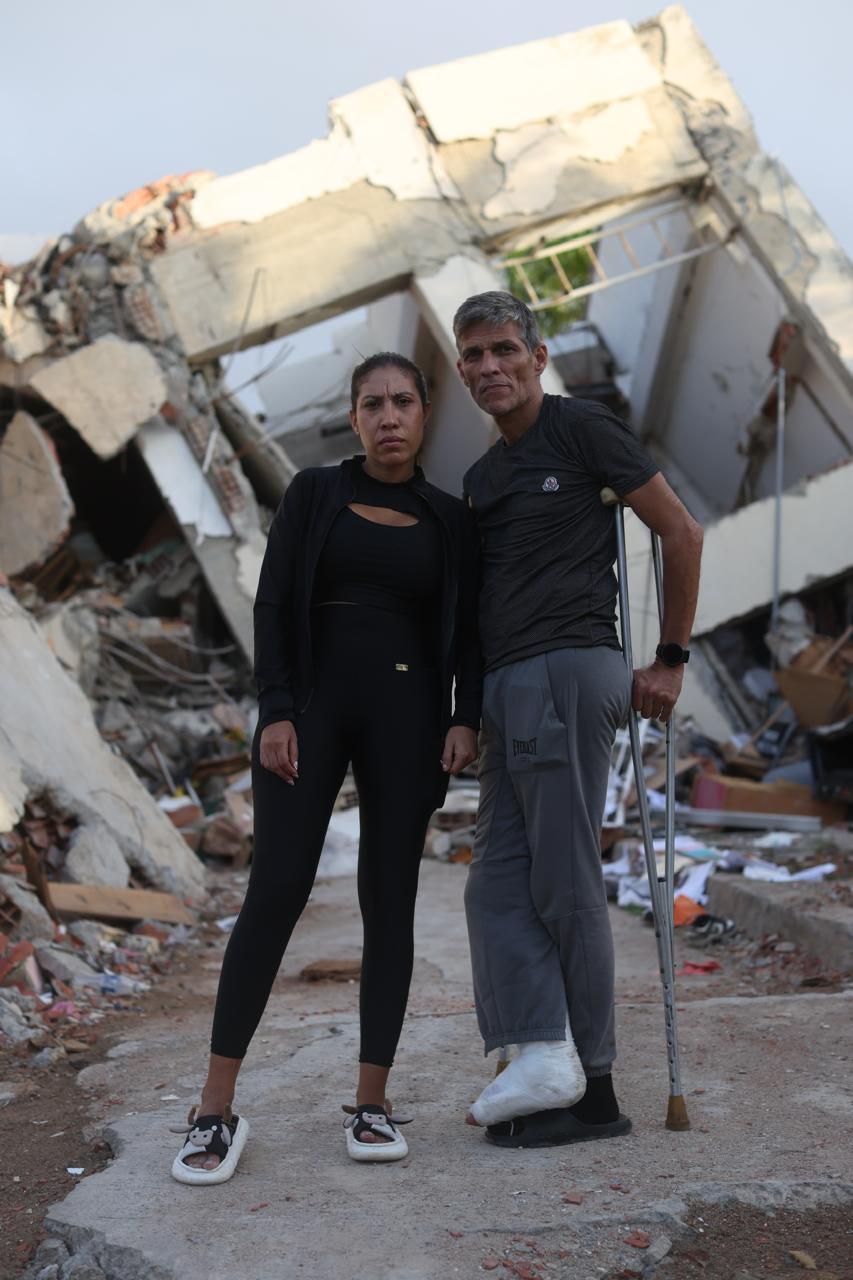
Francisco Soto and his wife, Deomaris Matathey couldn’t see each other, but they could still hold hands. On their bodies rested the remains of the Tamiami building and a concrete slab that shifted slightly each time the ground shook again. In that minimal space, crossed by fragments of the kitchen, wood and debris, she reached for the chain that he wore around his neck. A Christ hung from it. Clinging to that symbol, they prayed throughout the night.
Francisco had an injured leg. Deomaris, trapped beneath him, could barely move. The air was scarce, the heat was increasing and they did not have a drop of water. He remained under the ruins for 17 hours; she, 22. Between them they had a conversation designed to keep them awake, united and with some hope, although for long moments they believed that that space would end up becoming their grave.
An afternoon that changed in 40 seconds
June 24 had begun for them like any other afternoon. The couple was preparing to watch a soccer game and decided to stay home. They opened the sofa bed located in front of the living room television, near the balcony of their seventh-floor apartment.
Shortly after, an alarm sounded on one of Deomaris’s phones. It was a sound that Francisco did not remember hearing. When he tried to look at the screen, the movement began.
“I thought it was strange. When I went to grab the phone to see it, it started shaking. I told my wife: ‘It’s shaking, darling,'” remember.
It was 6:04 in the afternoon. They didn’t have time to get up or look for an exit. The building began to sway, the television collapsed and a wall cracked before their eyes. By the time they realized that it was not a minor tremor, the structure was already collapsing.
“Everything happened in 40 seconds. What I was left with was hugging my wife and waiting for the fall.”
Francisco does not describe a free descent, but a succession of impacts. The building gave way level after level while they remained hugging on the sofa bed.
“It was a fall like a playing card, floor by floor. We fell until the building didn’t move anymore.”
During those seconds, both waited for the final impact. “We thought we were going to die. We were waiting for the final blow, the blow that would end our lives. But it didn’t happen like that.”
The total collapse of the Tamiami
The Tamiami building, located in Caraballeda, Vargas state, suffered a total collapse during the double earthquake on June 24. It was not partially affected nor in a condition to be rehabilitated: its eight residential floors collapsed successively, one on top of the other, “like a game of cards.” The building, built in 1975, had nine levels: eight apartment floors and a terrace.
According to the confirmed testimony of Francisco Soto, more than 40 people were inside the property. Some managed to get out, others died during the collapse and eight were rescued alive the next day. Francisco fell from the seventh floor and was trapped approximately at the height of the third. He remained under the rubble for 17 hours; his wife, Deomaris Mata, was trapped for 22 hours.
In technical and journalistic terms, the Tamiami should be classified as a building with total structural loss, converted into a compacted mass of plates, walls, wood and remains of the apartments.
Trapped almost at the height of the third floor
When the collapse stopped, they were still alive. Above them was a concrete slab. Around them they recognized parts of their apartment: the microwave, objects that had been on the counter and remains of the kitchen island. Everything had been compressed until his mobility was almost completely reduced.
Francisco ended up on top of Deomaris. One of his legs was pressing on it and the limbs of both were imprisoned by a wall that held the plate. A piece of wood located behind him prevented him from raising his body to free his wife. They couldn’t look at each other face to face; The crossed counter and the darkness nullified any visual contact. Yes, they could talk and hold hands.
“We hugged each other when we started to fall. Afterwards, I was left with my legs on top of her. The only thing we could do was hold hands, but we didn’t have eye contact.”
The first concerns were their families. Deomaris thought about his son, his parents and his young nephews. Francisco, in his children and in his parents. No one knew if the earthquake had only affected Tamiami or if the destruction spread throughout Caraballeda.
“We wondered how our families were doing. I wish nothing had happened to them. We had no idea of the magnitude of the event.”
At first they tried to convince themselves that the rescue would come soon. They were alive, they could communicate, and they still had strength. But the aftershocks began. Each new movement displaced the plate and the wall, which descended a little further on their bodies.
“That was our biggest fear: being crushed to death.”
The silence under the ruins
The darkness aggravated the anguish. Deomaris suffers from claustrophobia and had to contain his fear in a place where he could barely move. Francisco felt increasing pain in a leg that had previously been injured. They both tried to breathe slowly and avoid unnecessary movements to conserve the little air available.
The lack of oxygen and thirst became desperate during the night. The heat increased and dehydration weakened their bodies. They had no water nor did they know how long they could last in those conditions.
At first they heard screams coming from other places. Shortly after, the voices began to fade away. Francisco remembers that silence ended up occupying everything.
“The silence was dark. Not even a siren could be heard.”
The absence of sounds made them think that the destruction was much greater than they imagined and that the rescue teams could take a while. Still, they continued talking to each other. When one lost strength, the other tried to support him with his voice. They prayed again and again. Although they could not see each other, they remained united by hands and chain with the Christ.
As the hours passed, hope diminished. Francisco assures that his greatest fear was not only to die, but to do so slowly under the weight of the concrete.
“Our anguish was to die in pain, to die slowly. That was our biggest concern.”
A farewell for the family
In the midst of that uncertainty, Francisco picked up the phone and started recording. He had no signal to communicate with his relatives. He decided to leave the device unlocked so that if they both died and someone recovered the device, his children and parents could hear his last words.
“I recorded the video with the intention of documenting what we were experiencing and leaving a farewell for our family.”
While saying goodbye to his children and parents, Francisco broke down. According to him, Deomaris accompanied him with his voice and tried to give him strength. The recording had not been intended for social networks or to reach an audience. It was a message conceived in view of the possibility that they would not go out again.
Francisco believed then that the chances of survival were slim. The pain, the lack of water, the little air and the position of their bodies increasingly reduced their ability to resist. “It was very difficult for us to survive,” he acknowledges.
Joseph’s voice
Around 11:00 in the morning, a voice came through the ruins. It was José, the son of a neighbor, who was looking for his father. Francisco and Deomaris gathered the strength they still had and began to ask for help.
“We drew strength from where we didn’t have it. We screamed and screamed and, thank God, he heard us.”
Francisco identified himself and explained that he and his wife belonged to the seventh floor and were trapped. José alerted those participating in the search efforts. Knowing that someone had located them changed the meaning of the wait.
“Hope returned to our lives.”
Francisco began to repeat to his wife that they would be rescued. If they had lasted all night, they could last a few more hours. However, listening to them did not mean that it was possible to take them out immediately. The small space had to be located exactly without displacing the plate that protected them and, at the same time, threatened them.
Francisco distinguished a strip through which some light entered and guided the rescuers from within. Little by little they removed the rubble until they could see the couple. The first thing he asked for was water. “We were dehydrated. They gave us water and we gained a little more strength.”
An open exit with knives and a saw
The extraction was slow and complex. According to Francisco, those who reached them did not initially have all the necessary tools to cut through the obstacles. Moving the plate could cause a new collapse. The sofa bed, deformed by the collapse, also blocked the only possible exit.
Francisco had to remove his injured leg from a hole and change position. Deomaris, still beneath him, encouraged him to make the effort. The movement aggravated the fracture until it became an open wound. He was close to losing consciousness, but managed to settle down so that the rescuers could continue.
Once a small access was opened, they began to cut the sofa bed. First they used knives; When they found the wooden structure, they resorted to a saw. Francisco was extracted first. Deomaris remained under the rubble for five more hours until rescuers managed to free her.
As he left, Francisco looked up at the sky. “The first thing I did was look at the sky and thank God for giving me one more chance in life.”
The pain was intense and his leg was seriously injured. He was transferred to the José María Vargas Hospital, of the Venezuelan Institute of Social Security, where, as he explains, he received immediate attention: they stabilized him, cleaned the wound in the operating room and immobilized the fracture.
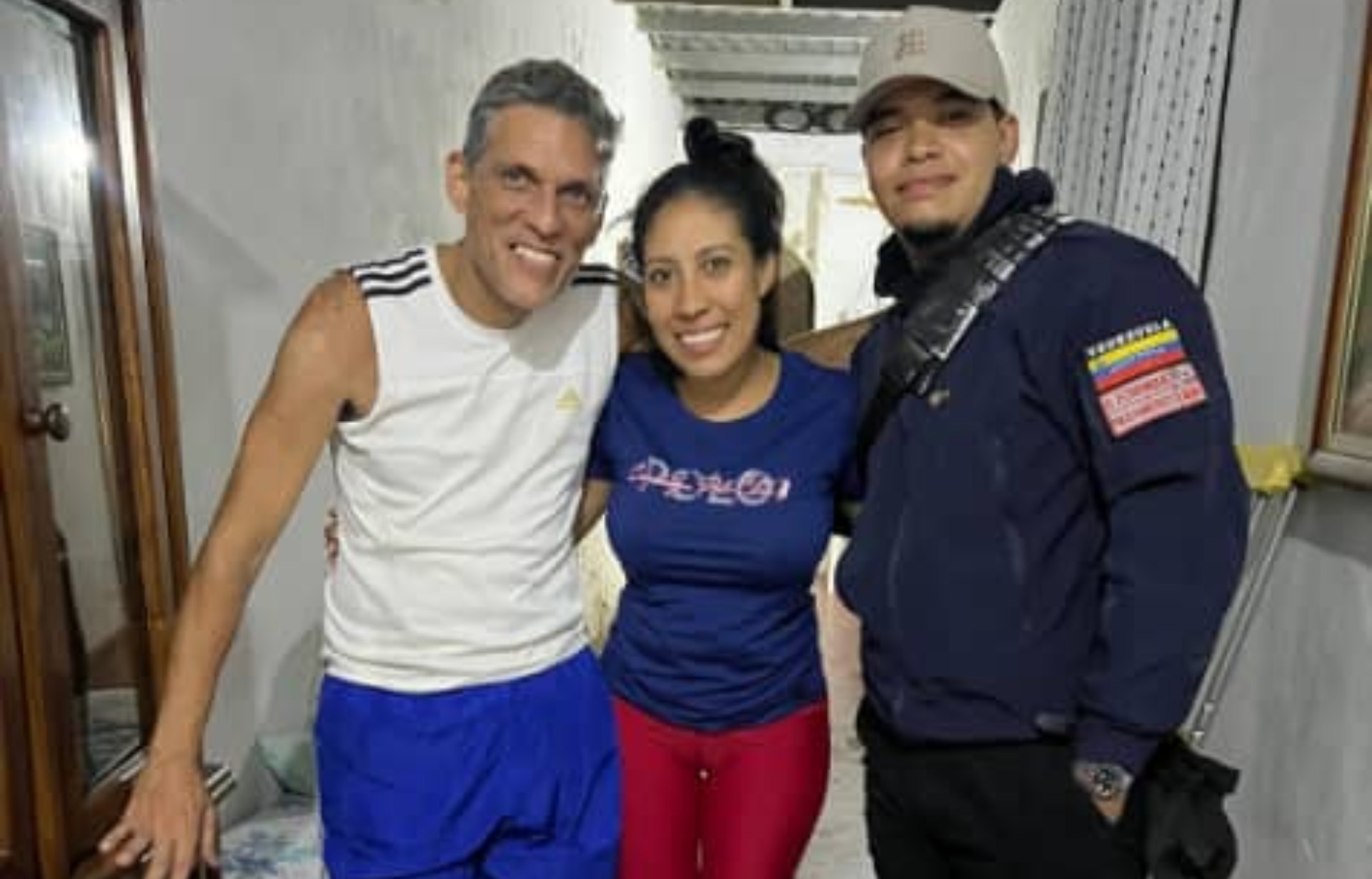
Francis attributes an essential part of the resistance that kept them together to faith. He also thanks José and those who participated in the search and extraction, among them members of Ángeles de la Autopista, a name with which he remembers the group that reached them when hope seemed exhausted.
Life after the rubble
The story did not end with the rescue. Surviving now means facing the injuries, the emotional impact and the loss of the home where they had built their life. The video recorded as a farewell ended up becoming a testimony: the words meant to be heard after his death reached the family when Francisco and Deomaris were still alive.
The survival of Francisco and Deomaris coexists with the memory of those who did not manage to return. The story itself preserves the screams that died down during the night and the awareness that other families did not receive the same opportunity.
“Coming out of the rubble was like being born again. This experience taught me that life can change in seconds, that every day is a gift and that a second chance also implies the commitment to live with greater gratitude, love and awareness.”
Francisco knows that staying alive does not eliminate losses or resolve the future. Starting over requires recovering health, rebuilding a home and learning to live with what happened. It also involves asking why some people survived while others died, a question that runs through the stories of those left on both sides of the rubble.
“My wife and I will have to start from scratch, but we are alive and together. We also carry in our hearts those who did not make it out and all the families who mourn their loved ones today.”
Their gratitude extends to those who sought them, prayed for them and continue to accompany them. In that darkness, the first voice did not erase the pain or the losses, but it opened a possibility that they thought had been extinguished.
“We will never forget that, when we were surrounded by darkness, you reached out to us and gave us hope.”