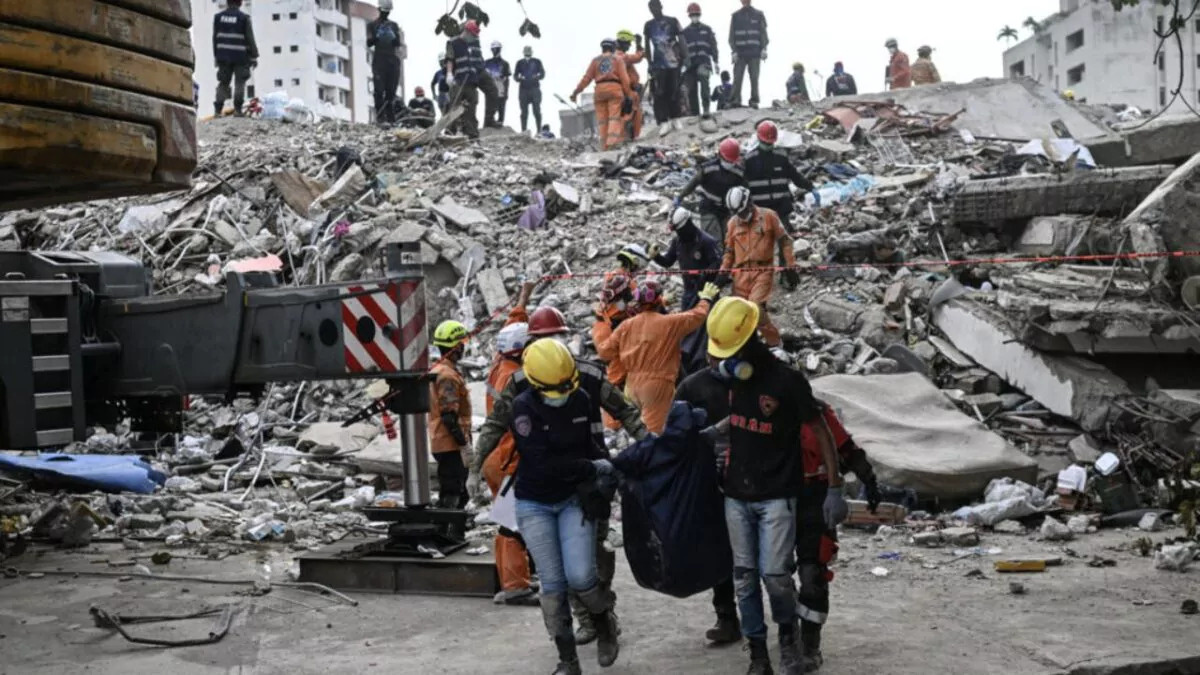
Caracas/Between tunnels dug under the rubble, improvised altars on concrete and morgues where traces of some bodies were lost, thousands of Venezuelans continue searching for their relatives a month after the two earthquakes that devastated the north of the country. The official toll amounts to 5,398 dead, but the authorities have not offered a number of missing people, which a citizen platform estimates at around 29,400.
The economic magnitude of the disaster is also beginning to be known. The World Bank this Thursday estimated the direct physical damage caused by the 7.2 and 7.5 magnitude earthquakes that shook Venezuela on June 24, just 39 seconds apart, at $19.6 billion.
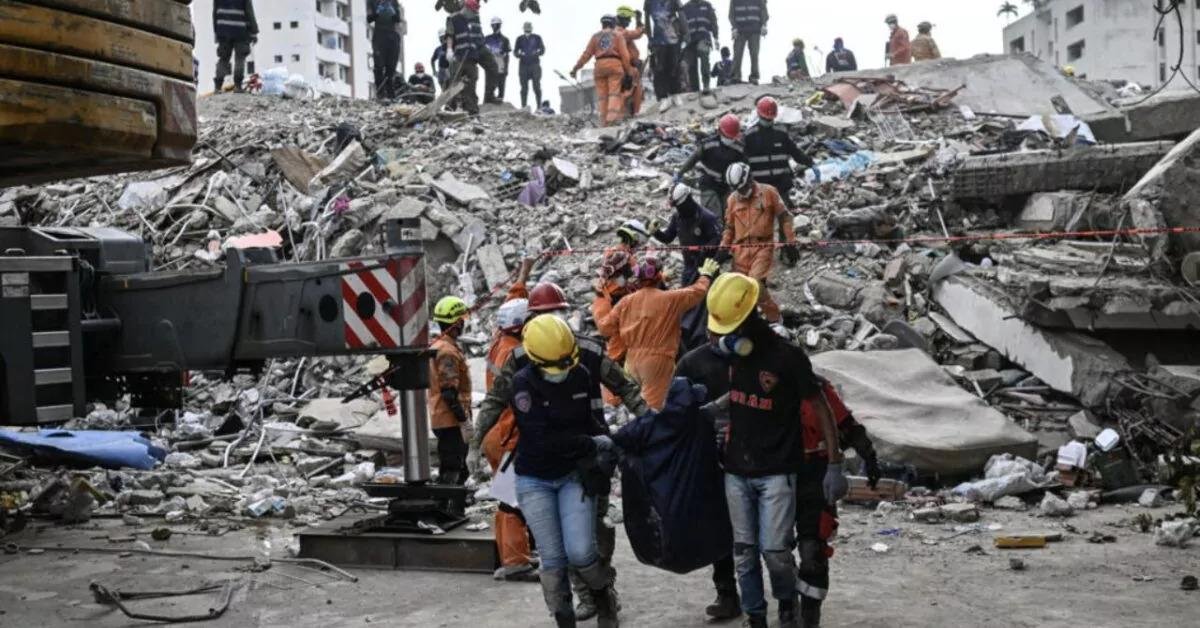
La Guaira, one of the hardest hit states, continues to be the scene of desperate searches. In Caraballeda, among the remains of an urbanization built by the Government, groups of citizens dig with picks, shovels and protective equipment, although some work practically with their bare hands.
Volunteers even follow the trail of flies to locate possible corpses and open tunnels between tons of concrete. On Wednesday night, one of the men participating in the work claimed to have heard a knock that he interpreted as a possible sign of life. The alert mobilized volunteers and kept firefighters and ambulances ready for the possibility of finding a survivor.
“We have to get our family out, no matter how hard it is, in whatever circumstances. We can’t leave anyone behind”
“There is something called faith,” Gómez Arroyo, leader of the brigade that detected the sound and later found heat signals using a scanner, told EFE. Although almost a month has passed since the disaster, relatives are reluctant to abandon the searches.
Javier Navarro, 36, is trying to locate nine members of his family. Just three days ago he found the bodies of his mother and grandmother, both in an advanced state of decomposition. Now he continues digging at night to avoid the intense heat of La Guaira, accompanied by family members who take turns doing the work and neighbors who provide them with food and tools.
“We have to get our family out, no matter how hard it is, in whatever circumstances. We can’t leave anyone behind,” Navarro said.
The man has argued with heavy machinery operators to prevent them from removing debris in the places where the so-called “moles” work, as those who enter the improvised tunnels are known. Nor does it contemplate leaving the place if the authorities order to suspend the searches. “We are not going to give up,” he insists.
While some search for their relatives under the ruins, others face a bureaucratic labyrinth to recover bodies that had already been rescued. This is the case of the family of Amir Infante, a 16-year-old teenager who survived for at least 13 hours trapped in the remains of a building in Playa Grande.
The disaster also leaves a bill that threatens to prolong the Venezuelan crisis for years.
The young man, a music student, was trapped between the doors of a refrigerator while the building collapsed on him. He was taken alive by neighbors, but died shortly after. His father, Jaime Infante, carried the body in his arms and on a motorcycle to a hospital in La Guaira, where it was deposited with other bodies and identified with a code.
When the family finished the procedures to obtain the death certificate and went to pick him up to bury him, no one could explain where he was.
The teenager’s aunt, Yanira, then took on the search with the young man’s mother. They toured hospitals and morgues in La Guaira and Caracas and repeatedly checked the containers where the bodies were stored. The code assigned to the body, as they were explained, did not allow its origin to be determined.
The family now hopes to undergo DNA testing after the State called on relatives of the missing to try to identify the bodies that remain nameless.
Amir had spoken with EFE during the early hours of June 25, while he was trapped. He feared he would become an invalid after the earthquake. His father, who had managed to get out of the rubble to find help, remembers him as a “warrior.” “That boy waited for me to die,” he laments.
The disaster also leaves a bill that threatens to prolong the Venezuelan crisis for years. According to the World Bank assessment, 47% of the damage corresponds to homes, with losses estimated at 9.3 billion dollars. Another 5,200 million correspond to infrastructure and 5,000 million to non-residential buildings.
They are looking for those who the official figures still do not count
La Guaira and the Capital District concentrate about 47% of the economic impact. If Miranda and Carabobo are added, the four territories account for 85% of the damages calculated by the agency.
The World Bank also warns that, if reconstruction depends solely on transferring resources destined for other projects and does not increase public and private investment, part of the works could remain unfinished within a decade. In that scenario, productive capacity, gross domestic product and consumption would remain below pre-earthquake levels at least until 2036.
The organization assures that it works with the Venezuelan Government, the Inter-American Development Bank and the CAF to define the technical and financial support for recovery. The evaluation comes three months after the World Bank resumed its relations with Venezuela, suspended since 2019 due to the international dispute over the recognition of the Government then headed by Nicolás Maduro.
While calculations are being made about the billions needed to rebuild the cities, in La Guaira reconstruction still seems far away. On the remains of the La Estrella building, in Macuto, relatives of the victims have placed flowers and petals and sprinkled the ruins with holy water. A few kilometers away, others continue to enter tunnels opened among the rubble. They are looking for those who the official figures still do not count.