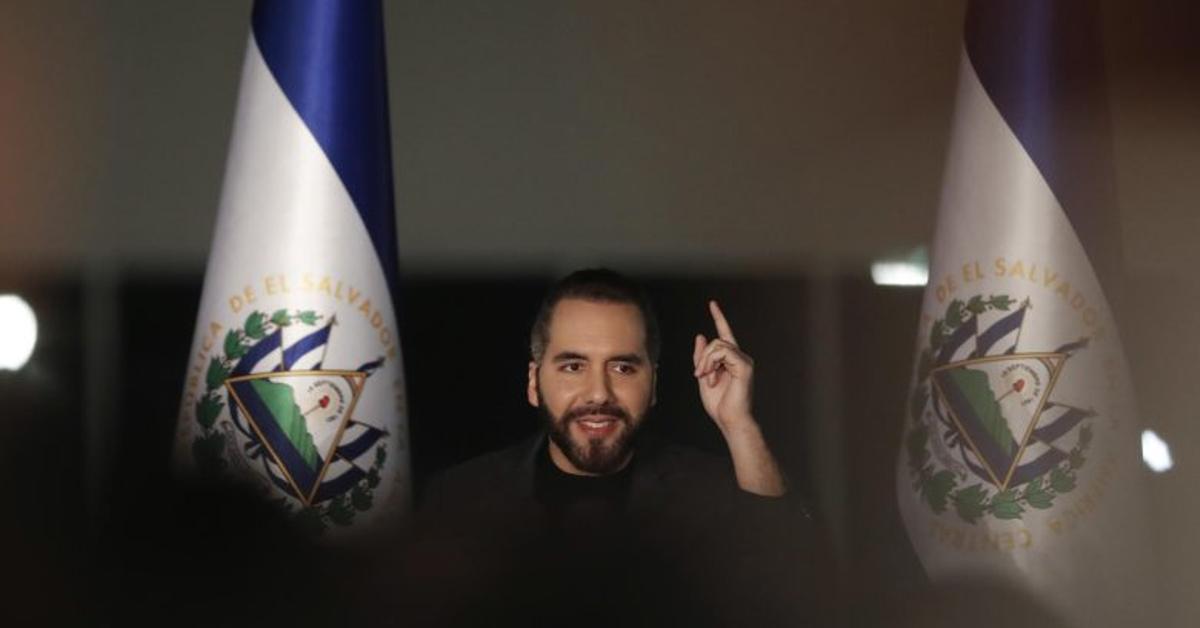
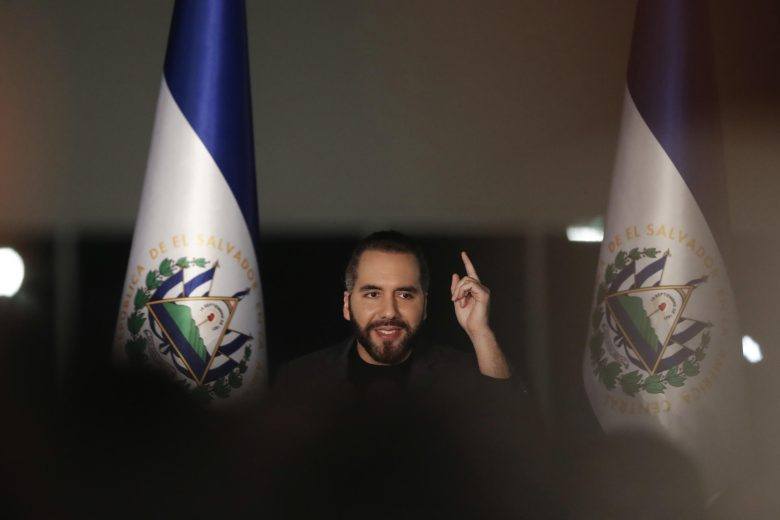
San Salvador/The president of El Salvador, Nayib Bukele, defended this Tuesday the indefinite presidential reelection, enabled in the country since July 2025 in a controversial constitutional reform, when he seeks a third term at the head of the Executive.
The president responded to a message on the social network
“Countries with indefinite reelection in Latin America: Venezuela, Nicaragua, El Salvador. Let it be very clear which club Nayib Bukele is now entering,” wrote Jiménez.
“Countries with indefinite reelection in Latin America: Venezuela, Nicaragua, El Salvador. Let it be very clear which club Nayib Bukele is now entering,” wrote Jiménez
In response, Bukele posted that “Canada, the United Kingdom, Germany, Australia, New Zealand, Ireland, Italy, the Netherlands, Belgium, Sweden, Norway, Denmark, Finland, Iceland, Luxembourg, Austria, Switzerland, and Japan, among many other countries, also have it. But the idea is to make it sound bad,” along with an emoji of a laughing face.
In reality, only one of those countries has indefinite presidential reelection: Iceland. In the rest, it is the head of government who can be re-elected several times, but not the head of state or president.
Bukele’s Nuevas Ideas (NI) party reported on Monday that the head of state won, in a primary held on Sunday, the presidential candidacy for the 2027 elections. Bukele, 42, has not publicly referred to this internal process, in which he apparently had no opponent.
As the next step for the general elections of February 2027, the Salvadoran president must register his candidacy before the Supreme Electoral Tribunal (TSE) in the period between October 1 and November 19, 2026, in accordance with the electoral calendar of the collegiate entity.
The Legislative Assembly (Parliament), dominated by Bukele’s NI party, approved and ratified in a single day on July 31, 2025 without prior analysis or debate, the reform of articles 75, 80, 133, 152 and 154 of the Constitution, giving President Bukele the freedom to opt for a third consecutive term.
This reform includes raising the presidential term from the current five to six years and eliminating the second round of elections.
This reform includes raising the presidential term from the current five to six years and eliminating the second round in elections.
According to various surveys published recently, Bukele maintains high popularity ratings, mainly due to the reduction of violence and the fight against gangs, but with growing economic demands from the population.
Bukele assumed his second consecutive term on June 1, 2024, despite the fact that the Constitution prohibited it at that time, and it would have to end in 2029. However, the reform endorsed by Congress advanced the presidential elections to 2027, when voting will also be carried out for deputies and mayors.
In addition, the number of people who died in El Salvador’s prisons after their detention under the emergency regime, in force since March 2022 against gangs, rose to at least 547, as reported this Tuesday by the non-governmental organization Humanitarian Legal Aid (SJH).
“The number of fatalities rises to 547. The tragic figure of at least 547 people who died in State custody in the context of the emergency regime, without having been defeated in court and without a criminal profile, represents a profound human rights crisis that cannot be ignored,” the NGO published in X.
He noted that “what is even more alarming is that 94% of these people did not have a profile of gang members and died under the protection of the State and in total impunity.”
He noted that “what is even more alarming is that 94% of these people did not have a profile of gang members and died under the tutelage of the State and in total impunity.”
Humanitarian Legal Aid, an organization that emerged in the context of the emergency regime to provide legal advice to relatives of detained people, stressed that “the real number of deaths could exceed a thousand, facing a systematic effort to hide information in mass trials.”
As the NGO has said on other occasions, the deaths have been recorded mainly in the prisons that house the majority of the more than 92,480 detainees under this regime and that the vast majority have no convictions, while little is known about the renowned prison of the Center for Confinement against Terrorism (Cecot).
According to a SJH report released at the end of January, physical violence leads the causes of death of prisoners in El Salvador’s prisons, with nearly 32% of reported cases.
So far, the Government of President Nayib Bukele has not commented on the matter, nor has it reacted to this situation.
The exceptional regime, approved in March 2022 after an escalation of murders at the hands of gang members and which suspends constitutional guarantees for the population, has left 6,400 complaints of human rights violations and is the main measure of the Bukele Government against the gangs to reduce violence.
The measure remains in force despite multiple calls from human rights organizations to end its implementation and has the support of nearly 85% of the population.