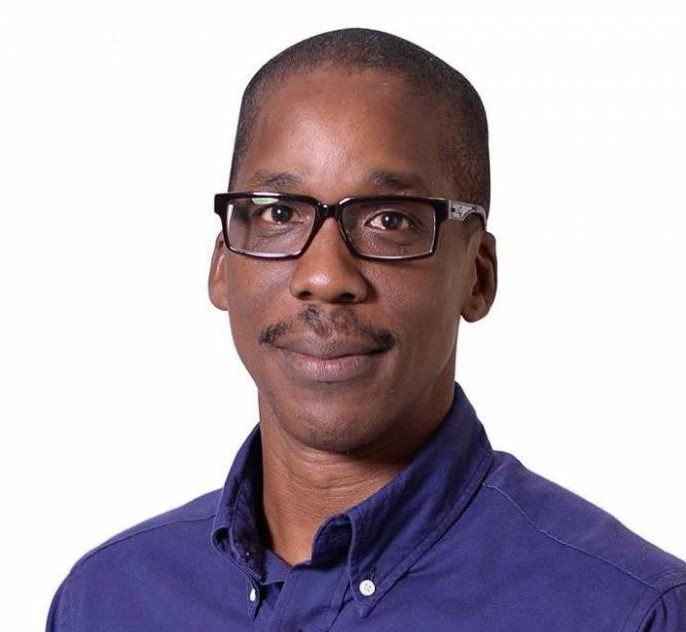
Regional pollster Peter Wickham has said CARICOM has emerged stronger from its latest heads of government meeting, pointing to diplomatic compromise, legal clarity, and renewed political engagement as signs of maturing regional integration.
The 51st Regular Meeting of the Conference of CARICOM Heads of Government, which ended on Wednesday in Saint Lucia, arrived at a critical juncture for regional integration, he said.
The regional leaders grappled with heavy agendas encompassing digital transformation, climate change mitigation, and the ongoing crisis in Haiti.
In post-summit analysis, Wickham characterised the event as a productive exercise in mature diplomacy, highlighting significant breakthroughs in regional governance, transport and labour mobility.
The summit’s early discussions were heavily overshadowed by an unprecedented governance dispute raised by Trinidad and Tobago’s Prime Minister, Kamla Persad-Bissessar, regarding the reappointment of CARICOM Secretary-General Dr Carla Barnett.
To resolve the impasse, the leaders ultimately agreed to formally seek an advisory opinion from the Caribbean Court of Justice (CCJ), leaving Dr Barnett’s current tenure intact whilst the court deliberates.
Wickham viewed this outcome as an exceptional victory for regional statesmanship, noting that the compromise allowed all parties to claim a degree of success.
He told Barbados TODAY: “The meeting was clearly dominated by the concerns of Kamla Persad-Bissessar and the letter that she wrote. Coming out of that, I think the outcome was a fairly good one. It was the kind of diplomacy that I’ve always been happy with, and supportive of, because both sides could say they came away with something.”
Beyond the immediate political resolution, Wickham emphasised the institutional value of involving the region’s highest court. He noted that the non-binding advisory opinion serves a grander historical purpose for the bloc.
“The advisory opinion which is being sought, of course it’s not binding… and I think it is useful, and I think we would all agree it’s the type of thing that helps to build what you could call jurisprudence within the concept of CARICOM. So no one would disagree that an advisory opinion of this type would be useful because it will satisfy her concerns and it will also satisfy the concerns of other people that something wasn’t right.”
Wickham pointed out that this legal clarity will prove invaluable “not only now but going forward because we will have the benefit of that opinion in terms of the next time that SG has to be elected or nominated”.
For Wickham, the most promising aspect of the summit was Persad-Bissessar’s physical presence throughout the entire event, hinting at a renewed commitment to regionalism:
“For me, the biggest part of the meeting that I’m happiest about is the fact that she attended in person and she attended the entire thing. One of my concerns with Persad-Bissessar has been the fact that she doesn’t seem to be terribly interested in CARICOM… Certainly if she had attended the previous one, you know, the issue would not have been on the table in the first place.”
Another headline achievement from the Saint Lucia summit was the finalisation of operational frameworks to fast-track a new intraregional cargo and passenger ferry system. Aimed at lowering shipping barriers, combatting the skyrocketing cost of living, and diversifying Caribbean food security supply chains, the initiative has garnered considerable public interest.
Whilst Wickham praised the conceptual merits of the ferry service, he maintained scepticism regarding its commercial viability, given the region’s historical track record with maritime transport experiments:
“I like the idea of the ferry service as well, and I’m happy that it seems to be gaining some traction. I have to admit that I am a bit sceptical about the extent to which it’s actually going to happen. Because you will recall that this is something that we’ve been talking about for several years and it hasn’t actually gone anywhere.”
Nevertheless, he expressed hope that political momentum would finally triumph over logistical hurdles.
“So if this is what it takes to get the initiative going, I’m supportive of it. It’s just that the math of it, the practicality seems to be daunting in that making it a profitable business venture seems to be challenging, but I’m happy that there’s a move towards starting it, and I wish them well.”
The evolution of the CARICOM Single Market and Economy (CSME) took a formal step forward in Saint Lucia, as leaders agreed to expand the categories of workers eligible for free movement. Four member countries, including Belize, Barbados and Dominica, accepted this expansion under a three-year transition window commencing October 2025.
Addressing public anxieties that expanded free movement might trigger a chaotic migration surge, Wickham argued that the historically slow uptake of these provisions actually serves to reassure cautious member states.
“The fact that the uptake has been very slow, I think in a sense we can argue it’s a good thing and it demonstrates that this uncontrolled free movement is a myth… I’ve always been of the opinion that free movement is a lot less exciting than people think in the sense that there are not large numbers of people sitting waiting to move because ultimately a decision to move or relocate is a big decision for a person to make.”
Wickham observed that rather than a massive influx of new economic migrants, the current numbers indicate that regional citizens are primarily using the framework to legitimise pre-existing living arrangements.
“Most of the people who seem to have signed on to it are people who were already in Barbados or in the country, have more or less legitimised their status. And that seems to be the main attraction, but there hasn’t been a flood, and to me that’s not a bad thing. I think that it demonstrates that we will have measured movement within the Caribbean.”
Wickham insisted that the true success of the CSME expansion depends entirely on broader participation from regional economic heavyweights, expressing hope that countries like Guyana will soon formally sign on to the initiative.
As more nations realise that expanded free movement yields a measured, flexible flow rather than an uncontrollable flood, regional integration will move closer to its ultimate potential, the pollster suggested.
(RR)