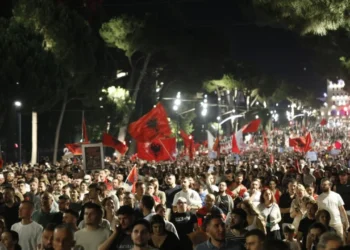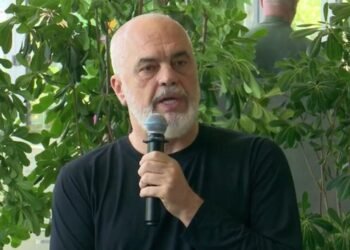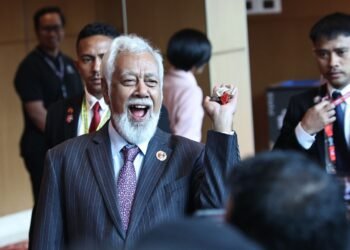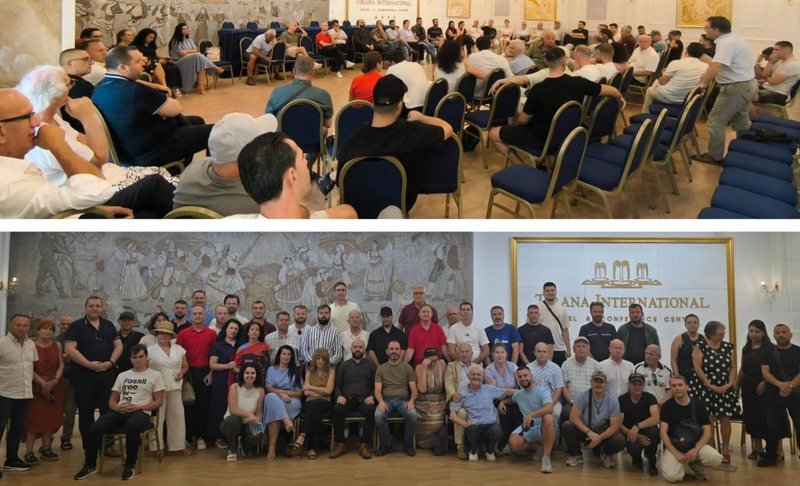
Yesterday’s meeting for the creation of the “National Citizen Assembly” of the protest seems to have opened a strong debate within the ranks of the organizers and supporters of the movement.
While it was publicly announced that the working group had approved the platform and membership criteria for the Assembly, messages exchanged in a WhatsApp group of more than 500 people show that within the organizers there is dissatisfaction, doubts and clashes over the way this initiative was taken.
In a reaction on social media on Friday evening, journalist Armir Shkurti wrote that “80 Albanians with their heads down and determination” worked for the “National Civic Assembly of Protest”. According to him, the working group unanimously approved the platform and membership criteria after five hours of meeting.
But in the internal communications group, not everyone seems to share the same enthusiasm. Some of the participants have raised direct questions about the legitimacy of the initiator group and about the way it is claiming to organize the representation of the protesters.
“Who chose the working group?”, “Who decided that these people organize the Assembly?”, “How were the protesters notified?” and “Who guarantees the transparency of the process?”, are some of the questions that appear in internal discussions.
In one of the messages, a participant points out that if the Assembly intends to represent the protesters, then the process should be open and not presented as decision-making by a small group.
“In democracy, there is a big difference between ‘we propose’ and ‘we represent’. Anyone can make a proposal. Only the community that is represented gives representation”, is written in one of the reactions.
Another message sums up the criticism with the words: “Legitimacy is not declared; it is earned.”
In the face of these criticisms, supporters of the initiative have responded that the working group is not the Assembly itself, but only a preliminary structure to prepare it. According to them, the invitation was public and anyone who wanted had the opportunity to join the process.
“The Working Group is not an Assembly. The Assembly has not been established yet. Everyone will be invited to the Assembly meeting, without exception,” says one of the defense messages.
However, the debate has continued in strong tones. Some participants have asked not to think long about what should be done at this stage, arguing that the main priority is the removal of the current government and not the election of the next leadership. Others have insisted that precisely at the moment when representative structures are created, transparency becomes even more important.
“History teaches us that the biggest mistakes are not made at the height of the protest, but at the moment when the representative structures begin to be created,” reads another message.
The controversies show that the initiative for the “Citizen National Assembly” has brought to the surface an internal division between those who demand quick organization and those who first demand a clear, open and verifiable process.
What stands out in the internal debates is the mention of the activist Edviol Kulluri as one of the initiators of the idea for the “Citizen National Assembly”. His name has been mentioned even earlier in the public controversies surrounding the protest, since a few days ago Prime Minister Edi Rama published a post on social networks where he presented Kulluri as one of the “13 flag bearers of the boulevard protest”, listing a series of alleged proceedings against him over the years.
In his post, the prime minister wrote that Kulluri has been prosecuted for several cases, including beatings in collaboration, energy theft, participation in illegal protests, threats, minor injuries and domestic violence. These claims were not commented on in the announcement of the initiator group, but the mention of Kulluri as the initiator of the idea for the Assembly adds another controversial element to the internal debate of the protest.
Instead of clarifying the path of representation, the “Citizen National Assembly” seems to have produced more division than organization.