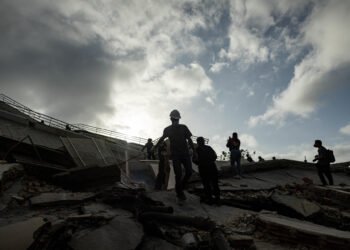
Yesterday afternoon, the death toll from the two earthquakes that hit Venezuela last Wednesday stood at 1,450, and is expected to continue to rise. The president of the National Assembly, Jorge Rodríguez, reported yesterday that officially 3,150 people were injured and 774 buildings suffered serious damage. At least 68,900 people remain missing, according to their families.
“According to disaster response experts, it often takes several weeks to get a full picture after disasters of this magnitude, and several signals coming out of Venezuela indicate that these earthquakes were particularly deadly,” reports the New York Times.
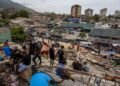
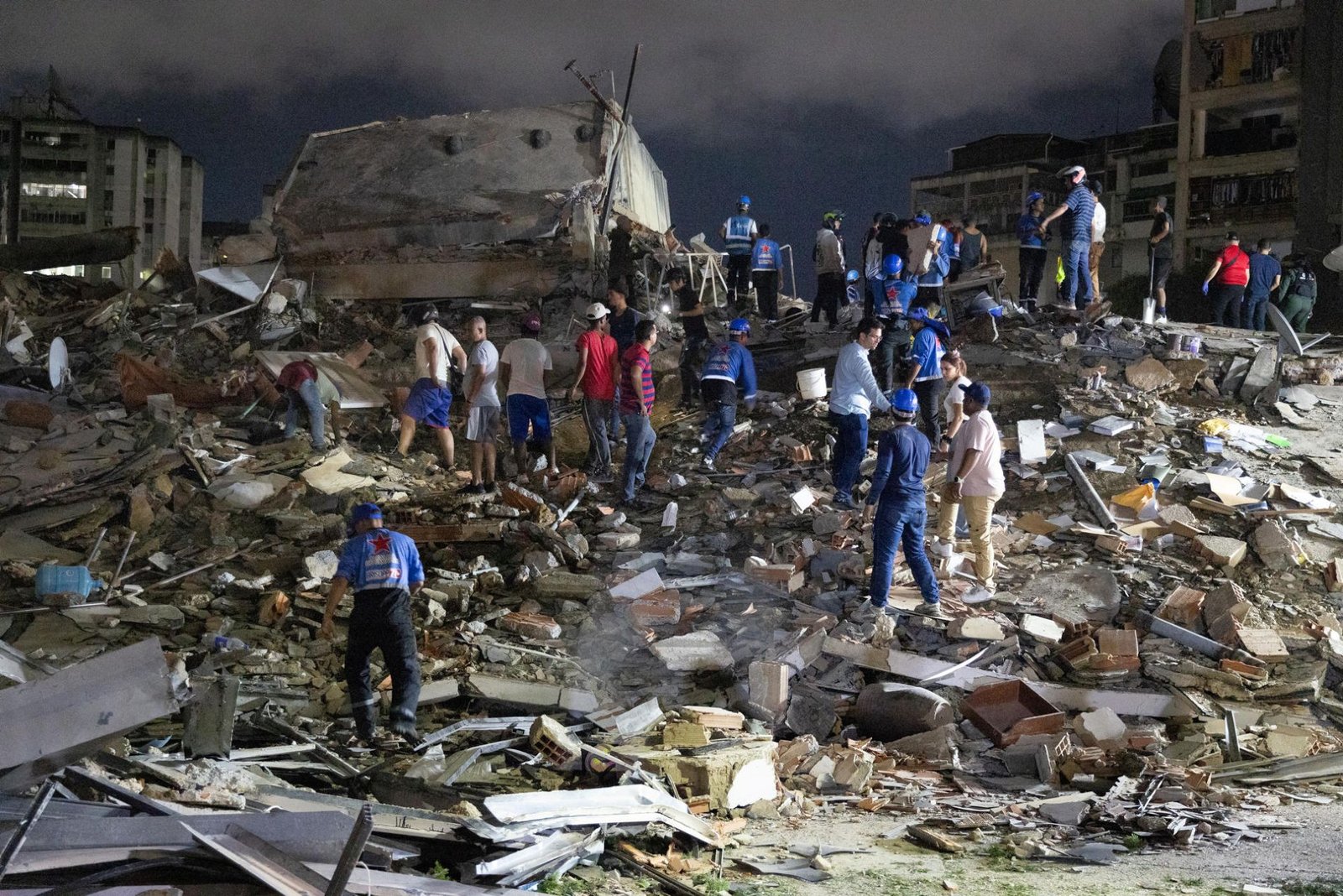
Volunteers have led desperate rescue efforts, along with international brigades. In many affected areas, heavy machinery is in short supply, forcing volunteers to use whatever tools they can find to make their way through the concrete, according to the Washington Post. Many civilians in La Guaira, one of the most affected areas, have been using shovels and their bare hands to remove debris from collapsed buildings, reports Guardian.
On Saturday morning, authorities restricted access to the area to only government vehicles and other authorized personnel, claiming that the flow of civilian volunteers had become uncontrollable, according to the New York Times.
“In the disaster zone there are 25,000 Venezuelan officers and 2,741 international rescuers, and, according to the authorities, everything is coordinated. But on the street it is difficult to know who is in command,” reports The Country. “The role of the military in this tragedy remains an enigma.”
The absence of the armed forces has generated much speculation, writes David Smilde in Venezuela and the United States. But “until now, the response of the Rodríguez government has demonstrated the limited state capacity at its disposal.”
Identification of victims has been especially difficult because many bodies were severely crushed under collapsed buildings, the ministry said. New York Times.
In the midst of the rescue efforts, looting was reported in La Guaira, a port city near the country’s main international airport. Much of the city was reduced to rubble, according to reports AFP. “Pharmacies, supermarkets and other businesses were looted,” said residents, some of whom complained about the slowness and scarcity of aid received from authorities after the earthquake.
Outrage is growing in the streets over what many perceive as the slow response of a government that was unprepared for a crisis of this magnitude, and over the way many feel they were abandoned to their fate in the hours after the disaster, reports Guardian.
“The deepest economic collapse documented outside of wartime—the result of socialist government mismanagement, exacerbated by economic sanctions imposed by the United States—has left the country ill-prepared to respond,” notes the Washington Post. And the sector that contracted the most during the crisis, which lasted for years, was construction, according to Venezuelan economist Francisco Rodríguez.
Venezuela “lacks legitimately elected national leadership and has been at the center of geopolitical controversy for years,” notes James Bosworth in World Politics Review. “The Venezuelan government remains an illegitimate and unelected dictatorship, relatively unpopular with its population. Rodríguez, like his predecessor Maduro, believes in centralized government action and a strictly controlled information landscape. This means that the Venezuelan armed forces are currently carrying out rescue efforts, even though their own deteriorating condition and equipment limit their ability to do so on the necessary scale…”
That centralized control could provoke an adverse reaction, says Bosworth in Latin America Risk Report: “International largesse makes the Rodriguez regime’s failures of control even more frustrating. Its eagerness to control personnel on the ground in certain areas, as well as the media narrative, has undoubtedly led to the loss of life and will continue to delay recovery. Overnight, a video circulating on the internet appears to show Cabello telling a US team that they could not get their truck into an area where they were trying to rescue trapped people. This is one of many reports about various humanitarian organizations that have suffered restrictions, blockages, harassment and delays.”
In fact, there are also reports that the police have attempted to suppress the political opposition’s efforts to collect aid. “The conflict over who should take credit for humanitarian aid for the earthquake-ravaged nation highlights a much larger, high-stakes battle for political survival in a fractured Venezuela,” according to the New York Times.
The US government is frustrated by exiled opposition leader María Corina Machado’s requests for help to facilitate her return to Venezuela after the earthquakes, reports the New York Times: Officials said that “Machado’s multiple requests were ill-timed, and one official called them a “political maneuver”.”
International aid has arrived quickly, and Venezuela could become the paradigmatic example of the benefits of the alliance with the United States under the so-called Donroe Doctrine; although responses could be hampered by the Trump administration’s dismantling of USAID, reports Guardian.
“This tragedy is likely to raise expectations for the United States, especially since the Trump administration took control of the Venezuelan oil industry following the ouster of Venezuelan leader Nicolás Maduro in January,” notes the New York Times.
*This article was originally published in Latin American Daily Briefing.