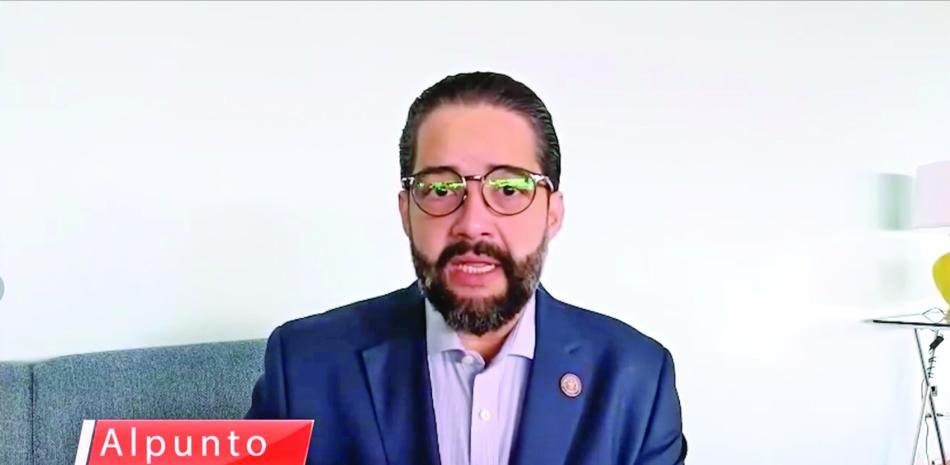
Economist Ysrael Abreu assures that what the Executive Branch submitted and the National Congress approved is “a Tax Reform.”
“It is a reform because it only affects and modifies aspects related to contributions,” he emphasizes.
He supports his assertion that, in most cases, this project increases taxes and in others eliminates taxes.
When interviewed on the program Alpunto Vespertino, Ysrael Abreu said that what was approved by the legislators is a Tax Reform, although they wanted to “sell” it as an economic reform or a Tax Reform. “That is not the case, because that was a project, and it has already been a law since it was promulgated, which means that it is immediately applicable throughout the territory,” he assures.
He called on the population to verify each transaction made after the project was enacted and they will see that each transaction registers an increase.
“Whoever paid their water, telephone, housing, energy, domestic service bills for a transaction from their bank account will notice that it is no longer 0.15% but 0.20% that they are being charged.
For him, it is clear evidence and specifically that the Dominican citizen is directly affected by these increases.
Since the so-called anti-crisis project began to be conceived, government spokespersons assured that only businessmen and the upper class would be recorded and the poorest and the middle class would not be affected in any way.
The economist says that in a broad sense there will be a general increase in the products of the basic basket and in a general sense in all prices.
“Because as you already know, the concept of inflation, unfortunately, the effect of any reform aimed at increasing collections translates into a general increase,” says Abreu.
He considers that this is the result of the fact that it is an economic phenomenon that the Central Bank is responsible for controlling, which is another task of said organization.
Banks and slot machines.
Abreu pointed out that only two articles of the project were modified and they are those related to betting banks and slot machines.
“Both intended to charge RD$500 thousand pesos in the city and RD$300 thousand in the interior, betting banks and slot machines with RD$18 thousand, but apparently the legislators agreed to eliminate those taxes.”
And he questions that the work that legislators should have done to benefit their voters “was done to benefit personally” specifically the businessmen who own banks.
He states that a fact that draws attention is that in the country, there are more betting banks than schools, colleges and churches combined. He insists that increases in the prices of consumer items will be inevitable.
“I want to tell you that it is very likely that the chicken you bought last week at a price this week will have to pay 5 or 10 pesos more, because directly or as a result of the tax reform you will feel that increase when you go to the supermarket,” he says.
He said that men become disinterested in responsibility at home, but housewives will begin to feel those effects and what they bought with a thousand pesos the week that ends, in which it begins, they will have to look for 1,100 or 1,200.
He reiterates that what has been done is a tax reform and that is why from now on “to all of us when we make a transfer, when we buy a recharge, when we pay for electricity, when we pay for the maintenance of the house we are going to be paying a O.20% withholding in bank transactions,” finally emphasized the economist Ysrael Abreu.