Synopsis: Cambodia condemns The Wall Street Journal headline, calling it derogatory, misleading, and harmful to the country’s reputation, while reaffirming its determination to eradicating online scams on its shores.
Cambodia has rebuked The Wall Street Journal over its use of the pun “Scambodia” to refer to the Kingdom, calling it derogatory and harmful, while reaffirming its firm commitment to eradicating online scams through intensified nationwide enforcement.
The Cambodian Human Rights Committee (CHRC) has formally asked WSJ to remove the label in its article, saying the wording is derogatory and harmful to Cambodia’s reputation.
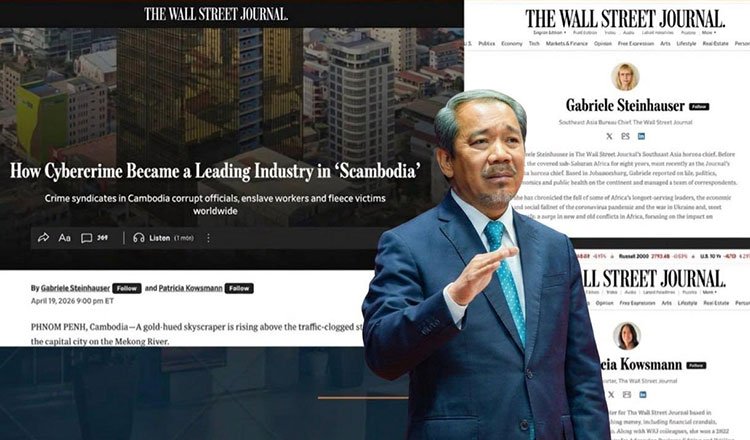
Responding to the April 19 report titled “How Cybercrime Became a Leading Industry in ‘Scambodia’, Tep Asnarith, Undersecretary of State at the Ministry of Information, said the publication’s language “undermines the honour of the country”.
“It is deeply regrettable that a prominent media outlet has spontaneously labelled Cambodia with such a derogatory term, reflecting a form of immature journalism that overlooks the government’s unwavering determination to eradicate online scams and hold all perpetrators fully accountable,” he said.
“Using the name of a sovereign nation and associating it with global criminal issues reflects an intention to create discrimination against that country,” he said, adding that such wording “is an insult to the dignity of the Cambodian people and damages their standing on the international stage.”

The article examines the rapid rise of cybercrime operations in Cambodia, describing how online scam networks—such as investment fraud, romance scams, and fake job schemes—have expanded and become a significant illicit industry in the country.
The report says many of these operations are run by transnational criminal groups, often based in casino complexes and special economic zones, using workers who are trafficked or coerced into carrying out scams. It highlights how foreign nationals, particularly from across Asia, are both perpetrators and victims within these networks.
According to the article, factors contributing to the growth of cybercrime in Cambodia are gaps in law enforcement, corruption concerns, and the country’s rapid development of loosely regulated casino hubs. It also notes that the illicit industry has drawn increasing international scrutiny due to its scale and cross-border impact.
The story acknowledges that Cambodian authorities have taken steps to crack down on such activities, including raids, arrests, and cooperation with foreign governments, but suggests challenges remain in fully dismantling the networks.
Asnarith said no single country should not be portrayed as the source of transnational crimes, warning that “writing driven by emotion and sensational language to attract attention rather than analysing the root causes of the issue” reflects “a lack of professionalism.”
The spokesman also cautioned that such terminology “originates from extremist groups and biased media outlets to serve psychological warfare and promote discriminatory narratives,” adding that its use risks reinforcing harmful perceptions.

“The role of the media is to inform, present facts, and contribute to solutions—not to undermine the dignity of any nation,” Asnarith said, adding that global cybercrime should be addressed through “evidence, data, and facts—not derogatory labelling.”
Cambodia remains open to “constructive reporting on challenges to jointly seek solutions,” he said, but “categorically rejects the use of insulting language that undermines our national identity and sovereignty.”
At the same time, the government reiterated its “firm and unwavering commitment to eliminate all forms of online fraud” from the country, backed by strengthened law enforcement and legal measures, he added.
In the letter yesterday addressed to WSJ Editor-in-Chief Emma Tucker, CHRC President Keo Remy expressed concern over the article.
Remy said the term “Scambodia” unfairly associates Cambodia as a whole with transnational criminal activity and risks promoting hatred and discrimination against the Cambodian people.
He said the phrase is viewed as a sensational and provocative label that does not reflect the principles of accuracy, fairness, and responsibility expected in ethical journalism, particularly when reporting on complex issues such as cybercrime.
The matter goes beyond national image and also concerns human dignity and reputation, which it said are recognised under international human rights principles, he said, adding that language stereotyping an entire nation could contribute to blame and damage investor confidence.
The CHRC noted that online scams are part of a wider transnational criminal network operating across multiple jurisdictions and should be addressed through international cooperation rather than simplified narratives.
It also highlighted Cambodia’s recent measures to combat cybercrime, including strengthened law enforcement operations, cooperation with international partners, and the enactment of a Law on Combatting Online Scams.
The CHRC called on WSJ to immediately retract the term “Scambodia”, issue a correction reflecting accurate and balanced reporting, and make a formal apology.
The committee said it remains open to constructive engagement and urged global media outlets to uphold professional ethics and respect for human rights principles.
“Global media can achieve accountability and demonstrate a commitment to responsible journalism and respect for the professional ethics and the principles of human rights, including the protection of dignity and reputation,” he said.
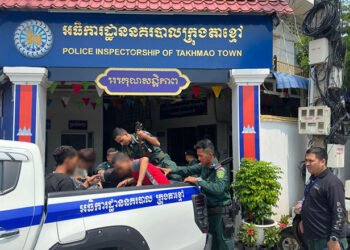
According to the Secretariat of the Commission for Combatting Online Scams, Cambodian authorities have stepped up operations nationwide to dismantle fraud networks. From July last year to mid-April, authorities cracked down on more than 250 online scam cases, raiding 91 casino locations in the process.
A total of 112 cases have been sent to court, involving 1,089 suspects from China, Thailand, Vietnam, Japan, South Korea, Singapore, and Cambodia.
Separately, from January 2025 to April, authorities deported 13,039 foreigners of 33 nationalities linked to online scam activities.
- Tags: National, scam operation