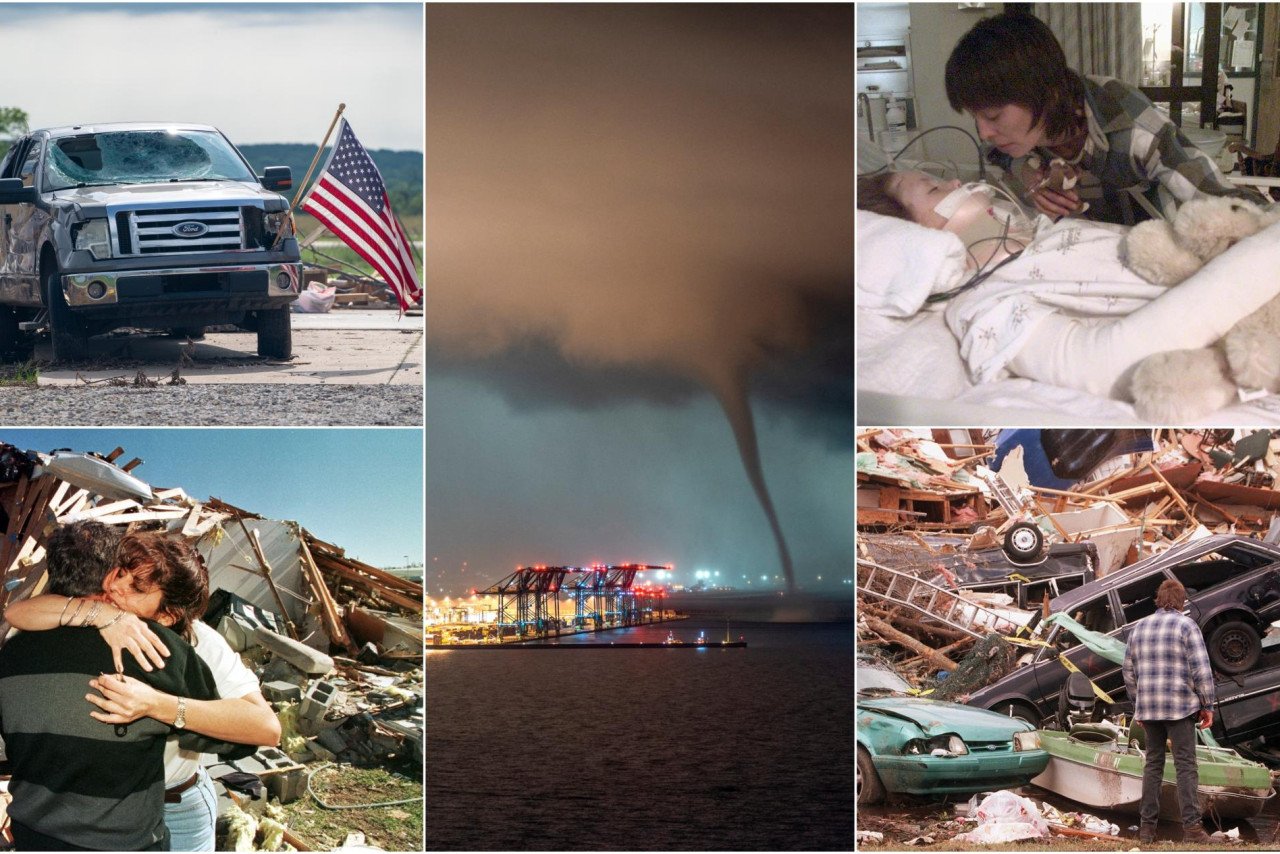
Tornadoes are among the most extreme and unpredictable weather phenomena on Earth, and their destructive power has repeatedly left deep scars on entire communities throughout history. Although they are most often associated with the United States of America, the deadliest tornado ever recorded occurred far from the American plains – in densely populated Bangladesh.
On April 26, 1989, a devastating tornado struck the area around the cities of Saturia and Manikganj in central Bangladesh. In just a few minutes, he destroyed everything in front of him, leaving behind scenes of utter devastation. It is estimated that around 1,300 people lost their lives, giving this event the infamous title of the deadliest tornado in history.
The tornado was about 1.5 to 1.6 kilometers wide and moved along a path approximately 13 kilometers long. On that relatively short journey, he wiped out entire villages. Experts point out that high population density, fragile infrastructure and almost non-existent early warning systems explain the extremely high number of victims. In many cases, people had neither the time nor the opportunity to seek shelter.
Although Bangladesh holds the global record, the United States has some of the most famous and well-documented tornadoes. Among them, the so-called Tri-State tornado from 1925 stands out. That tornado, which passed through the states of Missouri, Illinois and Indiana on March 18, is considered the deadliest in American history.
The Tri-State tornado killed 695 people, while some sources report a slightly lower number – 625. What makes this tornado particularly terrifying is its longevity and length of path – it traveled more than 350 kilometers, which ranks it among the longest-lasting tornadoes ever recorded. It destroyed tens of thousands of homes and injured thousands of people, leaving lasting effects in the affected areas.
The difference between these two events clearly shows that the devastating effect of a tornado depends not only on its strength, but also on social and infrastructural conditions. While in the USA already at the beginning of the 20th century there were certain forms of warning and better construction, in Bangladesh at the end of the 20th century many communities were completely unprotected.
Apart from these two extreme examples, history records a number of other deadly tornadoes, including those in India, Pakistan and the USA, where a combination of climatic conditions and human factors often determine the scale of the disaster. Today, thanks to advances in meteorology and early warning systems, the number of victims in more developed parts of the world has been significantly reduced, although the danger has never been completely eliminated.