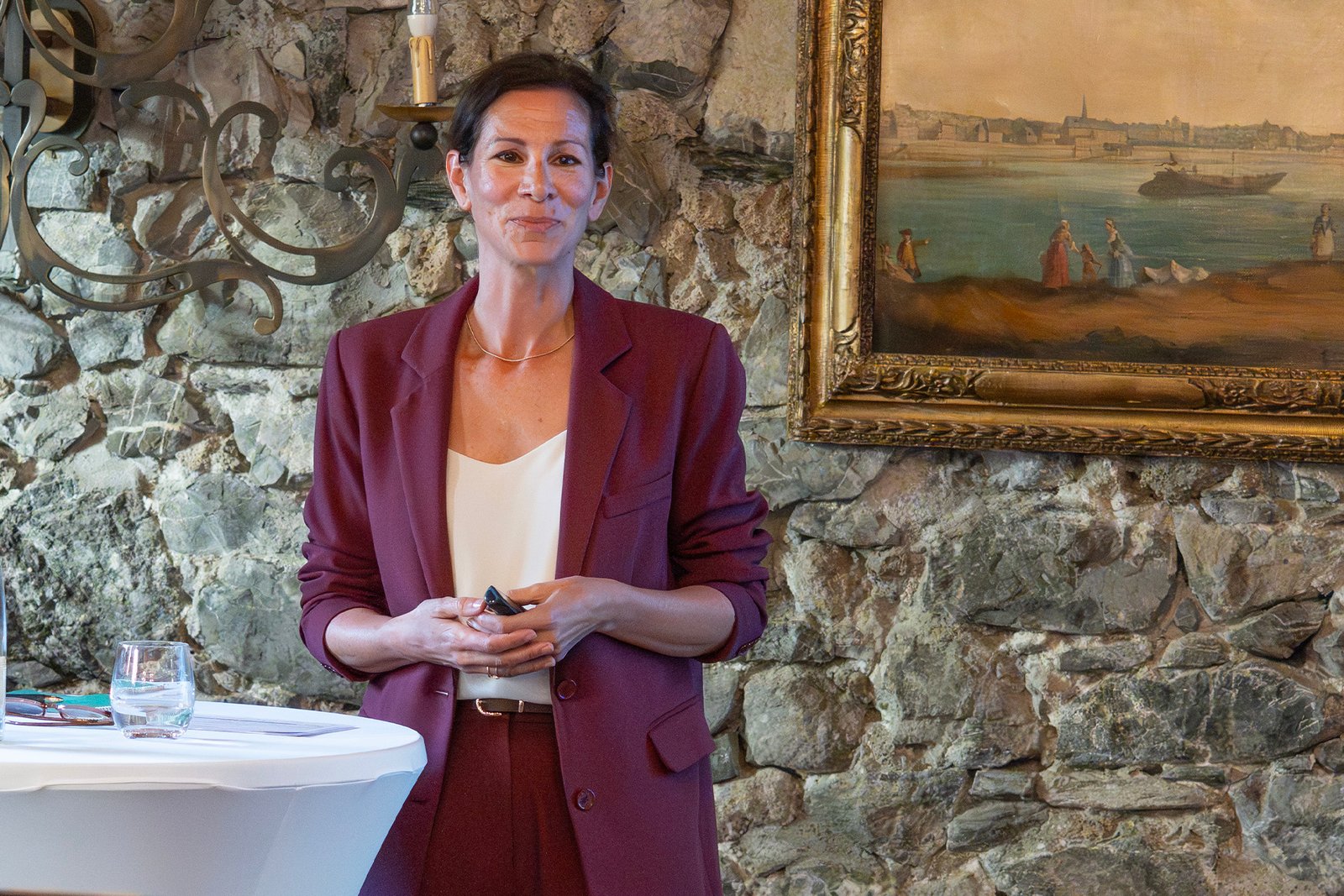
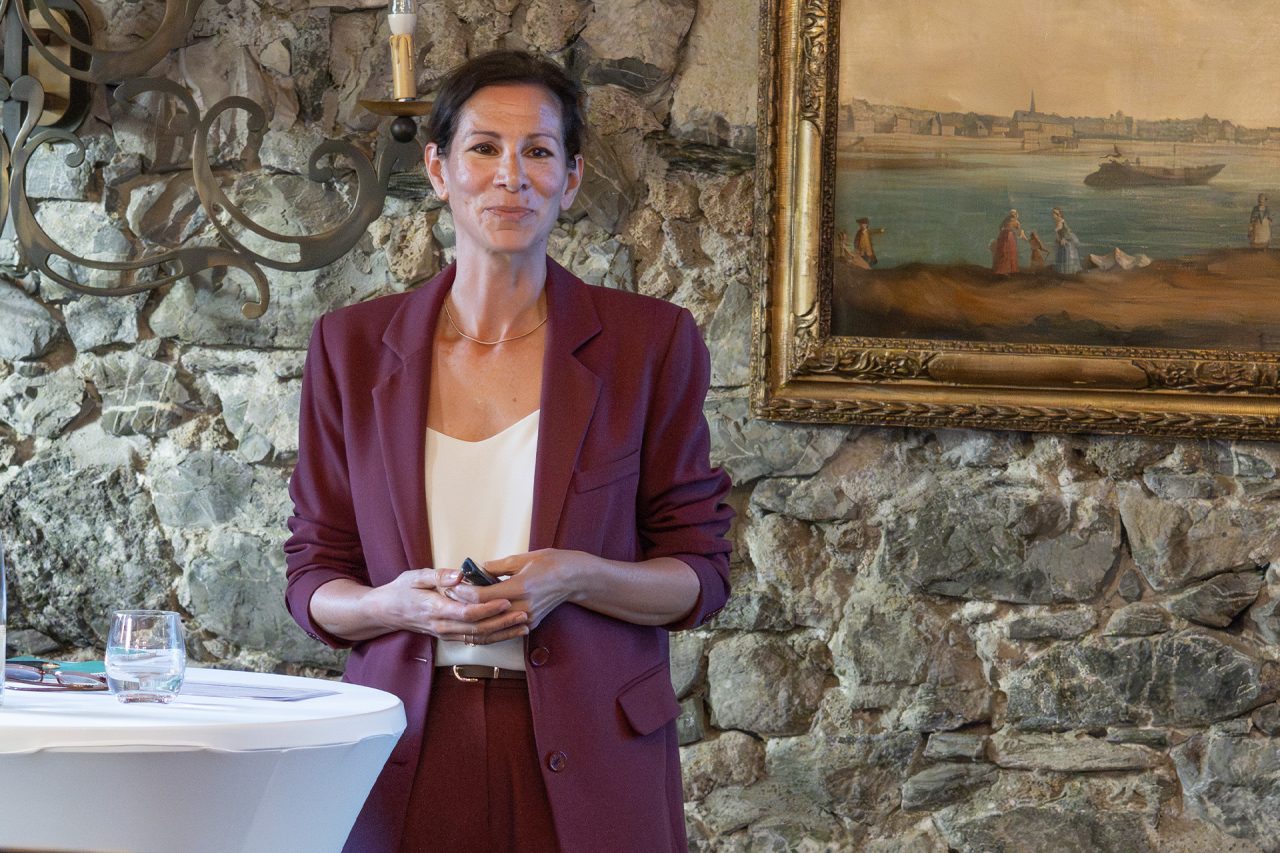
Dr. Bianca Lins, LL.M., from the Office of Communications | Photo: Gregor Meier
Two satellites in orbit, frequency rights with the International Telecommunications Union (ITU) and a growing space economy – Liechtenstein is involved in a future field that goes far beyond classic space travel. At yesterday’s event at the Liechtenstein Press Club, government advice was given Hubert Büchel and Dr. Bianca Lins from the Office of Communications an insight into the country’s strategic positioning.
The background is as unusual as it is significant: Liechtenstein registered its satellite frequencies with the ITU as early as 2014 – earlier than SpaceX registered its Starlink program. Whoever registers first has priority. However, these valuable frequency rights were in danger of being forfeited because the original licensees – after a complex change of ownership with Chinese investors at times – did not launch any satellites into space. The Office of Communications revoked the license in 2023 and reassigned it to the British space company Open Cosmos.
The ITU set a clear deadline: at least two satellites had to be in operation by the end of February 2026 – otherwise the frequency rights would have been lost without replacement. On January 22, 2026, the two Open Cosmos-built satellites were successfully placed into orbit using a Rocket Lab rocket from the launch site in New Zealand. This marks the first milestone. Now Open Cosmos must launch around half of the planned constellation by mid-2026 and have the entire fleet in space by 2028.
But what does Liechtenstein actually stand for? Lins made it clear that satellites have long been part of the invisible infrastructure of everyday life: navigation, weather forecasts, financial transactions, smart agriculture – all of this is now based on satellite data. This would also create economic opportunities for Liechtenstein, because companies like Hilti, Neutrik and Ivoclar have exactly the technological know-how that the space industry needs. “In space, the size of a country doesn’t matter.”said Lins. “The moment in which business and research invest more heavily in these future fields is now.”