Monday, May 4, 2026
    The GeoStrategic Consensus
    No Result
    View All Result
    • Login
    • HOME
    • AMERICAS
      • Argentina
      • Brazil
      • Canada
      • Chile
      • Colombia
      • Costa Rica
      • Cuba
      • Dominican Republic
      • Ecuador
      • El Salvador
      • Greenland
      • Guatemala
      • Honduras
      • Mexico
      • Nicaragua
      • Panama
      • Paraguay
      • Peru
      • United States
      • Uruguay
      • Venezuela
    • ASIA-PACIFIC
      • Australia
      • Brunei Darussalam
      • Cambodia
      • China
      • Federated States of Micronesia
      • Fiji
      • Indonesia
      • Japan
      • Kiribati
      • Laos
      • Malaysia
      • Marshall Islands
      • Mongolia
      • Myanmar
      • Nauru
      • New Zealand
      • North Korea
      • Palau
      • Papua New Guinea
      • Philippines
      • Samoa
      • Singapore
      • Solomon Islands
      • South Korea
      • Taiwan
      • Thailand
      • Timor-Leste
      • Tonga
      • Tuvalu
      • Vanuatu
      • Vietnam
    • CARICOM
      • CARICOM – Non-English
        • Haiti
        • Suriname
      • CARICOM Associates
        • Anguilla
        • Bermuda
        • British-Virgin-Islands
        • Cayman-Islands
        • Curacao
        • Turks-and-Caicos
      • CARICOM English
        • Antigua and Barbuda
        • Barbados
        • Belize
        • Dominica
        • Grenada
        • Guyana
        • Jamaica
        • Montserrat
        • Saint Kitts and Nevis
        • Saint Lucia
        • Saint Vincent and the Grenadines
        • The Bahamas
        • Trinidad and Tobago
    • EURASIA
      • Armenia
      • Azerbaijan
      • Balarus
      • Georgia
      • Kazakhstan
      • Kyrgyzstan
      • Moldova
      • Russia
      • Tajikistan
      • Turkmenistan
      • Ukraine
      • Uzbekistan
    • EUROPE
      • Albania
      • Andorra
      • Austria
      • Bosnia and Herzegovina
      • Bulgaria
      • Croatia
      • Cyprus
      • Czech Republic
      • Denmark
      • Estonia
      • Finland
      • France
      • Germany
      • Greece
      • Holy See
      • Hungary
      • Iceland
      • Ireland
      • Italy
      • Kosovo
      • Latvia
      • Liechtenstein
      • Lithuania
      • Luxembourg
      • Malta
      • Monaco
      • Montenegro
      • Netherlands
      • North Macedonia
      • Norway
      • Poland
      • Portugal
      • Romania
      • San Marino
      • Serbia
      • Slovakia
      • Slovenia
      • Spain
      • Sweden
      • Switzerland
      • United Kingdom
    • MIDDLE EAST AND NORTH AFRICA
      • Algeria
      • Bahrain
      • Egypt
      • Iran
      • Iraq
      • Israel
      • Jordan
      • Kuwait
      • Lebanon
      • Lybia
      • Morocco
      • Oman
      • Palestinian Territories
      • Qatar
      • Saudi Arabia
      • Syria
      • Tunisia
      • Turkey
      • United Arab Emirates
      • Western Sahara
      • Yemen
    • SOUTH ASIA
      • Afghanistan
      • Bangladesh
      • Bhutan
      • India
      • Maldives
      • Nepal
      • Pakistan
      • Sri Lanka
    • SUB-SAHARAN AFRICA
      • Angola
      • Benin
      • Botswana
      • Burkina Faso
      • Burundi
      • Cabo Verde
      • Cameroon
      • Central African Republic
      • Chad
      • Comoros
      • Cote d’Ivoire
      • Democratic Republic of the Congo
      • Djibouti
      • Equatorial Guinea
      • Eritrea
      • Eswatini
      • Ethiopia
      • Gabon
      • Gambia
      • Ghana
      • Guinea
      • Guinea Bissau
      • Kenya
      • Lesotho
      • Liberia
      • Madagascar
      • Malawi
      • Mali
      • Mauritania
      • Mauritius
      • Mozambique
      • Namibia
      • Niger
      • Nigeria
      • Republic of the Congo
      • Rwanda
      • Sao Tome and Principe
      • Senegal
      • Seychelles
      • Sierra Leone
      • Somalia
      • South Africa
      • South Sudan
      • Sudan
      • Tanzania
      • Togo
      • Uganda
      • Zambia
      • Zimbabwe
    • HOME
    • AMERICAS
      • Argentina
      • Brazil
      • Canada
      • Chile
      • Colombia
      • Costa Rica
      • Cuba
      • Dominican Republic
      • Ecuador
      • El Salvador
      • Greenland
      • Guatemala
      • Honduras
      • Mexico
      • Nicaragua
      • Panama
      • Paraguay
      • Peru
      • United States
      • Uruguay
      • Venezuela
    • ASIA-PACIFIC
      • Australia
      • Brunei Darussalam
      • Cambodia
      • China
      • Federated States of Micronesia
      • Fiji
      • Indonesia
      • Japan
      • Kiribati
      • Laos
      • Malaysia
      • Marshall Islands
      • Mongolia
      • Myanmar
      • Nauru
      • New Zealand
      • North Korea
      • Palau
      • Papua New Guinea
      • Philippines
      • Samoa
      • Singapore
      • Solomon Islands
      • South Korea
      • Taiwan
      • Thailand
      • Timor-Leste
      • Tonga
      • Tuvalu
      • Vanuatu
      • Vietnam
    • CARICOM
      • CARICOM – Non-English
        • Haiti
        • Suriname
      • CARICOM Associates
        • Anguilla
        • Bermuda
        • British-Virgin-Islands
        • Cayman-Islands
        • Curacao
        • Turks-and-Caicos
      • CARICOM English
        • Antigua and Barbuda
        • Barbados
        • Belize
        • Dominica
        • Grenada
        • Guyana
        • Jamaica
        • Montserrat
        • Saint Kitts and Nevis
        • Saint Lucia
        • Saint Vincent and the Grenadines
        • The Bahamas
        • Trinidad and Tobago
    • EURASIA
      • Armenia
      • Azerbaijan
      • Balarus
      • Georgia
      • Kazakhstan
      • Kyrgyzstan
      • Moldova
      • Russia
      • Tajikistan
      • Turkmenistan
      • Ukraine
      • Uzbekistan
    • EUROPE
      • Albania
      • Andorra
      • Austria
      • Bosnia and Herzegovina
      • Bulgaria
      • Croatia
      • Cyprus
      • Czech Republic
      • Denmark
      • Estonia
      • Finland
      • France
      • Germany
      • Greece
      • Holy See
      • Hungary
      • Iceland
      • Ireland
      • Italy
      • Kosovo
      • Latvia
      • Liechtenstein
      • Lithuania
      • Luxembourg
      • Malta
      • Monaco
      • Montenegro
      • Netherlands
      • North Macedonia
      • Norway
      • Poland
      • Portugal
      • Romania
      • San Marino
      • Serbia
      • Slovakia
      • Slovenia
      • Spain
      • Sweden
      • Switzerland
      • United Kingdom
    • MIDDLE EAST AND NORTH AFRICA
      • Algeria
      • Bahrain
      • Egypt
      • Iran
      • Iraq
      • Israel
      • Jordan
      • Kuwait
      • Lebanon
      • Lybia
      • Morocco
      • Oman
      • Palestinian Territories
      • Qatar
      • Saudi Arabia
      • Syria
      • Tunisia
      • Turkey
      • United Arab Emirates
      • Western Sahara
      • Yemen
    • SOUTH ASIA
      • Afghanistan
      • Bangladesh
      • Bhutan
      • India
      • Maldives
      • Nepal
      • Pakistan
      • Sri Lanka
    • SUB-SAHARAN AFRICA
      • Angola
      • Benin
      • Botswana
      • Burkina Faso
      • Burundi
      • Cabo Verde
      • Cameroon
      • Central African Republic
      • Chad
      • Comoros
      • Cote d’Ivoire
      • Democratic Republic of the Congo
      • Djibouti
      • Equatorial Guinea
      • Eritrea
      • Eswatini
      • Ethiopia
      • Gabon
      • Gambia
      • Ghana
      • Guinea
      • Guinea Bissau
      • Kenya
      • Lesotho
      • Liberia
      • Madagascar
      • Malawi
      • Mali
      • Mauritania
      • Mauritius
      • Mozambique
      • Namibia
      • Niger
      • Nigeria
      • Republic of the Congo
      • Rwanda
      • Sao Tome and Principe
      • Senegal
      • Seychelles
      • Sierra Leone
      • Somalia
      • South Africa
      • South Sudan
      • Sudan
      • Tanzania
      • Togo
      • Uganda
      • Zambia
      • Zimbabwe
    No Result
    View All Result
    Agentially
    No Result
    View All Result
    Home ASIA-PACIFIC Australia

    NDIS changes: What you should know if you use the scheme

    The Analyst by The Analyst
    April 22, 2026
    in Australia
    NDIS changes: What you should know if you use the scheme


    Brittany Busch

    Updated April 22, 2026 — 5:31pm,first published 5:27pm

    READ ALSO

    Snowy 2.0: Water torrents gush through tunnel amid project challenges

    Lebanon attacks: UN warns of health crisis amid ongoing Israel-Hezbollah conflict

    You have reached your maximum number of saved items.

    Remove items from your saved list to add more.

    Save this article for later

    Add articles to your saved list and come back to them anytime.

    The government is overhauling the National Disability Insurance Scheme with new eligibility criteria and sweeping cuts that will rein in growth far beyond what was previously expected.

    Health and Disability Minister Mark Butler said the challenges facing the scheme were existential, and if it wasn’t reformed now it could cease to exist.

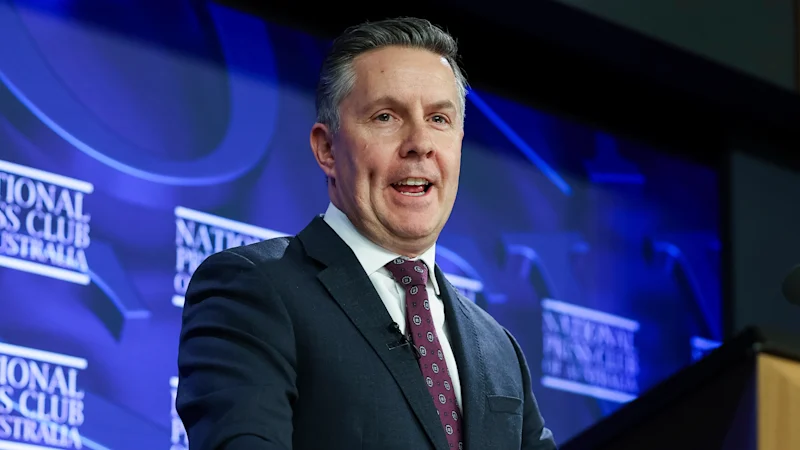
    Health Minister Mark Butler at the Press Club on Wednesday.Alex Ellinghausen

    “The NDIS costs too much, and it’s growing too fast,” he said in a speech at the National Press Club on Wednesday to outline changes to the scheme coming in the May budget. “Unless we take action to make it sustainable, it simply will not be there in the future for the Australians who need it most.”

    So what do the changes mean for those using the scheme?

    What was announced?

    Butler will introduce legislation when parliament returns next month that will help slash NDIS growth from 10 per cent to just 2 per cent, on average, over the next four years.

    Related Article

    Health Minister Mark Butler at the Press Club on Wednesday.

    There will be new eligibility criteria for scheme access, and people’s budgets for social and community participation will be cut.

    A $200 million Inclusive Communities Fund will be established to rebuild capability among disability organisations to boost user participation in their local communities.

    States and territories will focus on building “foundational supports” outside the NDIS for people with milder support needs – for which $6 billion has previously been allocated.

    Related Article

    The NDIS has blown out to $50 billion. Can Labor stop it from spiralling?

    Mandatory registration for providers will be expanded for high-risk activities, such as in-home care, and payments will move to an online system.

    “We don’t need to monitor retail purchases from a chemist the same way we monitor close personal care of vulnerable people, but we will expand categories of mandatory registration to include those high-risk activities, personal care, daily living supports and supports provided in closed settings,” Butler said.

    Butler said that anyone receiving a payment through the NDIS would “have to basically declare themselves, and we’ll be able to compare data between government agencies”.

    “The measures I announced today mean that 90 per cent of all payments will go to registered providers,” he said.

    The cost of third-party intermediaries, who manage the majority of NDIS plans and claims, will be cut by 30 per cent. Butler said this was intended to weed out providers who had no qualifications or background in disability services and were more interested in “clipping the ticket” than providing quality care.

    What does this mean for NDIS participants?

    The new reforms mean eligibility for the scheme will no longer be based on a diagnosis list. Instead, from January 2028, a standardised, evidence-based assessment of a person’s day-to-day “functional capacity” will determine if they are eligible.

    This will lead to current NDIS participants being reassessed and removed from the scheme, while others will no longer be able to join it.

    Related Article

    Caroline, Mattea and Sabina Massola inside the James Turrell sculpture at the National Gallery. Mattea,3, has Jansen-de Vries syndrome and uses the NDIS.

    The overall number of participants will be cut from 760,000 Australians currently on the scheme. The government wants to reduce this to about 600,000 by the end of the decade, instead of the more than 900,000 projected under current settings.

    From October this year, people’s plan budgets will also be cut.

    This will be directed at the funding pot allocated to social and community inclusion activities, which range from helping people build social skills to support workers taking them to the movies.

    These budgets will be reduced and reverted to their 2023 levels. Some people’s allocation could be cut by as much as 50 per cent. On average, it will represent a $5000 per person reduction per year.

    “I want to be honest with people. This will have a material impact on participant plans,” Butler said.

    Plan rollovers will end, meaning unspent funds will not be banked for a new plan. This will “ensure plans align with reasonable and necessary decision-making”, according to the government’s explanatory document.

    Who will be removed when the diagnosis list is scrapped?

    Butler said the reform was not meant to target specific diagnoses, as eligibility would be based on the severity of support needs.

    However, he said many autistic people would be affected because they are the largest cohort on the scheme.

    Autistic children aged eight and under will be directed off the NDIS and onto the Thriving Kids program, which is under development after being announced at Butler’s press club speech last August.

    Wednesday’s announcement means those aged nine and above, including teenagers and adults, could also lose access to the NDIS if they have mild support needs, Butler said.

    “Their functional capacity will determine whether they stay on the scheme, or whether they enter the scheme in the first place,” he said.

    “If they have lower support needs, they won’t be on the scheme in the long term, and they will return to the sorts of support systems that were in place before the NDIS, and frankly, were always intended to continue to support those people.”

    Butler said most people with psychosocial disability and serious mental health needs were expected to remain on the scheme.

    Related Article

    Jim Chalmers addresses the media on Monday.

    “We’re pretty confident the people on the scheme now with psychosocial disability have very high support needs. It’s not easy for someone with mental health needs to get on to the scheme,” he said.

    Which providers will be covered?

    Butler insisted choice and control remained the core philosophy of the NDIS, but that the reform would move away from the “let it rip” market that had little oversight of quality and qualifications of providers.

    He said in some areas, particularly where participants receive close personal support such as through supported independent living, providers should have to apply and demonstrate their compliance with performance standards, “and then from that panel, yes, people can choose”.

    “We’re not going to say to individual participants, ‘you have to deal with this provider’. There will be a panel. There will be still choice and control, but it won’t be this free-for-all market that has developed over the last 10 years and is serving no one’s interest.”

    When will the changes start?

    Butler said he was aiming for the NDIS overhaul legislation to pass through parliament by June 30, and that many measures, such as cutting back on unscheduled plan reassessments, would take immediate effect. The eligibility assessment tool will be developed in coming months with the support of a technical advisory group, and in consultation with the community and state and territory governments.

    The new eligibility rules are expected to be in force by January 1, 2028. Existing participants will then be reassessed, and new participants will gain entry based on the updated criteria.

    What problems is the government trying to fix?

    Butler said the design of the NDIS was a “fundamental barrier” to managing the scheme.

    He said a fraud fusion taskforce identified eight recurring design failures in long-standing government programs that make them susceptible to fraud. The NDIS had all eight.

    “It also identified seven fundamental building blocks for high-integrity programs. The NDIS has none of them. These structural flaws mean that measures that we have introduced to control spending are simply not working as we intended,” he said.

    Butler said fraud was rife in the scheme, with unregistered and unqualified people and organisations providing services to disabled people. He said the overhaul would rein in cost blowouts.

    “Instead of costing more than $70 billion in 2030, taxpayers will spend around $55 billion over the [next four years],” Butler said.

    What we don’t know

    The eligibility test will be developed over the next 18 months. How severely reduced a person’s functionality will have to be to qualify for the NDIS and how frequently they will need to be reassessed remains unclear.

    To what degree the states and territories will comply remains to be seen. States and territories have agreed to curb growth to five or six per cent, and have also agreed to run the new Thriving Kids program in a national cabinet deal.

    But they now need to implement the changes, and Queensland, which has not yet signed up to fund the children’s early intervention despite the previous agreement, has also been sceptical of today’s announcement.

    Cut through the noise of federal politics with news, views and expert analysis. Subscribers can sign up to our weekly Inside Politics newsletter.

    You have reached your maximum number of saved items.

    Remove items from your saved list to add more.

    Brittany BuschBrittany Busch is a federal politics reporter for The Age and Sydney Morning Herald.Connect via email.


    From our partners


    Source link

    Related Posts

    Snowy 2.0: Water torrents gush through tunnel amid project challenges
    Australia

    Snowy 2.0: Water torrents gush through tunnel amid project challenges

    May 4, 2026
    Lebanon attacks: UN warns of health crisis amid ongoing Israel-Hezbollah conflict
    Australia

    Lebanon attacks: UN warns of health crisis amid ongoing Israel-Hezbollah conflict

    May 4, 2026
    NRL: How Brisbane Broncos coach Michael Maguire defied his critics to become ‘one of the best signings’
    Australia

    NRL: How Brisbane Broncos coach Michael Maguire defied his critics to become ‘one of the best signings’

    May 3, 2026
    Best TV shows to stream in May 2026. What’s on Netflix, Disney, Amazon Prime and more
    Australia

    Best TV shows to stream in May 2026. What’s on Netflix, Disney, Amazon Prime and more

    May 3, 2026
    Warriors vs Eels: Parramatta’s woes continue as Ryley Smith injured in defeat to Warriors
    Australia

    Warriors vs Eels: Parramatta’s woes continue as Ryley Smith injured in defeat to Warriors

    May 3, 2026
    Elizabeth St crowds clearly showed our shared values
    Australia

    Elizabeth St crowds clearly showed our shared values

    May 3, 2026
    Next Post
    Venezuela 145 deaths in March due to traffic accidents

    Venezuela 145 deaths in March due to traffic accidents

    POPULAR NEWS

    Justin Bieber fans flood Coachella festival for headlining show – Entertainment

    Justin Bieber fans flood Coachella festival for headlining show – Entertainment

    April 20, 2026

    Over 600 flee homes as Army, NPA clash in Negros Occidental

    April 21, 2026

    Ex-DPWH exec recalls P800-M ‘delivery’ to Zaldy Co 

    April 20, 2026

    Former PM Paluckas suspends party membership, to waive immunity over criminal probe

    April 24, 2026
    Pres. Ali challenges CARICOM to transform into health research powerhouse

    Pres. Ali challenges CARICOM to transform into health research powerhouse

    April 23, 2026

    EDITOR'S PICK

    This unpleasant symptom on the feet could indicate diabetes or liver disease – Life

    This unpleasant symptom on the feet could indicate diabetes or liver disease – Life

    May 2, 2026
    Zero tolerance only way to curb harm of cyberbullying – Opinion

    Zero tolerance only way to curb harm of cyberbullying – Opinion

    April 15, 2026
    Japan warns of slightly increased risk of mega-quake after a 7.7-magnitude one

    Japan warns of slightly increased risk of mega-quake after a 7.7-magnitude one

    April 23, 2026
    Cidh grants precautionary measures in favor of political prisoner Yorman Bladimir Acevedo Murillo

    Cidh grants precautionary measures in favor of political prisoner Yorman Bladimir Acevedo Murillo

    April 9, 2026

    Recent Posts

    • The Prime Minister of Italy arrived in Yerevan – ARMENPRESS Armenian News Agency
    • How can this pan-Armenian shrine, an architectural pearl, be distorted like this? Lilit Galstyan
    • Turkmenistan plans 10 bcm gas processing plant at Galkynysh field – Turkmengaz
    • Gomel Economic Forum scheduled for 21-22 May

      © 2026 Agentially - Navigating shifting sovereignties and global risk .

      Welcome Back!

      Login to your account below

      Forgotten Password?

      Retrieve your password

      Please enter your username or email address to reset your password.

      Log In
      No Result
      View All Result

        © 2026 Agentially - Navigating shifting sovereignties and global risk .

        This website uses cookies. By continuing to use this website you are giving consent to cookies being used. Visit our Privacy and Cookie Policy.