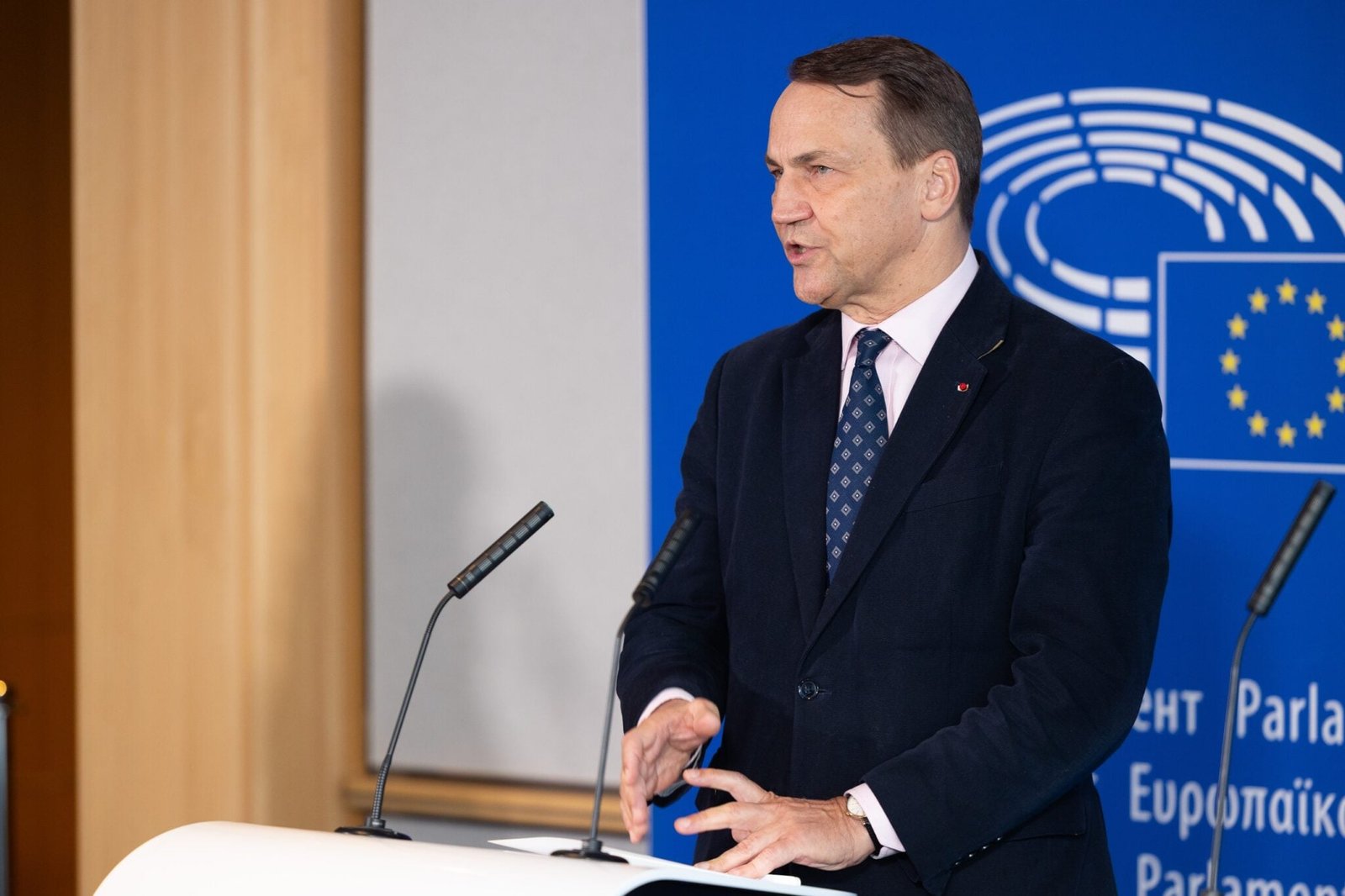

Polish Foreign Minister Radoslaw Sikorski
On Thursday, the Polish Foreign Minister spoke on the private radio station RMF FM about the expected shift in Hungary’s policy toward Russia and Ukraine. Radoslaw Sikorski expects that the new Hungarian government will approve the disbursement of EU aid intended for Kyiv.
Minister Sikorski was asked whether, based on his phone conversation with Anita Orbán, the foreign minister-designate, he expected a change in Hungary’s policy toward the two warring countries. The politician replied: “Yes, it will be completely different.” The future minister had indicated that Hungary would lift the freeze on funds intended for the Polish army and Ukraine and support sanctions against Russia, said the Polish Foreign Minister.
Minister Sikorski had previously criticized Hungary on several occasions for, in his view, exploiting the EU’s unanimity rule to block EU reimbursement for Polish supplies to Ukraine as well as the disbursement of the 90 billion euro EU loan intended for Ukraine.
In response to the moderator’s remark that Péter Magyar had not made clear statements regarding Russia and Ukraine—noting that he wished to “maintain good relations” with the former but was imposing “tough conditions” on Kyiv—Sikorski stated: The remarks by the future Hungarian Prime Minister “align with the Polish position.”
Regarding the discussion within the European Union about the possibility of Ukraine’s accelerated accession, Sikorski stated that this would not happen.
Ukraine must “meet all the conditions, just as Poland had to,”
he emphasized.
As Politico reports, resistance in EU Member States is growing stronger in parallel with these plans. Although Ursula von der Leyen has long advocated for Ukraine’s accelerated accession, the majority of member states do not wish to put this issue on the agenda for the time being, the Brussels-based newspaper wrote. Key member states, including Germany, France, and the Netherlands, are insisting that the accession process remain strictly merit-based.
Following the elections in Hungary, many expected Budapest’s stance to shift.
Magyar, the leader of the TISZA party, which emerged victorious from the elections, made it clear, however: Hungary does not support Ukraine’s accelerated EU accession.
It appears to be no coincidence that the idea has already emerged in Brussels to temporarily restrict the veto power of member states in the future.
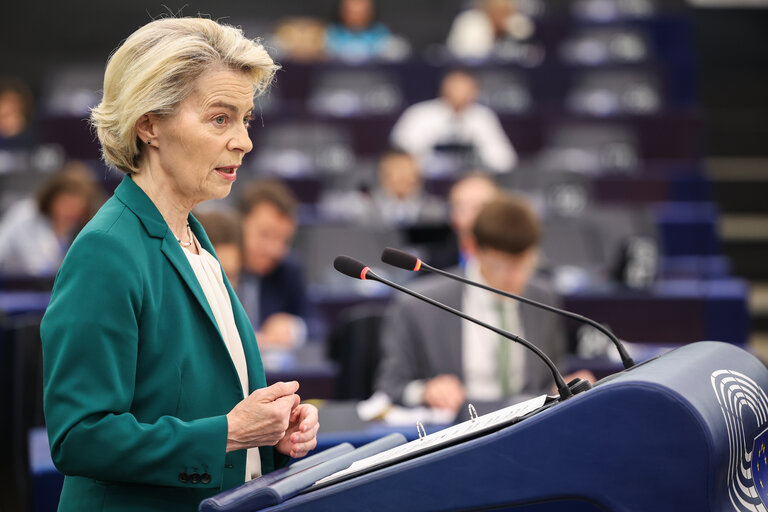
For barely a day after the elections in Hungary, Commission President Ursula von der Leyen spoke openly about the need to abolish the unanimity principle in the European Union’s foreign policy.
The core of the Brussels proposal is that, in the future, decisions on key issues will no longer be determined by the veto of individual member states, but by majority votes. This would particularly affect sensitive issues, such as sanctions against Russia or financial aid for Ukraine. According to von der Leyen, we must now capitalize on the political momentum.
Via mti, politico.eu; Featured image: Alexis HAULOT Copyright: © European Union