OPPOSITION SLATE:
The DPP said that it would focus on blocking the proposals in the legislature, and if they advance, engage with voters over them via campaigns
-
By Chen Cheng-yu
/ Staff reporter
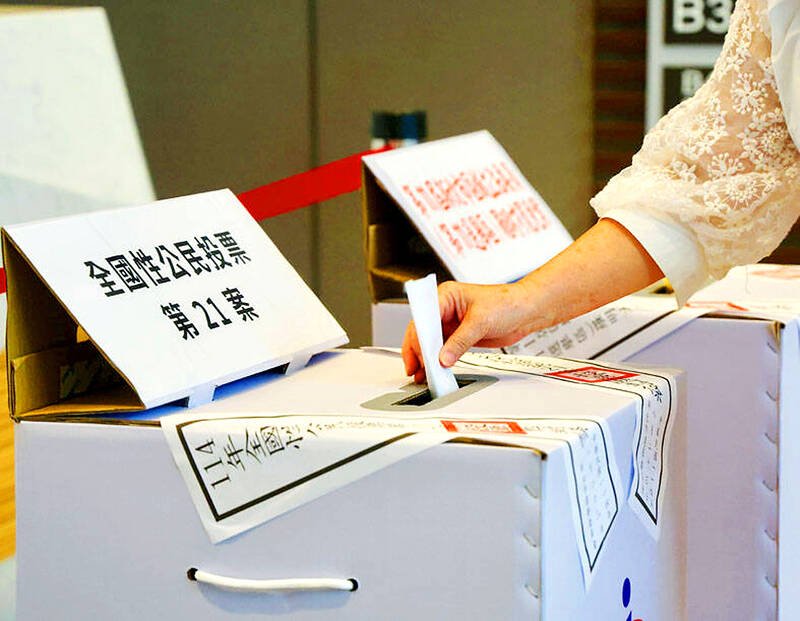
Five opposition party-led referendums might be held alongside the nine-in-one elections this year if approved by the Central Election Commission (CEC).
The local elections are scheduled for Nov. 28 to elect mayors and city councilors in the special municipalities of Taipei, New Taipei City, Taoyuan, Taichung, Tainan and Kaohsiung, as well as county commissioners and councilors, and other positions ranging from township mayors to borough wardens.
The voting is likely to be accompanied by referendums that the Chinese Nationalist Party (KMT) and the Taiwan People’s Party (TPP) legislative caucuses have proposed.
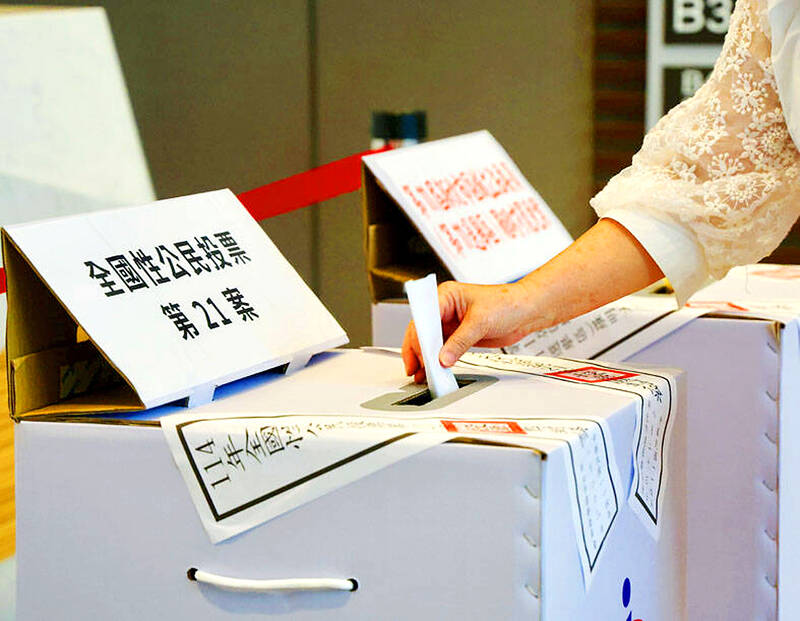
Photo: CNA
The KMT caucus has proposed a referendum opposing abolition of the death penalty. On Friday, the proposal was sent directly to a second reading and referred to party caucus negotiations.
The TPP caucus proposed a referendum to allocate traffic fines to road safety and public transport subsidies. It also advanced directly to a second reading on Friday and was sent to negotiations.
In April, the TPP caucus also proposed a referendum, asking: “To safeguard citizens’ right to political participation, do you agree that the government should, within two years, establish legislation to implement an absentee voting system for all elections and referendums in the free area of the Republic of China?”
The absentee voting referendum proposal is pending cross-party negotiations.
The TPP caucus in response to concerns over the feasibility of election administration if absentee voting is introduced, is seeking revamp the proposal to limit it to Taiwan proper, as well as Penghu, Kinmen and Lienchiang (Matsu) counties, as well as have it apply only to national-level elections, nationwide referendums and legislative elections.
Meanwhile, KMT Chairwoman Cheng Li-wun (鄭麗文) changed her stance regarding a referendum on caning proposed by KMT Legislator Hung Meng-kai (洪孟楷).
After saying on Friday that the caning referendum was “not a priority at this stage” — prompting dissatisfaction among KMT lawmakers — the party headquarters in the evening said that the “anti-fraud caning referendum” would be placed on the legislative agenda on Friday, along with a proposed referendum on restarting nuclear power generation.
The KMT caucus plans to push the caning and nuclear proposed referendums directly to second readings.
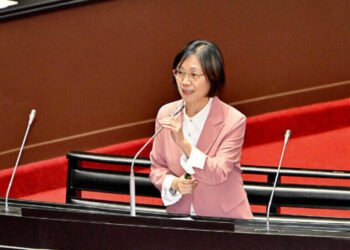
Democratic Progressive Party (DPP) Legislator Rosalia Wu (吳思瑤), director of DPP policy affairs, said that the DPP caucus would focus on blocking the opposition’s proposals in the legislature, but for now would not propose counter-referendums.
If the opposition-led referendums are formally advanced, the DPP would engage with voters via election campaigns, emphasizing the character and governing ability of its own candidates, while the executive branch would bolster policy messaging regarding the referendum issues, Wu said.
She urged the CEC to properly fulfill its supervisory responsibilities and ensure that the proposals comply with the Referendum Act (公民投票法).