When it comes to insulating external walls, styrofoam is a material that has held primacy on our market for decades.
Its popularity is not accidental, because it offers a significantly more affordable price compared to mineral wool, and the assembly itself is much simpler and faster. Although the profession often points out that stone wool is a superior solution, most investors and homeowners still opt for Styrofoam. At that moment, they face the most important question on which the overall energy efficiency of the building depends, which thickness of Styrofoam is optimal for the facade in our climate?
Too thin a layer of insulation will not fulfill its basic purpose and will provide insufficient protection, while an oversized layer will represent an unnecessary financial expense. In order to arrive at the right answer, it is necessary to understand how insulation works and what factors should be taken into account.
Why thermal insulation is crucial
Experts rightly point out that thermal insulation is one of the most important and cost-effective items when building or renovating a house. Properly installed insulation of the appropriate thickness has the power to reduce overall heating and cooling energy consumption by a whopping 40 to 60 percent. Its basic function is the prevention of heat losses during the winter, as well as the elimination of so-called thermal bridges, through which precious energy is lost.
However, energy efficiency is not the only benefit. A high-quality insulated facade drastically improves the microclimate of the interior space. During the winter months, the rooms remain pleasantly warm, while during the summer, excessive overheating of the walls is prevented, which significantly reduces the need to use air conditioning. In addition, adequate insulation is the most effective way to regulate humidity inside the building, because it directly prevents condensation and the appearance of unhealthy mold on the walls.
Also, the facade system provides significant sound insulation, reducing the influence of external noise, which is of inestimable importance in urban areas and near traffic roads. At the very end, the thermal insulation layer physically protects the construction of the house from deterioration due to adverse weather conditions.
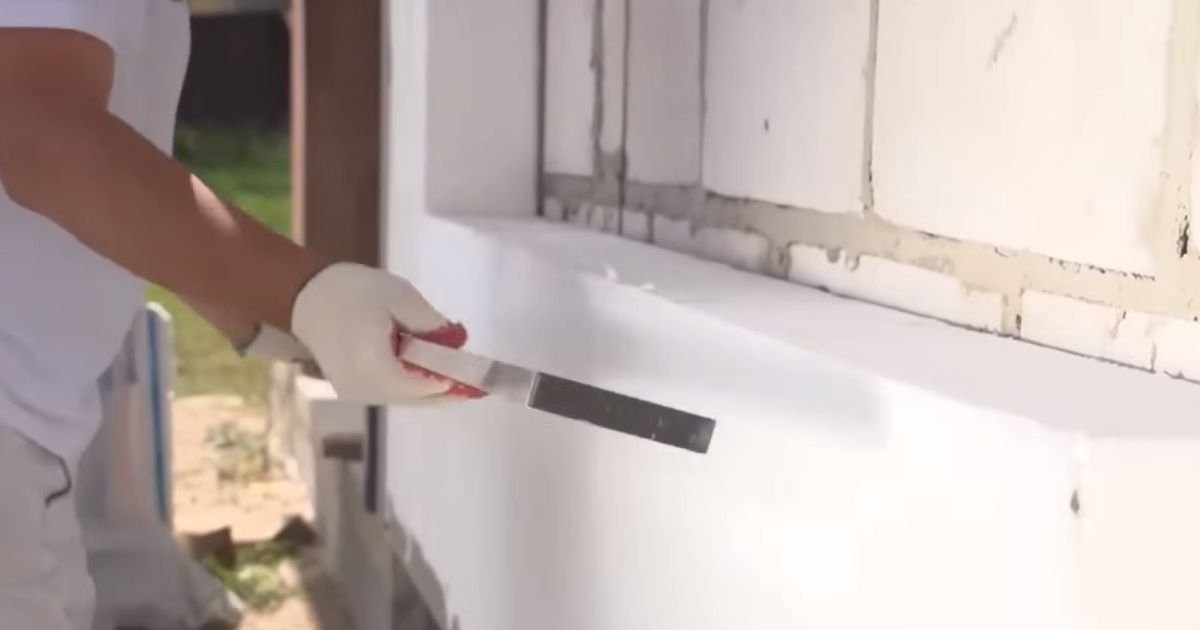
For this purpose, the so-called demit facade, i.e. contact facade, is the most widely used in our area. The process involves gluing styrofoam panels directly to the exterior wall. The panels are additionally fixed and mechanically connected with special dowels, after which glue is applied over them and a protective glass mesh is pressed in, which has the task of reinforcing and strengthening the surface. The final phase includes smoothing and application of facade paint or final decorative plaster.
As an alternative to styrofoam, rock wool is also available, which is a better solution in many parameters. Due to its dense structure, stone wool provides far better sound insulation. Its biggest advantage is its high vapor permeability, which allows the walls to “breathe” without hindrance, which perfectly regulates humidity. In addition, it is a completely natural material of mineral origin, while Styrofoam is obtained by processing oil. However, stone wool insulation is on average about 30 percent more expensive than Styrofoam. It is this noticeable difference in price, combined with the fact that Styrofoam is much faster and easier to install, that makes it the absolute leader on the domestic market.
Styrofoam itself is characterized by excellent thermal insulation properties, extremely low water absorption, and easy and quick installation. It is a light material with a low volumetric weight, which has dimensional stability. If installed professionally, correctly and in conditions without the presence of moisture in the wall itself, styrofoam can last for decades. Its application is wide, so in addition to facades, it is also used in the construction of sandwich walls, insulation of attics, while hard-pressed variants are used for insulation of floors and flat roofs.
Graphite styrofoam as an innovative solution
In order to improve the thermal insulation properties of ordinary white styrofoam, the industry offered graphite or gray styrofoam, also known on the market as neopor. Although the process of its production is very similar to classic expanded polystyrene, graphite particles are added during production, which give it a recognizable gray color.
These graphite particles have the ability to reflect, that is, to reject part of the thermal radiation, which directly reduces the thermal conductivity of the material. The result of this innovation is the fact that graphite styrofoam has about 20 percent better thermal insulation characteristics compared to classic white styrofoam of the same thickness. Of course, these improved properties are accompanied by a slightly higher market price of the material.
What is the optimal insulation thickness?
Choosing the right thickness depends on three key factors. The first is the climatic conditions in the region where the facility is located, because it is logical that areas with harsher winters require more massive insulation. Another factor is the type of building, considering that the standards for a family house where one stays every day are not the same as for occasional or auxiliary buildings. The third factor is building regulations and energy efficiency standards, which have become extremely strict, especially if the goal is to build low-energy or passive houses.
The fact that increasing the thickness of Styrofoam by only 5 centimeters can reduce heating and cooling costs by tens of percent shows how much Styrofoam thickness actually affects savings. This means that the slightly higher initial investment in thicker Styrofoam will pay off very quickly through significantly lower monthly bills.
Decades ago, our construction practice was dominated by the term “facade five”, which meant the installation of styrofoam only 5 centimeters thick. In the past this was considered the standard and many believed it was the ideal thickness. However, taking into account the climate zone in which our country is located, 5 centimeter Styrofoam is anything but optimal and experts no longer recommend it because it cannot provide adequate thermal protection.
Over time, the “five” was replaced by Styrofoam 8 centimeters thick. Although it was progress, practice has shown that even the “eight” is not the best solution for our climate, because this thickness is actually intended for warmer Mediterranean climates where winter temperatures rarely fall significantly below zero.
Today, the profession is absolutely in agreement, the optimal thickness of insulation for facade walls, adapted to our climatic conditions and modern standards, is exactly 12 centimeters.
Thicker Styrofoam does not heat better
It is important to clarify that higher grammage, i.e. denser styrofoam, does not mean better thermal insulation characteristics, but only greater mechanical resistance and load capacity. Hard-pressed styrofoam is designed for pressure-bearing floors and for passable roof surfaces, not for facades. Better thermal insulation properties on the facade are achieved exclusively and only by increasing the thickness of the panel itself, and not by its density.
How thick the styrofoam really changes the price
When comparing the prices of installing systems with different thicknesses, it is clear that saving on the thickness of Styrofoam is not financially justified. The creation of a classic contact (demit) facade with 8-centimeter-thick reinforced styrofoam currently costs from 15 euros per square meter and upwards. On the other hand, the same facade with the recommended Styrofoam thickness of 12 centimeters costs from 17 euros per square meter. It is clear that the average difference is only about 2 euros per square meter, which is a minimal cost for the total square footage of the house compared to the energy benefits brought by a thicker layer.
If the investor decides for a more advanced, graphite styrofoam, the total price per square meter increases by approximately 1 euro compared to the stated prices of white styrofoam. For those who want top-notch protection and approaching passive house standards, a facade with 16-centimeter-thick styrofoam costs 20 euros per square meter, while extreme insulation of 20-centimeter thickness will exceed the price of 21 euros per square meter.
Installation and importance of adequate carpentry
Even the thickest and highest quality graphite styrofoam will not do its job if the installation of the insulation is not professionally and meticulously performed. Hiring verified and experienced facade workers is of crucial importance in order to avoid the creation of thermal breaks and cracking of the facade. Today, finding the right craftsmen is made easier thanks to specialized digital platforms, where by sending a free inquiry you can quickly and easily get in touch with verified contractors in every region.
In addition to the professionally installed facade, it is extremely important to note that the building’s thermal protection is not complete if the joinery is not in perfect condition. Up to an incredible 40 percent of the thermal energy used to heat the building can be lost through worn-out windows and doors. If your joinery has lost its original function, if condensation forms on the glass, and mold appears at the joints of window frames and walls, this is a clear signal that no facade will be able to compensate for these losses and that it is time to replace the windows.
PVC windows stand out as the safest choice that offers the best price-quality ratio. They have excellent thermal insulation characteristics, are very easy to maintain and, contrary to popular belief, are no longer available exclusively in white, but come in a multitude of patterns and textures. At the same time, PVC joinery is the most affordable option on the market, so for a standard PVC window with double glass, you need to spend between 85 and 160 euros. Only through the synergy of high-quality facade insulation and modern carpentry, the home becomes truly energy efficient, comfortable and protected from all external influences, reports Courier.