Friday and Saturday 11/12 Muharram 1448 AH – 26/27 June 2026 AD
Consolidating the Kingdom’s position as a global logistics center
Ministry of Transport…from road asphalt to quality and safety

The construction of roads in the past contributed to the easy and convenient arrival of pilgrims to Mecca
Since its establishment in 1372 AH, the Ministry has worked to pave and maintain the main roads
The year 1355 AH witnessed the establishment of a public works and minerals department affiliated with the Ministry of Finance and National Economy. It was concerned with public works affairs, including roads. In the year 1372 AH, government departments and departments with similar activities were gathered into stand-alone ministries, and the Kingdom became a Ministry of Transportation supervising everything related to transportation, including roads, railways, and ports (in the country). When means of transportation developed and the ministry’s responsibilities expanded greatly, it was taken into consideration during the studies the state conducted. The year witnessed 1372 AH The Ministry of Transportation was established to supervise all aspects related to transportation, including roads, railways, and ports. In 1395 AH, the state’s ministries and public institutions were reconstituted, and the General Corporation for Ports and the General Corporation for Railways were established. Since that date, the Ministry became responsible for planning, designing, constructing, and maintaining roads and bridges. A specialized agency for transportation was later established, responsible for planning and supervising the land transportation sectors. And maritime, and coordination between its various means, in addition to preparing the regulations governing the various transport sectors, and issuing the necessary licenses to practice land and sea transport activities. In the year 1424 AH, the name of the ministry was changed to (Ministry of Transport), and in the year 2016 AD, the Council of Ministers’ decision stipulated that the Minister of Transport should have a supervisory role over the air transport sector, as His Excellency the Minister of Transport holds the position of Chairman of the General Authority of Civil Aviation, which is the body responsible for supervising operational and safety regulations, and services. Air navigation and operations at the Kingdom’s 27 airports, including 5 international airports, 12 regional airports, and 10 domestic airports, all of which provide all services to air travelers. In the year 2021 AD, the Council of Ministers approved amending the name of the Ministry of Transport to become (Ministry of Transport and Logistics Services), and on August 2, 2022 AD, the General Authority for Roads was established by decision of the Council of Ministers. It enjoys a public legal personality, financial and administrative independence, and is organizationally linked to the Minister of Transport. And Logistics Services, with its main headquarters in the city of Riyadh, is the authority responsible for legislating and regulating the road sector and following up on compliance in it to raise traffic safety and quality, by developing and unifying standards and policies and finding innovative and sustainable solutions. The authority aims to regulate and supervise the road sector, and develop the infrastructure, in a way that supports the strategy of transport and logistics services in the Kingdom.
“Beginnings”
The Ministry of Transport is considered one of the oldest state facilities that were established at the beginning of the founding of the Kingdom. Facilitating communication between the wide regions of the Kingdom was one of the first things that the late founder, His Majesty King Abdulaziz – may God rest his soul – concerned himself with, whether by introducing wired or wireless means, or by providing telegraph, postal, and telephone services, or by constructing roads, or establishing railways, airways, or ports. The transport sector has gone through many stages consistent with what the state was taking on the path of organization and development. The Ministry of Transport, when it was established in the year (1372 AH), was Responsible for everything related to the construction of roads, telegraphs, post, telephone, telex, ports, railways, and land and sea transport affairs in general. With the increasing responsibilities of the Ministry of Transport and the diversification of its service areas, it was reconstituted in the year 1395 AH so that telegraph, postal and telephone affairs became entrusted to a stand-alone ministry. A general ports institution was also established, entrusted with the responsibility of managing and operating ports in the Kingdom, and an institution for railways. Thus, the Ministry of Transport became responsible for various land and sea transport facilities in the Kingdom, including: This includes constructing and maintaining roads and bridges, organizing land and sea transport in various technical, administrative and regulatory aspects, and supervising railways and ports. On June 12, 2024, His Excellency the Minister of Transport and Logistics Services inaugurated for the first time the self-driving air taxi experience in the Holy Sites, which reflects the extent of development witnessed by the Ministry of Transport and Logistics Services within the initiatives of the National Strategy for Transport and Logistics Services supported by the Kingdom’s Vision 2030.
“knock”
After a number of years had passed since the establishment of the Ministry of Transport, the idea of a project to construct a road linking Taif – Al Hada – Mecca came, as the old Mecca – Taif road was only for pedestrian crossing, and its impact remains to this day. When King Saud bin Abdulaziz – may God have mercy on him – visited Al Hada during his summer vacation in 1375 AH, he issued his noble order in 1377 AH to the Ministry of Transportation to establish and expand the Taif – Al Hada – Mecca road project with a length of 67 km. He spoke, and during King Saud’s visit to Taif in the month of Rabi’ al-Awwal of the year 1378 AH, he directed the Muhammad bin Laden Foundation to complete and maintain the road, and the follow-up of His Highness the Crown Prince at that time, Prince Faisal bin Abdulaziz – later the King – in implementing this major project and supervising the implementation stages of the road, and preparations began to celebrate the opening of the new Taif – Al Hada – Mecca road, which is the first road of its kind not only in the Kingdom but in the Middle East at that date, and a large number were invited to the ceremony. Statesmen, notables, ambassadors, and the Arab and foreign diplomatic corps. The road was opened on Wednesday, the third of Safar, 1385 AH, under the patronage of King Faisal bin Abdulaziz Al Saud – may God have mercy on him. Our country has also known highways for decades, as many highways were implemented in various regions of the Kingdom, and they are roads with precise entrances and exits, consisting of several lanes and equipped with all means of safety. The Dammam – Abu Hadriyah road is considered the first and longest highway to be opened in the Kingdom, and that month coincided with this month. November 1980 AD, with a length of 161 km, runs in two directions and consists of six lanes. This road received an official opening in a ceremony attended by King Khalid, King Fahd, and King Abdullah – may God have mercy on them. As for the second highway in the Kingdom, it is the Riyadh – Dammam Expressway, and it starts from the northeast of Riyadh, heading to the east, to then meet the Dammam – Abu Hadriyah Expressway, with a length of 386 km. This road consists of two directions separated by A central island twenty meters wide, and each direction consists of three lanes. The road was also provided with all means of traffic safety, including traffic instructions, clear intersections, indication signals, and directional signs. The total cost of this road amounted to about 1,460 million riyals. The Ministry of Transport also implemented roads whose length reached more than 71,500 thousand km, linking the main cities to each other, and the length of the implemented highways reached more than 5 thousand km around the Kingdom, in addition to… It developed single roads with a length of more than 49,000 km, to become dual roads, in addition to the current dual roads, whose length reaches 12,000 km. It also implemented side and secondary roads to serve villages, villages and populated areas, installed intelligent transportation systems (ITS), and placed signals and road markings on them. It also paved dirt roads with a length of 144,000 km, and the number of bridges in regions and cities reached more than 5,000 bridges. It also completed paving the obstacles. In mountainous areas, and the establishment of ring roads in some regions and cities, with the enforcement and maintenance of internal roads that connect the cities and governorates of the regions, and connect them to other regions, and in order to transform roads into smart roads, the Ministry of Transport worked to establish a control room for the intelligent transportation system, and the tunnel monitoring and control system, in addition to activating regular, electrical and preventive maintenance contracts, in addition to contracts for surveying and evaluating bridges and facilities, through surveying, evaluating, and determining the appropriate treatment pattern for the total road paths in Saudi Arabia.
“body”
The General Authority for Roads was established on August 2, 2022 AD. It is a governmental body that has a public legal personality, and financial and administrative independence. It is affiliated organizationally with the Minister of Transport and Logistics Services, and its headquarters are in the city of Riyadh. It is the body responsible for legislating and regulating the road sector and following up on compliance therein to raise traffic safety and quality, through developing and unifying standards and policies and finding innovative and sustainable solutions. It also aims to enhance the safety and sustainability of the road sector led by national competencies to raise the quality of the road network and the experience of its users. And encouraging innovation. It also aims to raise the Kingdom’s road quality index to sixth in the world, reduce deaths on roads to less than 5 cases per 100,000 people, in addition to covering the road network with safety factors according to the International Road Assessment Program (IRAP) classification, keeping pace with future demand for the road sector and providing the necessary services, and raising the private sector’s participation in operational work to 20%. The authority also seeks to occupy sixth place globally in the road quality index, enhance connectivity between cities, governorates and centers, and facilitate the movement of individuals. and goods in all regions of the Kingdom through a safe and high-quality road network, which contributes to raising the quality of life and supporting the objectives of the National Strategy for Transport and Logistics Services.

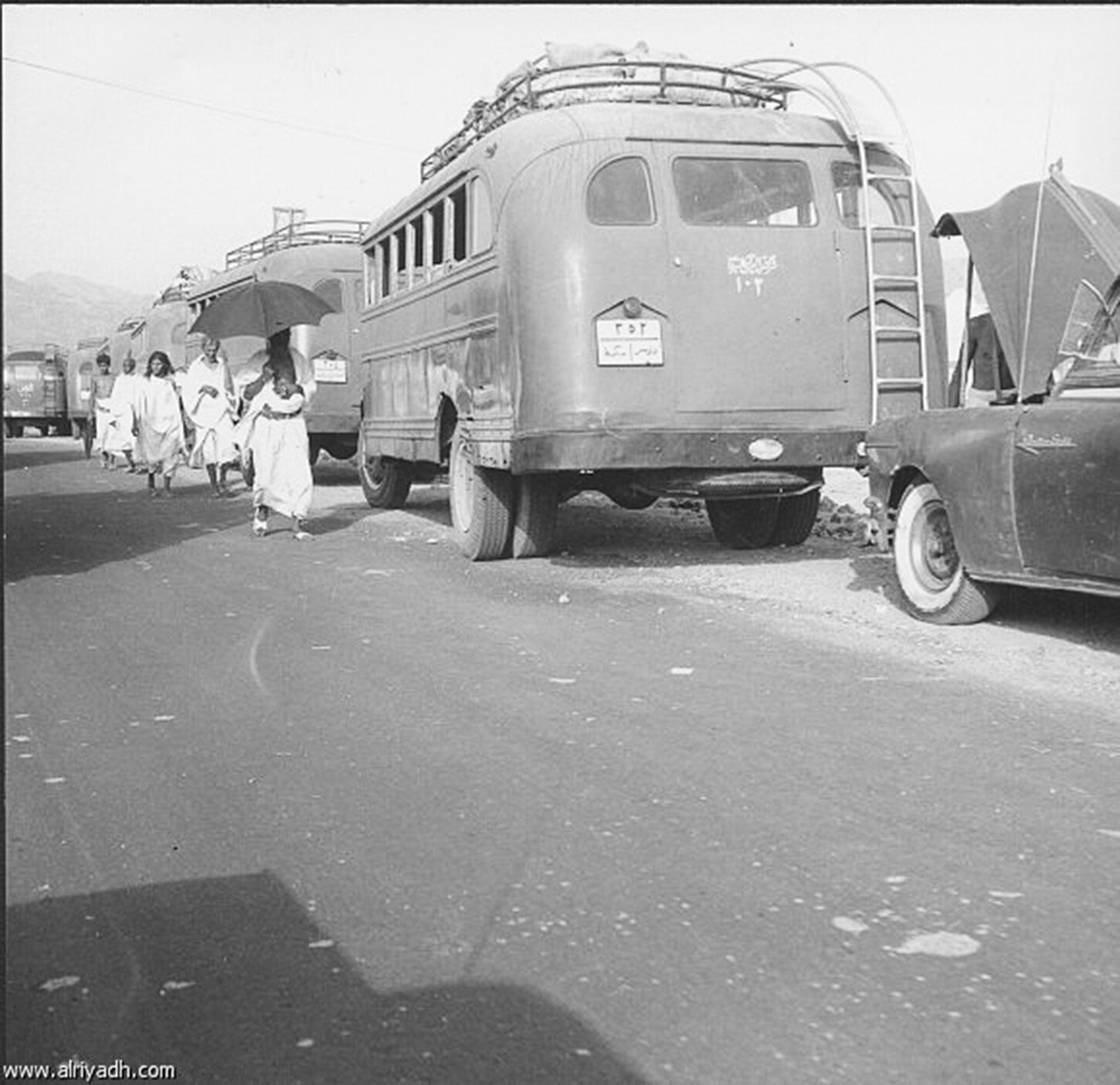
People struggled to move around before roads were built

Modern technologies enhance the safety and efficiency of the road network in the Kingdom

The road sector in the Kingdom is witnessing remarkable development and a series of distinguished innovations

Interest in logistics services in the maritime transport sector

Implementing and maintaining roads is a priority for the Ministry of Transport

Pioneering innovations in the road sector

Prepared by: Hamoud Al-Duwaihi