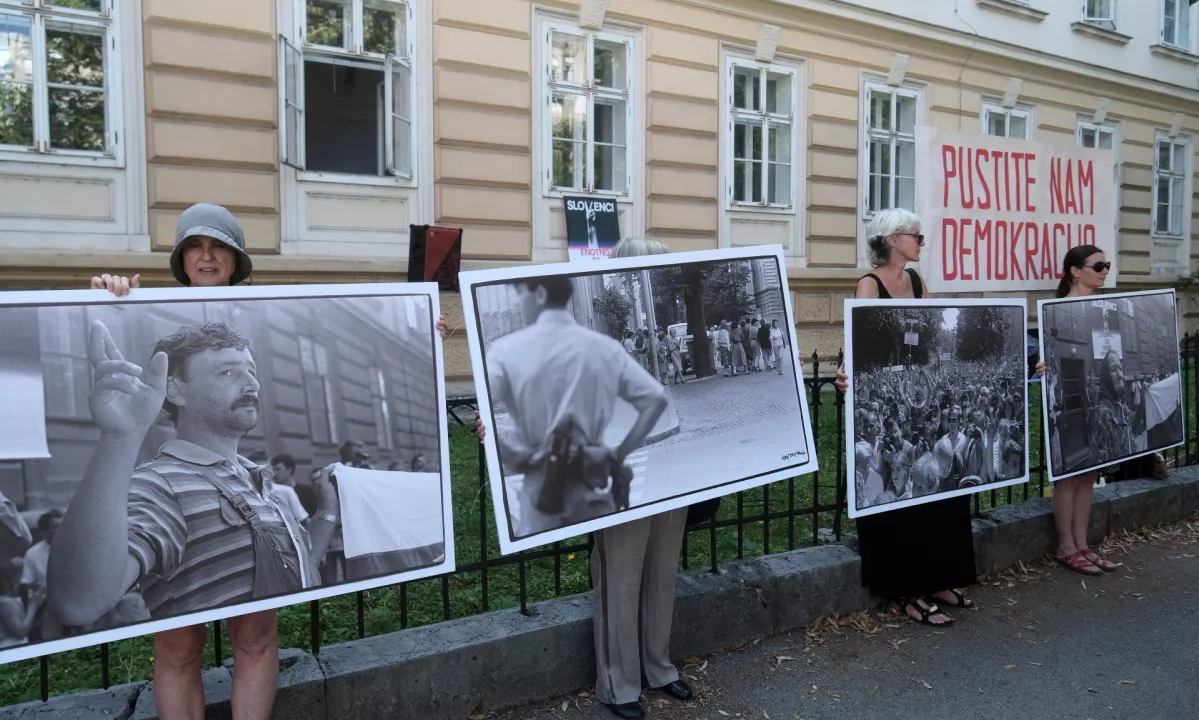
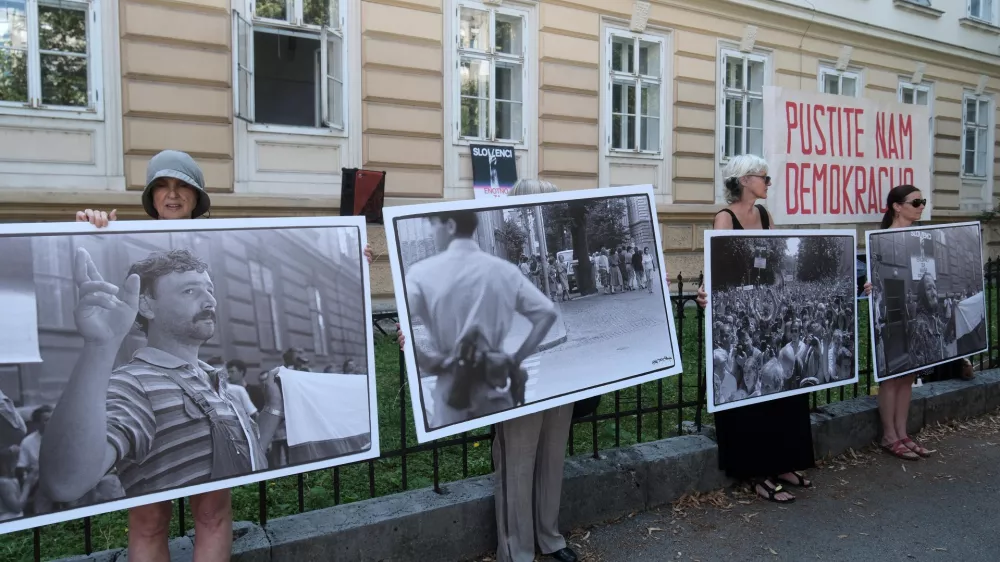
Those gathered were once again invited to submit their signatures for the referendum on the amendment to the Act on Parliamentary Investigation. Photo: Janez Zalaznik
In Glas ljudstva on Roška cesta, an appeal was made to submit signatures for the referendum
The Civil Initiative Voice of the People prepared a public exhibition of photographs by Tone Stojko from 1988 on Ljubljana’s Roška cesta and called on civil society to unite and stand in the way of any government that crosses the line of human rights. Those gathered were once again invited to submit their signatures for the referendum on the amendment to the Act on Parliamentary Investigation.
24 June 2026, 15.10
they are

According to Dušan Kebra, the representative of the initiative, a committee for the protection of human rights was established in Slovenia 38 years ago. The reason for its creation was the arrest of Janez Janša and three other defendants due to the disclosure of a document that proved the readiness of the military leadership to use force to suppress democratization in Slovenia. As he said, the committee was the first major demonstration of the strength of Slovenian civil society.
“On this occasion, it must be clearly stated that the historical merits for the committee belong to the people who founded it, led it and massively supported it, and not to Janez Janša. The committee did not just achieve a more lenient treatment of the accused, it achieved something even more important. People lost their fear of the authorities, civil society realized its power, and Slovenia stepped on the threshold of political pluralism and democracy,” he outlined the situation.
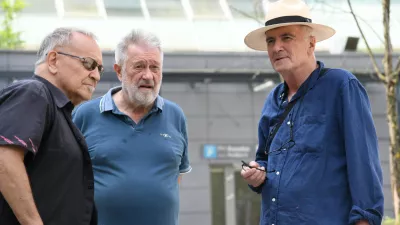
According to him, today civil society is watching the behavior of the authorities with the same concern, which under the leadership of Janša “repeatedly talks about internal enemies, attacks independent media, tries to subjugate public institutions and treats civil society as a political opponent”. He added that today’s event is a call to civil society to connect, organize and stand in the way of any government that crosses the line of human rights.
Ali Žerdin, journalist and editor of the Saturday edition of Dela, emphasized that the legislative branch should write the laws, the executive branch should implement the laws, and the judicial branch should judge according to these laws. “The legislature can investigate the activity of the executive branch, but it has no mandate to harass the civil sphere,” he said.
Metka Mencin Čeplak, a psychologist and former president of the Commission for Women’s Policy in the Parliament of the Republic of Slovenia, pointed out that by canceling the already acquired rights of permanent residents of Slovenia with citizenship of third countries, reducing the legal protection of those investigated in a parliamentary investigation, limiting parliamentary and public debate, and hindering trade union activities, Slovenia is becoming “exactly what the democratic forces opposed decades ago, in order to prevent a slide into autocracy”.
Photographer Tone Stojko described today’s spontaneous short exhibition as one of the most beautiful exhibitions he had in his life, because it “came where it belongs”.
In the civil initiative at the event, everyone was invited to submit signatures for the referendum on the amendment to the Act on Parliamentary Investigation, for which 40,000 signatures are needed. They see the referendum as an opportunity for people to decide what kind of country they want to live in.