Budapest keeps the European integration of Ukraine in place, and in this way it also blocks Moldova, which is bound together with Ukraine. Political scientist Ana Maria Albulescu (University of Tartu) explains what solutions Romania would have to force Hungary’s hand.
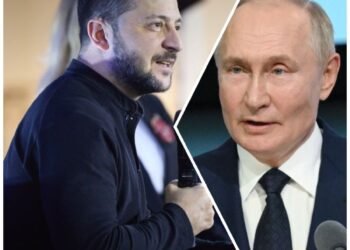
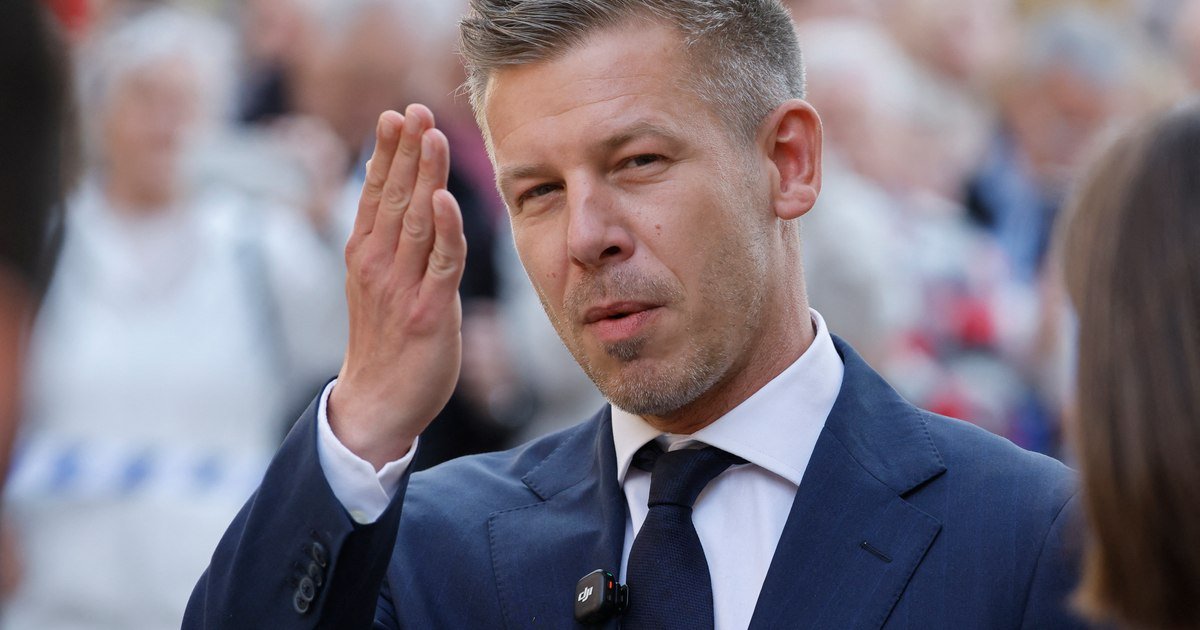
Péter Magyar blocks Ukraine’s accession to the EU, and so does the Rep. Moldova on the spot. PHOTO: AFP
The truth: Péter Magyar’s Hungary does not give up its decision to block Ukraine’s accession to the EU, and in this way indirectly hits the Republic of Moldova and the interests of Romania. What solutions does Romania have besides what is already said to have tried, the “decoupling” of Moldova from Ukraine?
Ana Maria Albulescu: I think that Romania does quite a lot for the Republic of Moldova, from the declarative level to the economic-financial, supportive level. And I think that, clearly, the fact that we could be a lobbyist in the European Union is the best thing that Romania can do for the Republic of Moldova. Now, I don’t know if we are still at the moment to discuss the moment when we would actually reach this integration of the Republic of Moldova and Ukraine, and here I am referring more to Ukraine. And I say this because there have been countries in the past that started these accession processes and ended them without success.
Is Chancellor Friedrich Merz’s announcement that Germany would prefer, at least in the first phase, a somewhat partial accession of Kiev an ominous sign for Ukraine?
If we are to refer to the fact that a different status is proposed for Ukraine, indeed, it may come to a point where Ukraine could receive a different status than the Republic of Moldova, because the war will last much longer than expected. This is how I see things from the point of view of the future: a different status for Ukraine, at least temporarily, and a faster completion of the integration process for the Republic of Moldova.
Political negotiations with Hungary: Solutions for unblocking the Chisinau file
If, however, Hungary will continue to indirectly block the Republic of Moldova, which may still not be decoupled from Ukraine, what solutions would Bucharest have and what could it give in exchange to improve Budapest?
I clearly don’t think it’s about exchanges. I think what could be done at this moment would be to benefit from the fact that Hungary has a new leader, just as Romania has a relatively new leader. And I think that resetting Romanian-Hungarian relations would be something to be desired. Not only from the perspective of the Republic of Moldova, but from the perspective of Romania.
Ana Maria Albulescu is a researcher in Conflict Studies. PHOTO: Personal archive
Now, if we are to talk about Romania a bit and how it could negotiate with Hungary for the Republic of Moldova, I would say that in the situation where we still do not have a stable government and we are in the actual situation with this government that no longer passes the Parliament, it is very difficult to have a coherent foreign policy. In the past, I have criticized Nicușor Dan’s positions regarding foreign policy, and I would say the following: I have seen only one situation in which the Romanian Foreign Minister took a very good position, namely regarding the drone that fell in Galați. I don’t know who advised Oana Țoiu to go to the United Nations, but I think it was very good that she had this initiative, and Romania showed itself the way it did. He did exactly what he was supposed to do. Unfortunately, only in this case. And I think from that perspective, the fact that we don’t have a stable government affects a lot what’s going to happen. If we are to think about what can be done at the moment with the government we have: taking positions within the European Union, even towards Hungary, even bilateral meetings with Hungary. That is, some processes can be started, even if it will not be the same foreign minister who will bring them to a conclusion.
Energy diplomacy: Neptun Deep as leverage in the relationship with Budapest
Hungary has repeatedly expressed its intention to purchase gas from Romania, once Neptun Deep is fully operational. Could we be a bit more transactional and somehow ask the Hungarians in exchange for a more benevolent position towards the Republic of Moldova?
Of course. I would say that behind closed doors, any kind of leverage matters. And it really matters a lot. And I think the economic side is to our advantage. Emphasis should be placed on the economic side and everything we have to offer from the point of view economic. And not only in this case, but in many, many other cases, serious economic diplomacy could lead to excellent results. But I don’t know if we as humans are ready to do that. Unfortunately, it is very, very difficult for us to do anything about it. We don’t have the right people, we have serious problems when it comes to this.
Where do these problems come from and why doesn’t Romania also have a foreign policy and better negotiation capacity?
Because foreign policy is not treated seriously enough in Romania. We also look at which politicians we have, how they perform. It is valid for the president, valid for all recent prime ministers. In fact, in Romania foreign policy is not even discussed, it is not a concern. Unfortunately. In the other countries there are
serious concerns for that, but here at most we still discuss a little bit, but there is also little external information in the press. If we look at the Baltic countries, things are completely different. And it’s not by chance that Kaja Kallas got where he did, and the Baltics have a much better image everywhere. Because I think it is important that these discussions about foreign policy appear in the Romanian press. I also understand that, day by day, in Romania we are preoccupied with the standard of living, with the economy, and then we forget that external issues and what is happening abroad also affect us. It is somewhat understandable, but still we cannot completely neglect foreign policy. We see that we also have prime ministers who do not speak foreign languages, we have a president…
Why there is a lack of interest in foreign policy in Romania
Some would say that it could be worse, that instead of presidents Klaus Iohannis and Nicușor Dan, we could have leaders who would change Romania’s orientation, that instead of prime ministers Marcel Ciolacu and Ilie Bolojan, who don’t even speak a foreign language, we could have even weaker premiers and a somewhat different orientation.
Yes, in this respect it is. It is good that Romania is a state with a pro-Western orientation, it would be very bad if that had changed. However, I want to tell you that regarding this, the fact that we are not interested in foreign policy in Romania, I am very dissatisfied. I’ve always said I’d vote for someone who has a really good foreign speech. And there have been some candidates in the past who, let’s say, have tried to bring this discussion to the presidential campaigns. But, at least lately, we don’t see that, we don’t see anyone who is even interested in foreign policy. Not. Everything is focused on what is happening internally. The problem is that because of this lack of interest in foreign policy, we are not performing. Or because of it.
Who is Ana Maria Albulescu?
Ana Maria Albulescu is a researcher in Conflict Studies at the University of Tartu. He received his PhD in War Studies (Kings College London, 2019). His research focuses on frozen conflict dynamics in the post-Soviet space, de facto states, democratization and international peacebuilding efforts.